


Lack of Civil Court Injunction No Bar to Appointing Receiver Under S. 146 CrPC: Rajasthan HC
 Copy Link
 Share
 Save
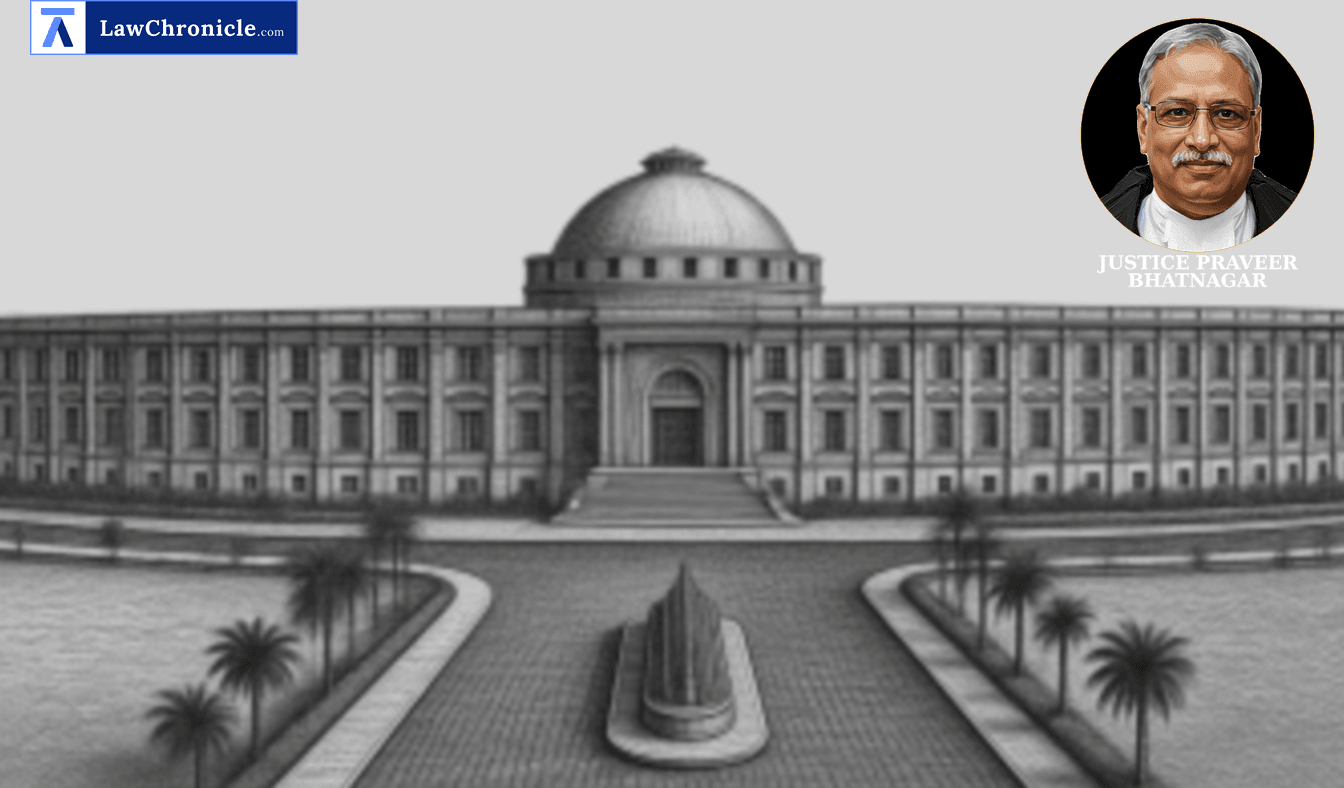
The Rajasthan High Court has reinforced the preventive power of Magistrates to attach disputed property and appoint a receiver even during pending revenue litigation, ruling that such measures are vital to avert breaches of peace when possession remains unclearly established. The Bench clarified that while civil proceedings are significant, they do not automatically oust criminal jurisdiction under Section 145 and 146 of the Code of Criminal Procedure, 1973 unless an effective protective order is already in place.
Justice Praveer Bhatnagar, presiding over the Single Bench, heard the challenge against an order by the Revisional Court which had reversed a Sub-Divisional Officer's decision. The Court delved into the delicate balance between civil property rights and the state's duty to maintain public order through preventive criminal law.
Key Takeaways
Preventive Nature Overrides Title
Magistrates can intervene to prevent physical confrontation regardless of who holds the ultimate legal title to a property.
Civil Pendency Limitation
Pending revenue or civil suits only bar Section 145 proceedings if an effective interim injunction or status quo order has already been granted by the civil court.
Possession Must Be Contemporary
Claims of past possession are insufficient; the court must assess the actual state of possession at the time of the dispute and the imminent threat of violence.
Receiver's Role as Custodian
Appointing a receiver is a neutral act intended to preserve the status quo and does not constitute a final adjudication of the parties' legal rights.
Magisterial Intervention in Property Disputes
The Rajasthan High Court emphasized that the objective of Sections 145 and 146 of the Code of Criminal Procedure, 1973 is strictly preventive. It noted that the mere existence of a long-standing dispute does not insulate parties from magisterial intervention if their conduct threatens public tranquility. It observed that "Sections 145 and 146 Cr.P.C. are preventive in nature and are intended to avert a breach of peace arising out of disputes concerning possession of immovable property. The object of these provisions is not to adjudicate upon the rights, title or ownership of the parties but to prevent a breach of peace by taking appropriate measures in cases where a dispute regarding actual possession exists and the circumstances warrant such intervention."
Addressing the interaction between criminal and civil jurisdictions, the Rajasthan High Court relied on the principles set by the Supreme Court in Amresh Tiwari v. Lalta Prasad Dubey ( "(2000) 4 SCC 440": 2000 CaseBase(SC) 1203). It noted that while Amresh Tiwari v. Lalta Prasad Dubey ( "(2000) 4 SCC 440": 2000 CaseBase(SC) 1203) generally discourages parallel criminal proceedings, it is not an absolute rule. Since no interim injunction was granted by the Revenue Court in the present case, the Magistrate's power to prevent a breach of peace remained intact.
Ratio
The pendency of a civil or revenue suit does not operate as a bar to the initiation or continuation of proceedings under Sections 145 and 146 of the Code of Criminal Procedure, 1973, in circumstances where no effective interim protection or injunction has been granted by the competent civil/revenue court and there exists a continuing dispute over possession with an imminent apprehension of a breach of peace.
Background
The litigation stemmed from a dispute over agricultural land in Village Jirod, Tehsil Atru. The Sub-Divisional Officer (SDO) had originally dismissed the proceedings under Section 145 and 146 of the Code of Criminal Procedure, 1973 on April 20, 2023, concluding that intervention was unnecessary. This was challenged by the respondents in the Revisional Court, which subsequently set aside the SDO's order and directed the appointment of a Receiver.
The petitioners argued before the Rajasthan High Court that they had been in possession of the land and cited Ramji Ram v. State of Rajasthan & Anr. and Munshi Ram v. State of Rajasthan to claim that the revisional court exceeded its jurisdiction. However, the Bench found that the Commission Report from the Halka Patwari indicated the petitioners' possession was not clearly established and that the land was recorded in the khatedari of the respondent. Given the history of forcible interference and prior preventive proceedings under Section 107 and 151 of the Code of Criminal Procedure, 1973, the Rajasthan High Court upheld the appointment of the Receiver to preserve the property.
Case Details:
Case No.: S.B. Criminal Revision Petition No. 2277/2025
Neutral Citation: 2026:RJ-JP:43948
Case Title: Mooli Bai & Ors. v. State of Rajasthan & Anr.
Appearances:
For the Petitioner(s): Mr. Raj Kamal Gaur, Mr. Pawan Sharma, Mr. V.K. Arya, Mr. Vishal Rai
For the Respondent(s): Mr. Jitendra Singh Rathore (PP), Dr. Mahesh Sharma with Mr. Ajay Kharbas
Source: 2026 CaseBase(RAJ) 30801
Similar Articles


 Breaking News


