


Lapse of 72 Hours Between 'Last Seen' and Death Fatal to Prosecution Case: Jharkhand HC
 Copy Link
 Share
 Save
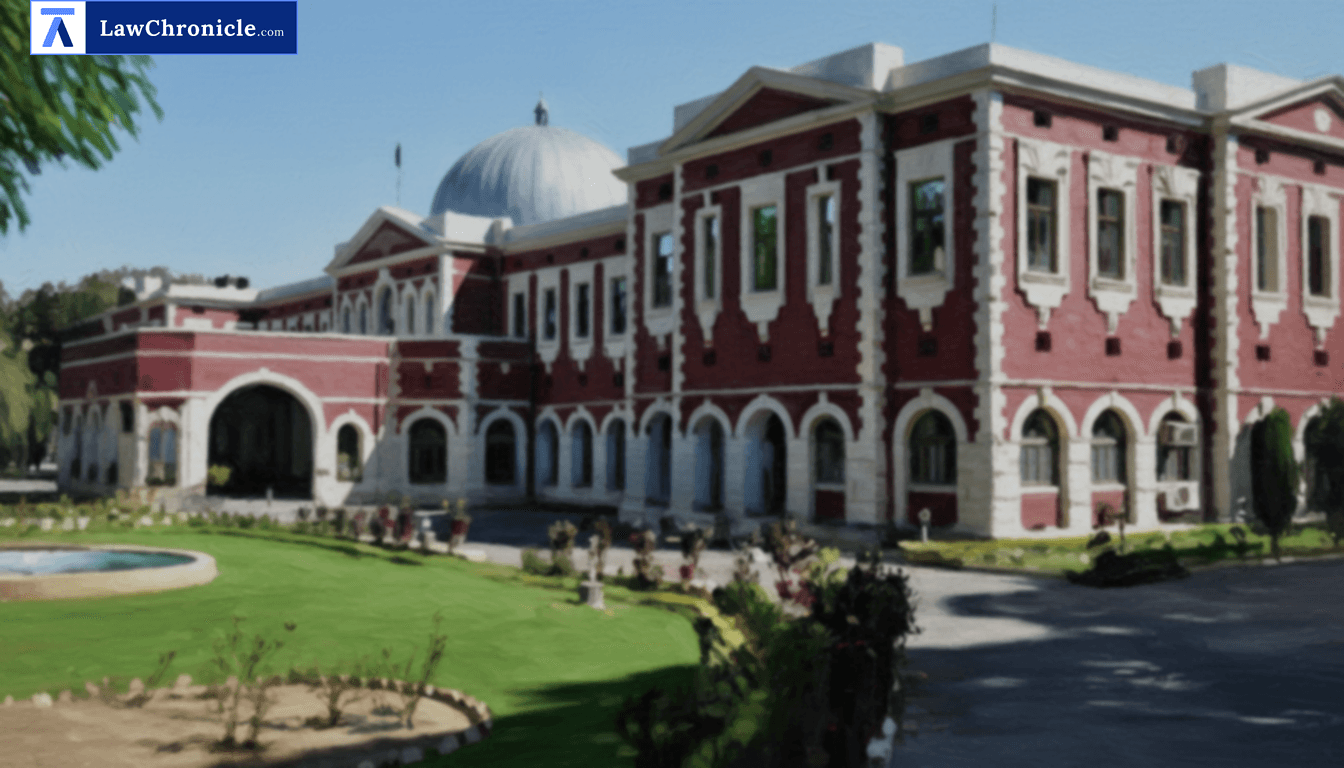
The Jharkhand High Court has reaffirmed that a significant time gap between the 'last seen' circumstance and the estimated time of death shatters the chain of events necessary for conviction in cases based on circumstantial evidence. The Court ruled that where two views are possible, the benefit of doubt must invariably accrue to the accused, especially when the prosecution fails to bridge the temporal gap in its narrative.
A Division Bench comprising Justice Ananda Sen and Justice Pradeep Kumar Srivastava dismissed an acquittal appeal, emphasizing that suspicion, however strong, cannot take the place of legal proof. The Court was hearing a challenge against a lower court's decision to acquit seven individuals accused of conspiracy and murder in a case where the deceased's body was recovered from a well days after he was allegedly seen with the respondents.
Key Takeaways
Temporal Gap in Last Seen Theory
An unexplained 72-hour gap between the deceased being last seen with the accused and the estimated time of death creates a fatal break in the prosecution's circumstantial chain.
Benefit of Doubt is Paramount
In criminal jurisprudence, if the evidence allows for two plausible interpretations one pointing to guilt and the other to innocence the view favourable to the accused must prevail.
Suspicion is Not Evidence
Motives based on alleged illicit relationships and conspiracies must be supported by substantive proof, as judicial decisions cannot be anchored solely on suspicion.
Post-Mortem Findings and Last Seen Discrepancies
When medical evidence regarding the time of death contradicts the immediacy required by the 'last seen' theory, the prosecution's case loses its judicial legs.
Analysis of Circumstantial Evidence and Prosecution Gaps
The Court noted that the entire case rested on circumstantial evidence and the 'last seen' theory. The prosecution alleged that the deceased was taken by the accused on February 12, 2020, but the post-mortem report suggested the death occurred much later. The Court observed that the prosecution failed to explain the activities or whereabouts of the parties during the intervening period.
The Court has the following directions:
"Accordingly, the instant Acquittal Appeal stands dismissed. Pending Interlocutory Application(s), if any, stand disposed of."
The Court, in its reasoning, observed: "Since this is a case based on circumstantial evidence thus we have to see the circumstances present in this case... There is time of 72 hours from the last seen together which has not been explained satisfactorily, though the dead body was found from the well but the death has not been caused by drowning. As per post-mortem report the death has occurred due to throttling which means the death has occurred sometime else and body was thrown in the well... the circumstances are too weak to convict the respondent nos. 2 to 7."
Ratio
In cases relying on circumstantial evidence, the 'last seen' theory can only form the basis of conviction if the time gap between the point when the accused and deceased were last seen together and the time of death is so small that it excludes the possibility of any other person meeting the deceased. Furthermore, when two views are possible on the evidence adduced, the view favourable to the accused should be adopted as a 'golden thread' of criminal justice administration.
Background
The dispute originated from an FIR lodged by the wife of the deceased, Pushpa Kumari, alleging that her husband, Lakshman Das, was taken by the accused on February 12, 2020, under the pretext of withdrawing money. It was alleged that the accused hatched a criminal conspiracy due to an illicit relationship between the deceased and a relative of the accused. The body was discovered in a well on February 17, 2020. The prosecution charged the respondents under Sections 363, 364, 302, 201, and 120B of the IPC.
The trial court, in its judgment dated April 20, 2023, acquitted the respondents citing discrepancies in the evidence. On appeal, the High Court analyzed the testimony of nine prosecution witnesses and the post-mortem report prepared by PW-6. The Court relied on Shivaji Chintappa Patil vs. State of Maharashtra ( "(2021) 5 SCC 626": 2021 CaseBase(SC) 1560) and Devi Lal v. State of Rajasthan ( "(2019) 19 SCC 447": 2019 CaseBase(SC) 3340) to reiterate the standards required for circumstantial evidence. Finding that the prosecution failed to meet these standards, the High Court upheld the acquittal.
Case Details:
Case No.: Acquittal Appeal (DB) No. 61 of 2023
Neutral Citation: 2026:JHHC:30597-DB
Case Title: Pushpa Kumari v. The State of Jharkhand & Ors.
Appearances:
For the Petitioner(s): Mr. Ram Lakhan Yadav, Advocate; Ms. Savita Kumari, Advocate
For the Respondent(s): Mr. Shailendra Kumar Tiwari, Spl.P.P. (for State); Mr. Shekhar Prasad Sinha, Advocate (for Resp. Nos. 3, 5, 6 & 7)
Source: 2026 CaseBase(JHKD) 3197
Similar Articles
 Breaking News


