


Lapse of Time Barring Amendment: Calcutta HC Rejects Post-Trial Plaint Modification
 Copy Link
 Share
 Save
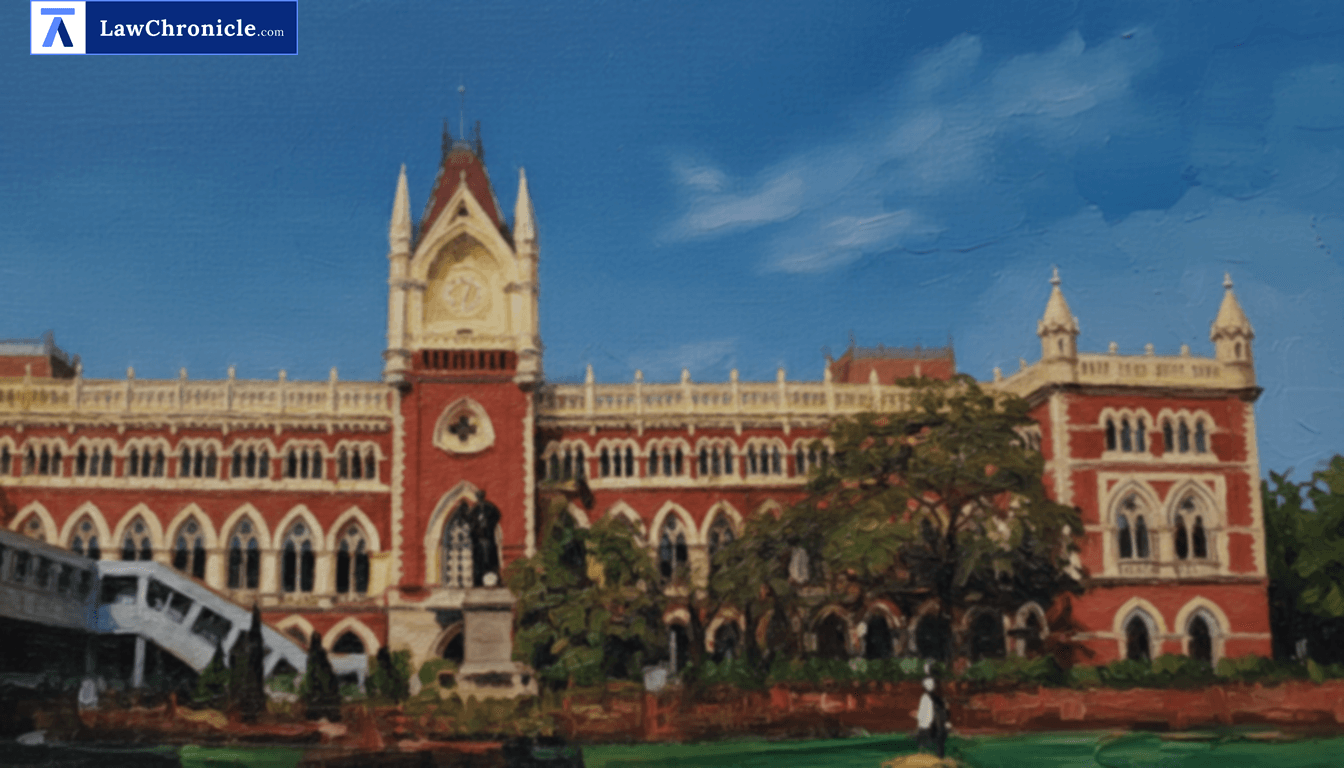
Belated attempts to amend pleadings after a trial has substantially progressed cannot be permitted if they jeopardize rights accrued to the opposing party through the lapse of time. Justice Rai Chattopadhyay of the Calcutta High Court has set aside a trial court order allowing a four-year-delayed amendment, ruling that litigants cannot act as 'fence-sitters' while evidence is being recorded.
In a revision petition challenging the order of the Civil Judge (Junior Division), Berhampore, a Single Bench of Justice Rai Chattopadhyay scrutinized the procedural delays in Partition Suit No. 13 of 2018. The petitioners, who were the defendants in the original suit, contested the trial court's decision to allow the plaintiffs to amend their plaint to challenge a gift deed four years after the deed was first disclosed in the written statement.
Key Takeaways
Diligence Requirement for Amendments
Amendments post-commencement of trial are strictly governed by the proviso to Order VI Rule 17, requiring a demonstration of due diligence that was found lacking in this instance.
Preservation of Accrued Rights
Courts will not permit amendments that frustrate or jeopardize legal rights that have accrued to the opposite party due to the passage of time and the collection of evidence.
Prevention of New Causes of Action
While procedural rules are flexible, they cannot be used to introduce a completely new cause of action or 'new set of ideas' that contradicts the original basis of the litigation.
Due Diligence and the Proviso to Order VI Rule 17
The Court observed that the plaintiffs were aware of the gift deed since 2019, yet they continued to participate in the trial and record evidence without seeking any amendment until 2023. The Court emphasized that Section 17 of the Code of Civil Procedure, 1908 contains a specific proviso limiting amendments after the trial has commenced unless 'due diligence' is proven.
The Court, in its reasoning, observed: "The proposed amendment of the plaintiff/opposite party, after lapse of about four years from the initiation of the suit by him and after conclusion of the proceeding to a substantial extent, amounts to be de hors the said settled principles of law concerning amendment of pleading... The opposite party/plaintiff rather appears to be a fence sitter for a prolonged period of time and, therefore, cannot at this stage be granted opportunity to frustrate the accrued right of the petitioners/defendants on the basis of the pleadings and evidence collected in the case so far."
Applying Judicial Precedents on Pleading Amendments
The Bench relied on Life Insurance Corporation of India versus Sanjeev Builders Private Limited and another ( "(2022) 16 SCC 1": 2022 CaseBase(SC) 652) to highlight that amendments should generally be allowed for determining real controversies, but not if they introduce a new cause of action or result in defeating a legal right. The Court noted that the principles in Smt. Dipti Paik and others versus Sri Jogesh Chandra Roy and others were directly applicable, as the proposed amendment sought to introduce a new set of ideas to the prejudice of the defendants. Furthermore, the Court cited Radhika Devi versus Bajrangi Singh and others ( "1996 7 SCC 486": 1996 CaseBase(SC) 1184) to reinforce the stance that amendments should not be granted except in exceptional cases to preserve accrued rights.
The Court has the following directions:
"i) Impugned order dated March 18, 2025 passed by Civil Judge (Junior Division), Additional Court, Berhampore, Murshidabad in Partition Suit No. 13 of 2018 is set aside.
ii) Let the learned Trial Court proceed with trial of the suit as expeditiously as possible and pass its judgment on the pleadings and evidence collected."
Ratio
Amendments to pleadings under Order VI Rule 17 of the Code of Civil Procedure, 1908 are prohibited after the commencement of trial if the party failed to exercise due diligence or if the amendment seeks to alter the nature of the suit or defeat rights accrued to the opposing party due to significant delay and progress in the trial.
Background
The dispute originated from a partition suit filed in 2018. In 2019, the defendants filed a written statement asserting their title via a 1976 gift deed. Despite receiving this statement, the plaintiffs waited until September 2023 to file an application for amendment to challenge the validity of said deed. The trial court allowed the amendment in March 2025, which led the defendants to move the High Court in revision. The High Court found that the trial court's order suffered from gross illegality and non-application of mind regarding the timeline of the proceedings.
Case Details:
Case No.: C.O. 3542 of 2025
Case Title: Keshab Malakar & Anr. Versus Kanai Malakar & Ors.
Appearances:
For the Petitioner(s): Mr. Shibasis Chatterjee, Mr. Sandip Kundu, Mr. R. Bose
For the Respondent(s): Mr. Rishab Ahmed Khan, Mr. Muskan Jalan, Mr. Aritra Ghosh
Source: 2026 CaseBase(CAL) 2914
Similar Articles

 Breaking News


