


Lapse of Time Extinguishes Right: HP HC Refuses to Resurrect Dead Claims
 Copy Link
 Share
 Save
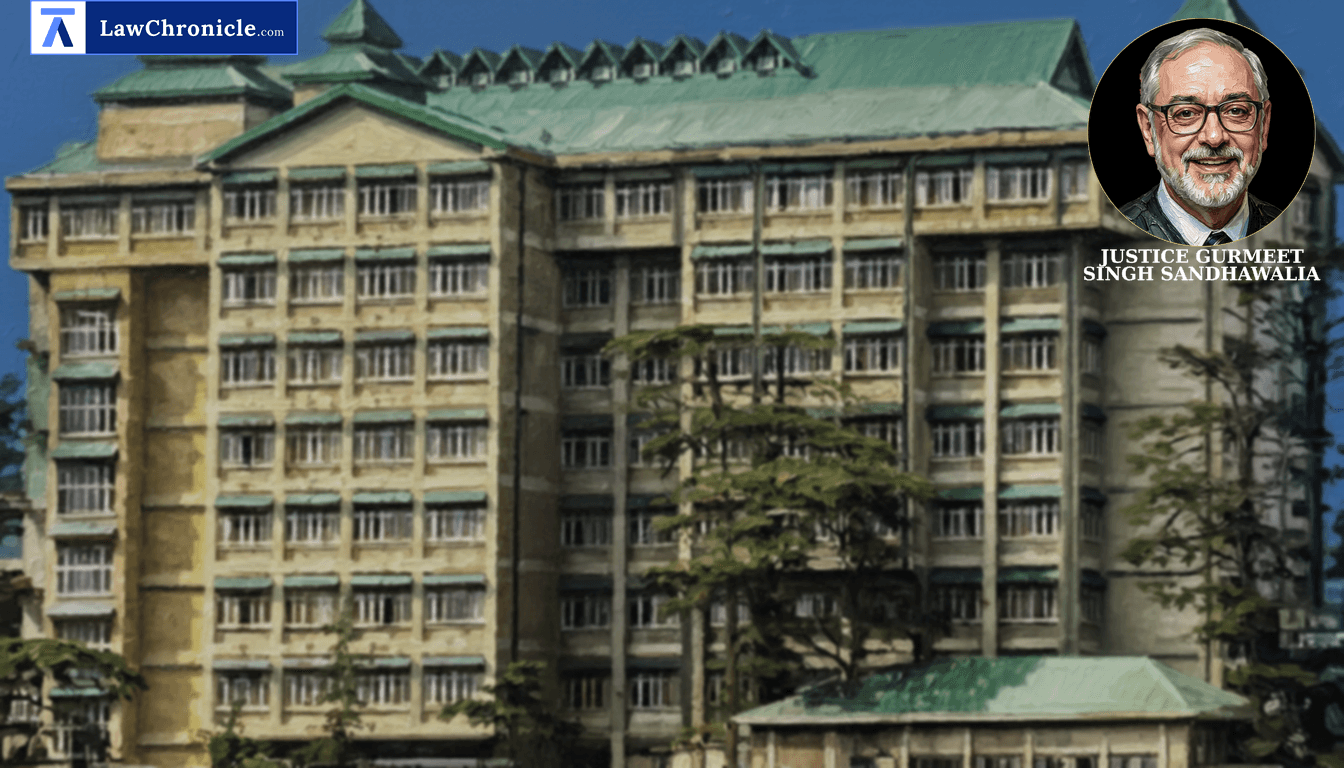
The Himachal Pradesh High Court has reinforced the principle that mere inter-se correspondence and repeated representations cannot resurrect a 'dead' cause of action for the purpose of invoking arbitration. In a decisive ruling, the Court held that once the limitation period of three years expires following the 'breaking point' of a dispute, parties cannot revive their claims through unilateral notices or subsequent administrative inquiries.
A Single Judge Bench comprising Chief Justice G.S. Sandhawalia adjudicated on whether a contractor could seek the appointment of an arbitrator nearly a decade after receiving the final payment for a construction project. The petitioner sought the court's intervention for a work contract awarded in 2000, where the final payment was settled in 2015.
Key Takeaways
Limitation Beyond Negotiations
Statutory limitation periods cannot be defeated or extended merely because parties are engaged in long-term negotiations or discussions.
The 'Breaking Point' Doctrine
Cause of action arises at the specific 'breaking point' such as the date of final payment or bank guarantee encashment marking the commencement of the limitation clock.
Representations Do Not Revive Claims
Filing representations or seeking administrative relief does not create a fresh cause of action once a legal right has been extinguished by the lapse of time.
Weeding Out Stale Disputes
Courts are duty-bound to weed out stale and dead claims to maintain the integrity of the Arbitration and Conciliation Act, 1996 and prevent judicial overreach in expired disputes.
Court Observations on 'Dead' Causes of Action
The Court noted that the petitioner remained inactive for significant periods and failed to take positive steps to invoke the arbitration clause immediately after the dispute arose. It emphasized that serving a notice under Section 21 of the Arbitration and Conciliation Act, 1996 years after the fact cannot breathe life into a claim already barred by law.
The Court, in its reasoning, observed: "The Apex Court has time and again held that dead causes must be weeded out, and old, stale claims cannot be permitted or agitated merely on account of filing representations... It is not open to a party to sit tight and not file an application for settlement of a dispute within the time prescribed by the Limitation Act and allow his right to be extinguished by the lapse of time and thereafter to assert a cause of action to file an application under Section 11 of the Act for establishment of his right, which is not alive."
Referring to the precedent in M/s B and T AG Vs. Ministry of Defence, the Court reiterated that the "Breaking Point" should be treated as the date on which the cause of action arose for the purpose of limitation. It further relied on Bharat Sanchar Nigam Limited and Another Vs. M/s. Nortel Networks India Private Limited ( "(2021) 5 SCC 738": 2021 CaseBase(SC) 783) to highlight that stale claims must be filtered out at the referral stage itself.
The Court has the following directions:
"Resultantly, the present petition is dismissed on the grounds of delay and laches. Pending miscellaneous application(s), if any, shall also stand disposed of."
Ratio
A party cannot extend the statutory limitation period of three years for filing an application under Section 11 of the Arbitration and Conciliation Act, 1996 by relying on inter-se correspondence or representations. The cause of action is fixed at the 'breaking point' of the dispute, and any claim brought after the expiry of the limitation period following such point is a 'dead claim' that cannot be revived through the service of a Section 21 notice.
Background
The dispute originated from a contract awarded to the petitioner on June 23, 2000, for the construction of Type-II quarters in Shimla. Although the project was to be completed in nine months, it was finished on June 15, 2006. The petitioner received the final payment of Rs. 3,94,522/- from the Himachal Pradesh State Electricity Board Limited (HPSEBL) on December 27, 2015.
Following the payment, the petitioner exchanged various communications with the respondents regarding balance payments and price escalation in 2017 and 2018. However, it was only on July 1, 2022, that the petitioner issued a notice for the appointment of a sole arbitrator, eventually filing the petition under Section 11(6) of the Arbitration and Conciliation Act, 1996 in June 2025.
The respondents argued that the claim was barred by limitation, citing Bharat Sanchar Nigam Limited and Another Vs. M/s. Nortel Networks India Private Limited ( "(2021) 5 SCC 738": 2021 CaseBase(SC) 783) and State of Himachal Pradesh & Another Vs. M/s Himachal Techno Engineers & Another ( "(2010) 12 SCC 210": 2010 CaseBase(SC) 405). They contended that since the final bill was paid without protest in 2015, no further claim survived, placing reliance on the principle in M/s Pandit Munshi Ram & Associates Vs. Delhi Development Authority. The Court agreed with this contention, noting that the petitioner's failure to serve a notice within three years of the final payment was fatal to the petition.
Case Details:
Case No.: Arb. Case No.197 of 2025
Neutral Citation: 2026:HHC:47539
Case Title: Girish Gupta Versus HPSEBL and Others
Appearances:
For the Petitioner(s): Mr. Rakesh Manta and Mr. Aryan Manta, Advocates.
For the Respondent(s): Mr. Sourabh Chand, Advocate, for Ms. Vandana Misra, Advocate.
Source: 2026 CaseBase(HP) 11153
Similar Articles


 Breaking News


