


Legal Heirs Cannot Claim Personal Property Exemption Under CPC: SC
 Copy Link
 Share
 Save
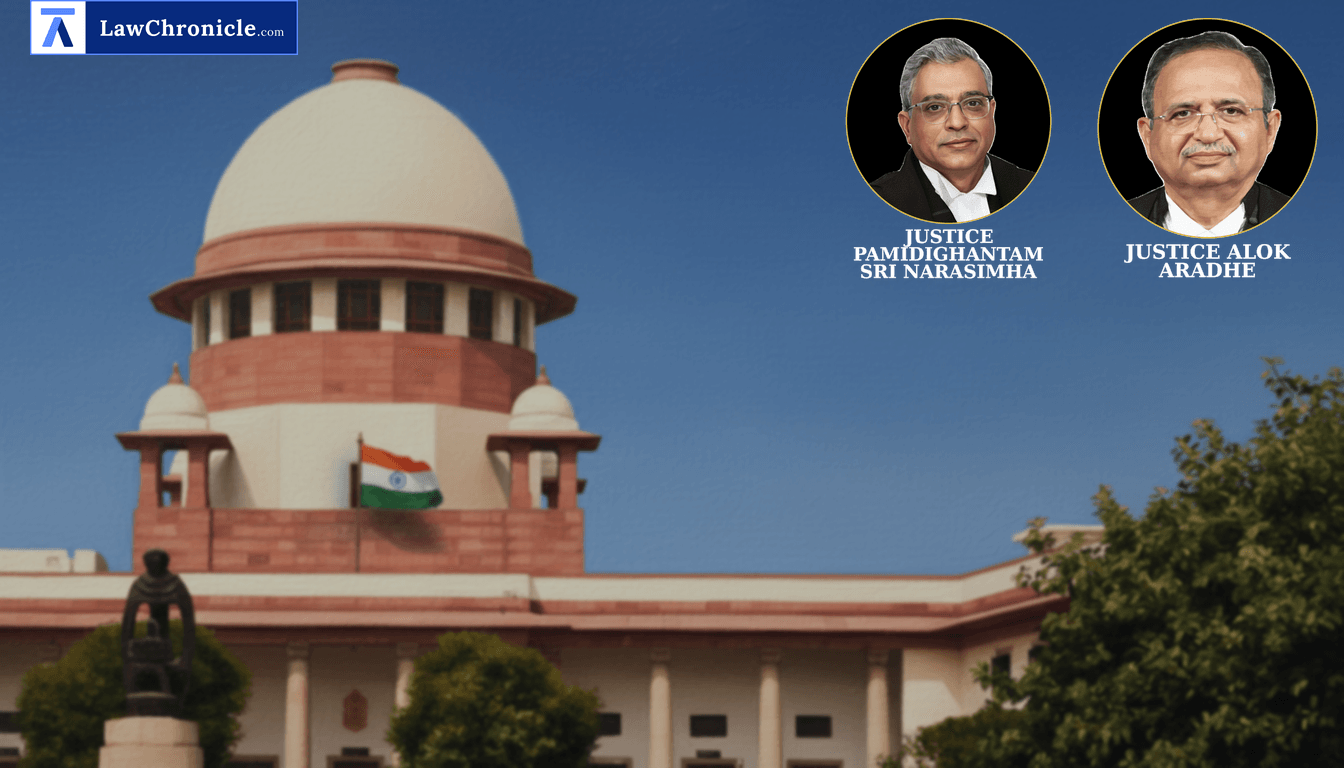
The Supreme Court has held that the statutory protection against attachment of a primary residential house under civil law is strictly personal to a judgment-debtor and cannot be inherited by legal heirs. Deciding a long-standing execution dispute, the apex court affirmed that special recovery frameworks override general procedural codes, safeguarding the rights of bona fide auction purchasers.
In a benchmark ruling, a bench comprising Justice Pamidighantam Sri Narasimha and Justice Alok Aradhe resolved a batch of civil appeals challenging a decision of the High Court of Madhya Pradesh. The primary controversy centered on whether legal representatives could claim residential property exemptions from attachment and whether procedural omissions under execution laws invalidated a finalized court auction.
Key Takeaways
Exemption Is Personal: Statutory protection under residential property exemption clauses is strictly personal to the judgment-debtor and does not devolve upon legal heirs.
Special Enactments Prevail: Proceedings under recovery laws like the Recovery Of Debts And Bankruptcy Act, 1993 override general provisions of the Code of Civil Procedure, 1908.
Procedural Defects Irregular: Absence of initial execution notice is a mere procedural irregularity when the party otherwise possesses full knowledge and participates in proceedings.
Strict Rules for Auction Challenges: Debtors cannot challenge confirmed execution sales without satisfying statutory deposit requirements and showing substantial injury.
Court's Observations and Directions
The Supreme Court observed that the Recovery Of Debts And Bankruptcy Act, 1993 provides a specialized, self-contained mechanism for debt recovery, superseding the procedure under the Code of Civil Procedure, 1908. Evaluating the impact of missing execution notices, the court noted that the legal representatives had active knowledge of the execution proceedings and filed multiple objections, thereby negating any claim of prejudice.
Addressing the statutory protection claimed for the residential property, the Court, in its reasoning, observed: "...Section 60(1)(ccc) of the Code in its application to Delhi exempts attachment and sale of one main residential house belonging to judgment-debtor other than an agriculturist and occupied by him the protection is by its own text personal to the judgment debtor as it is confined to a house belonging to and occupied by the judgment debtor and this protection does not extend to legal representatives of judgment debtor."
The Court noted that local amendments extending residential exemptions have consistently been interpreted as personal rights. Paraphrasing judicial precedents including Yogesh Sharma v. Devi Dayal & Ors., Yogesh Sharma & Ors. v. Devi Dayal & Ors., K.L. Bawa v. Basant Textiles, and Pargat Singh & Anr. v. Gurmail Kaur & Ors., the bench confirmed that a legal representative cannot claim personal exemption merely by residing in the deceased judgment-debtor's property.
Regarding the procedural validity of auction sales, the Court referred to the principles under Income-Tax (Certificate Proceedings) Rules, 1962 and precedents like Satyanarain Bajoria & Anr. v. Ramnarain Tiberwal & Anr. ( "(1993) 4 SCC 414": 1993 CaseBase(SC) 742), Bharat Kantilal Dalal (Dead) through LR v. Chetan Surendra Dalal & Ors., Rahul S. Shah v. Jinendra Kumar Gandhi & Ors. ( "(2021) 6 SCC 418": 2021 CaseBase(SC) 866), and Barkat Ali & Anr. v. Badrinarain (Dead) by LRs.. The Court issued the following directions:
"For the foregoing reasons, the impugned judgment dated 15.05.2009 passed by the High Court of Madhya Pradesh at Jabalpur in Writ Petition No. 2199 of 2008 is quashed and set aside. In the result, C.A. No. 182 of 2016 and C.A. No. 190 of 2016 are allowed whereas C.A. No. 191 of 2016 is dismissed. However, there shall be no order as to costs."
Ratio
The statutory protection against attachment and sale of a main residential house provided under Section 60(1)(ccc) of the Code of Civil Procedure, 1908 is a personal privilege limited exclusively to the judgment-debtor. This statutory exemption does not extend to or devolve upon the legal representatives of the judgment-debtor. Furthermore, execution proceedings conducted by a Recovery Officer under the Recovery Of Debts And Bankruptcy Act, 1993 read with the Second Schedule to the Income Tax Act, 1961 operate in supersession of Civil Procedure Code execution provisions, and non-service of initial notice constitutes a mere irregularity unless substantial injury is established.
Background
The case originated from credit facilities availed by a private company from Punjab & Sind Bank, secured by factory assets and personal guarantees of its directors. Following defaults, a compromise decree was passed in 1991 by the District Court, Morena, requiring third-party investors to repay the debt in instalments. The compromise decree explicitly stipulated that while title deeds of a residential property in Delhi belonging to a director would be released, his personal liability remained intact.
Upon default in paying instalments and the subsequent death of the director, the bank initiated execution proceedings against his legal representatives, including his widow and son. The execution case was eventually transferred to the DRT, Jabalpur under Section 31 of the Recovery Of Debts And Bankruptcy Act, 1993. The Recovery Officer ordered the auction of the Delhi property, which was purchased by an auction-purchaser in 2006.
The widow challenged the auction orders, contending that no notice under Order XXI Rule 22 of the Code of Civil Procedure, 1908 or Rule 2 of the Second Schedule to the Income Tax Act, 1961 was served, and claimed exemption under Section 60(1)(ccc) of the Code of Civil Procedure, 1908 as amended by the Punjab Relief Of Indebtedness Act, 1934. The DRAT rejected the widow's appeal, but the High Court remitted the matter back to the DRT for a fresh inquiry into prejudice and exemption.
Reversing the High Court's order, the Supreme Court restored the DRAT's judgment, upholding the validity of the auction sale in favor of the auction-purchaser.
Case Details:
Case No.: Civil Appeal No. 182 of 2016 (With C.A. No. 190 of 2016 and C.A. No. 191 of 2016)
Neutral Citation: 2026 INSC 863
Case Title: Sheela Gehlot v. Mohini Hardayal Singh & Ors.
Appearances:
For the Petitioner(s): Dr. A.M. Singhvi, Sr. Adv., Mr. D.N. Goburdhun, Sr. Adv., Mr. Rajiv Shakdher, Sr. Adv.
For the Respondent(s): Mr. Shekhar Naphde, Sr. Adv.
Source: 2026 CaseBase(SC) 792
Similar Articles



 Breaking News


