


Madhya Pradesh HC Reopens Corruption Case Despite Trial Court Acquittal
 Copy Link
 Share
 Save
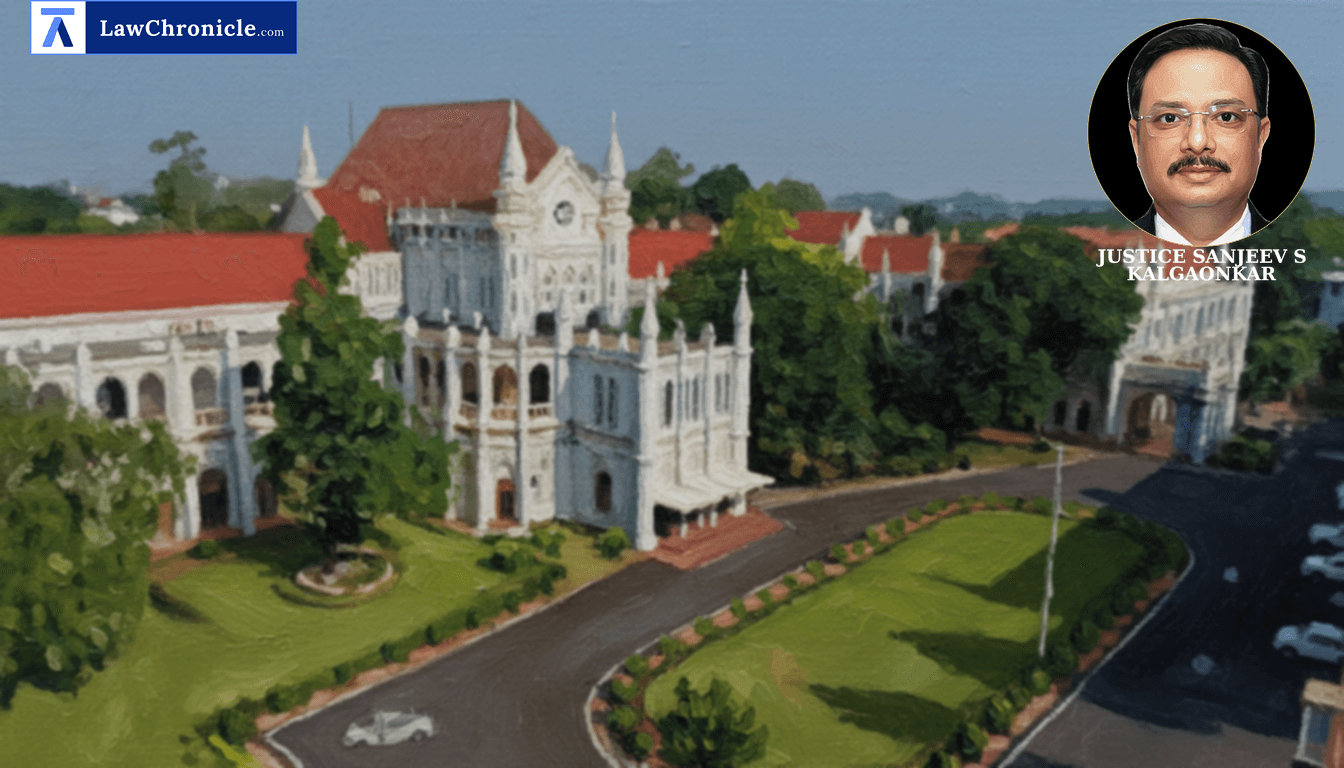
The High Court of Madhya Pradesh has paved the way for a deeper scrutiny of corruption charges against a public official, ruling that the existence of phenolphthalein traces and recorded bribe demands constitute a prima facie case that cannot be summarily brushed aside. By granting leave to appeal against an acquittal, the Court underscored that evidence of conscious acceptance of illegal gratification creates an arguable case for reappreciation at the appellate stage.
Justice Sanjeev S Kalgaonkar, presiding over the matter, evaluated the State's application for leave to appeal against a judgment delivered by the Special Judge, Prevention of Corruption Act, 1988, Sagar. The case involved an appeal against the acquittal of a Sahayak Samiti Prabandhak who was accused of demanding a bribe for processing an insurance claim related to crop damage.
Key Takeaways
Prima Facie Threshold for Leave to Appeal
The Court clarified that at the stage of granting leave to appeal under Section 378(3) of Cr.P.C., it need not finally determine guilt but only verify if the case warrants deeper scrutiny.
Impact of Circumstantial Evidence
Proof of recovery of tainted notes and presence of chemical traces on the accused's person serve as foundational facts that necessitate an explanation from the defense.
Rebuttable Legal Presumptions
Once foundational facts of demand or acceptance are established, the Court is under a legal obligation to consider statutory presumptions regarding illegal gratification.
Human Fallibility in Judgments
Applying the doctrine that 'Judges are also men,' the Court emphasized that a full-scale re-examination of facts and law is an integral part of fundamental fairness in the criminal justice system.
Court Reaffirms Standards for Appellate Review of Acquittals
In analyzing the principles governing appeals against acquittal, the Court relied on State of Maharashtra v. Sujay Mangesh Poyarekar ( "(2008) 9 SCC 475": 2008 CaseBase(SC) 763), noting that while there is a double presumption of innocence, the High Court has full power to review, reappreciate, and reconsider the evidence. The Court highlighted that the appellate court must grant leave if arguable points are raised that require a review of the evidence.
The Court further integrated the findings of Hazari Lal Vs. State (Delhi Administration) and N. Narsinga Rao Vs. State of Andhra Pradesh ( "(2001) 1 SCC 691": 2000 CaseBase(SC) 217), observing that it is not always necessary to prove the passing of money by direct evidence; rather, factual presumptions can be drawn from the circumstances preceding and succeeding the discovery of tainted currency. The Court also noted the Constitution Bench decision in Neeraj Dutta Vs. State (NCT of Delhi), which held that in the absence of direct evidence from a complainant, inferential deductions of guilt are permissible based on other evidence.
The Court, in its reasoning, observed: "At the stage of considering leave to appeal, the Court is not required to finally determine the guilt of the accused or the correctness of the acquittal. It is to be ascertained whether the material on record raises a prima facie and arguable case warranting deeper scrutiny. The demand and acceptance of illegal gratification, are foundational facts in issue and may be proved by direct or circumstantial evidence. The tainted currency notes were recovered from the accused immediately after the trap and traces of phenolphthalein were found on his hands and pocket of the full-paint of the accused."
The Court has following directions:
"The Registry is directed to convert the M.Cr.C. into regular Criminal Appeal and register the same accordingly. A copy of this order be kept on record of appeal. Being arguable, the appeal is admitted for final hearing."
Ratio
In an application for leave to appeal against acquittal under Section 378(3) of the Cr.P.C., the High Court is only required to determine if the record discloses a prima facie case or arguable points for deeper scrutiny; once foundational facts such as recovery of tainted notes and chemical traces are established, a case for reappreciation of evidence is made out regardless of the trial court's findings on minor inconsistencies.
Background
The dispute originated from a complaint by Lakhan Lal Sahu, who alleged that the respondent, Umashankar Khare, demanded a bribe of Rs. 5,000 for approving an insurance claim for crop loss. A trap was laid by the Special Police Establishment, Lokayukt, during which phenolphthalein-coated notes were allegedly recovered from the accused. Although the trial court acquitted the accused citing inconsistencies in prosecution evidence and a possible defense regarding a dispute over grain weighing, the State challenged this, arguing that the voluntary acceptance and chemical traces were sufficient for conviction.
The High Court concluded that the circumstances disclosed material evidence that could not be discarded without closer scrutiny. Consequently, the application for leave to appeal was allowed, and the matter was set for a final hearing in December 2026.
Case Details:
Case No.: MCRC-21195-2019
Neutral Citation: 2026:MPHC-JBP:67213
Case Title: The State of Madhya Pradesh Versus Umashankar Khare
Appearances:
For the Petitioner(s): Shri Abhinav Shrivastava - Advocate
For the Respondent(s): Shri Dilip Kumar Shrivastava - Advocate
Source: 2026 CaseBase(MP) 26540
Similar Articles
 Breaking News


