


Hostile Witness Does Not Equal Automatic Acquittal: Karnataka HC
 Copy Link
 Share
 Save
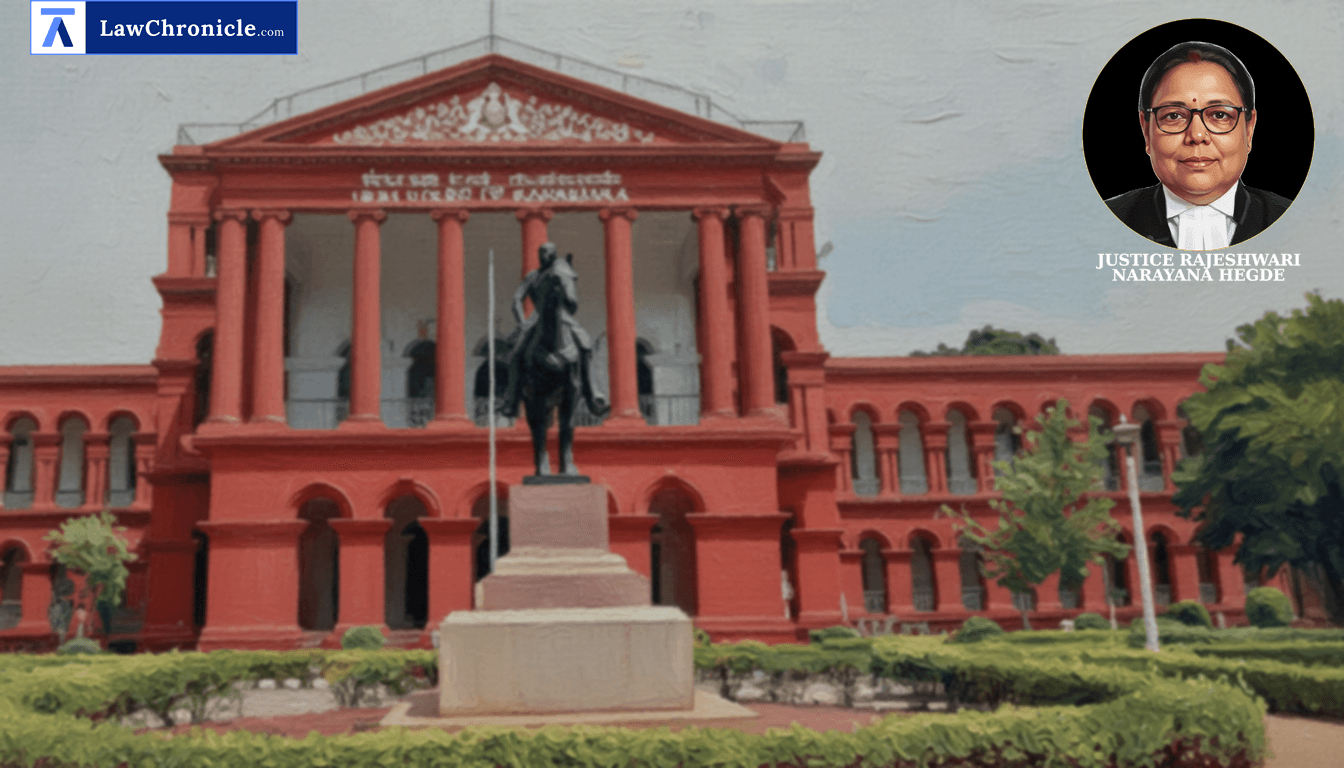
The Karnataka High Court has clarified that a prosecution case under corruption laws does not collapse solely because a complainant turns hostile, provided other evidence maintains a degree of creditworthiness to establish guilt. However, the Court underscored that the appellate power to overturn an acquittal must be exercised with extreme restraint, particularly where two reasonable views exist and the investigation suffers from linguistic and procedural gaps.
Justice Rajeshwari N. Hegde presided over an appeal by the Lokayukta Police challenging a 2018 acquittal of a Senior Work Inspector accused of demanding illegal gratification. While the prosecution argued that the recovery of tainted currency and voice recordings were sufficient for conviction despite the complainant’s flip-flop, the Court found the underlying evidence riddled with discrepancies, including a shadow witness who could not understand the language of the incriminating recordings.
Key Takeaways
Hostile Witness Rationale
The testimony of a witness declared 'hostile' is not automatically discarded and can sustain a conviction if corroborated by other reliable evidence and circumstances.
Double Presumption of Innocence
An order of acquittal reinforces the initial presumption of innocence, and appellate courts should only interfere if the trial court's view is perverse or ignores material evidence.
Corroborative Linguistic Accuracy
Evidence such as voice recordings and transcripts loses creditworthiness if the shadow witness overseeing the trap does not understand the language in which the alleged bribe demand was made.
Rebuttable Explanations
A plausible explanation by the accused for the possession of tainted money, such as reimbursement for official repair materials, can effectively rebut the statutory presumption of corruption.
Admissibility of Evidence from Hostile Witnesses
The appellant-State contended that the Special Court erred by dismissing the entire case based solely on the complainant's hostility. The Lokayukta argued that under the principles of Neeraj Dutta vs. State (Government of NCT of Delhi), the evidence of the shadow witness and the Investigating Officer, coupled with the chemical analysis, should have sufficed. The Court noted that while Neeraj Dutta vs. State (Government of NCT of Delhi) allows for conviction based on other creditworthy witnesses, the specific facts of this case did not meet that threshold.
The Court, in its reasoning, observed: "Even if a witness is treated as ‘hostile’ and is cross examined, his evidence cannot be written off altogether but must be considered with due care and circumspection and that part of the testimony which is creditworthy must be considered and acted upon... the fact that a witness has been declared ‘hostile’ does not result in an automatic rejection of his evidence."
Critical Discrepancies in Lokayukta Investigation
The High Court highlighted significant flaws in the trap proceedings. Specifically, the shadow witness (PW1) admitted to not knowing the Telugu language, yet the recorded conversation and transcripts (Ex.P14 and Ex.P37) containing the alleged demand were in Telugu. The Court found it improbable that the witness could verify the contents of the demand. Furthermore, the complainant (PW2) alleged that the tainted money was actually provided by the Investigating Officer himself, rather than being produced by the complainant.
Court Directions
The Court has following directions:
"The appeal is dismissed. The impugned judgment of acquittal dated 30.07.2018, passed by the learned Principal District and Sessions Judge and Special Judge, Ballari, in Special Case No.89/2014, is confirmed. Bail bond and surety bond executed by the accused and the surety stands discharged. Return the Trial Court Records."
Ratio
The appellate court shall not disturb a finding of acquittal if two reasonable conclusions are possible based on the evidence. While the hostility of a complainant does not bar a conviction, the prosecution must still prove the demand and acceptance of illegal gratification beyond reasonable doubt through creditworthy corroboration. Linguistic inability of a shadow witness to understand the trap conversation and a plausible alternative explanation for the recovery of funds (rebutting the presumption under Section 20 of the Prevention of Corruption Act, 1988) are valid grounds for acquittal.
Background
The case originated in 2013 when a house owner alleged that a Work Inspector of the City Municipal Council, Ballari, demanded ₹7,000 (later reduced to ₹3,000) for restoring a disconnected water connection. A trap was laid by the Lokayukta Police under Section 7 and Section 13(1)(d) of the Prevention of Corruption Act, 1988. During the trial, the complainant turned hostile, claiming the money was paid for pipeline repair materials. The Special Court acquitted the accused in 2018. On appeal, the High Court analyzed Section 378 of the Criminal Procedure Code, 1973 and the precedent in P.Somaraju vs. State of Andhra Pradesh ( "2025 SCC Online SC 2291": 2025 CaseBase(SC) 1101) regarding the limited scope of interference in acquittals. Finding no perversity in the lower court's reasoning, the High Court upheld the acquittal.
Case Details:
Case No.: CRIMINAL APPEAL NO.100291 OF 2019
Case Title: The State Of Karnataka V. N.T. Anjinappa
Appearances:
For the Petitioner(s): SRI ANIL KALE, ADVOCATE
For the Respondent(s): SRI NEELENDRA D. GUNDE, FOR SRI DAYANAND M. BANDI, ADVOCATE
Source: 2026 CaseBase(KAR) 21688
Similar Articles

 Breaking News


