


Madras HC Orders Re-Post-Mortem of Dowry Death Victim Amid Scientific Inconsistencies
 Copy Link
 Share
 Save
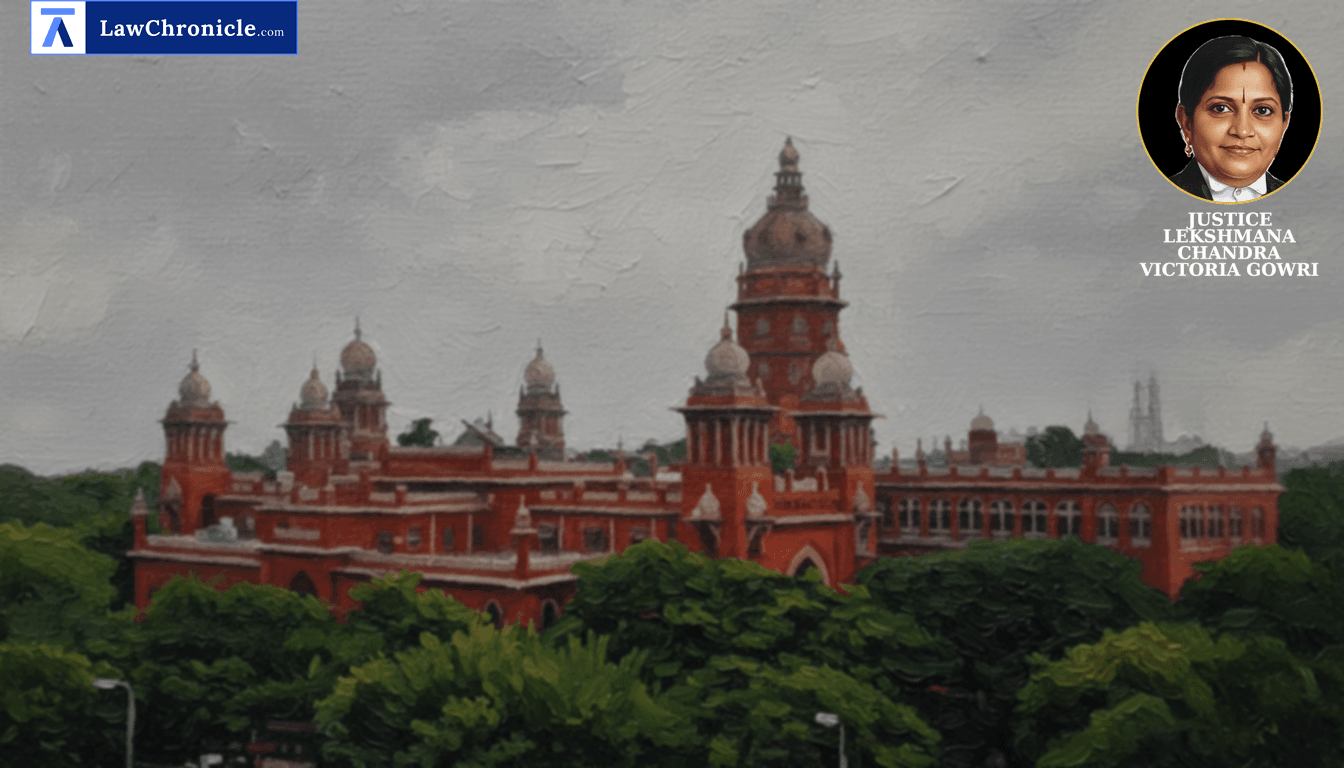
In a decisive intervention to protect the integrity of forensic evidence in dowry death cases, the Madras High Court has ordered an immediate re-post-mortem of a young woman's body after an independent report exposed alarming discrepancies in the initial autopsy. The Court underscored that in cases of suspicious death, the body serves as the 'most truthful witness,' necessitating a scientifically credible process to ensure that the search for truth is not compromised by procedural lapses.
Justice L. Victoria Gowri, presiding over the Madurai Bench, passed these directions while hearing a writ petition filed by the mother of the deceased under Constitution of India, 1950. The Court scrutinized the suspicious circumstances surrounding the death of Mrs. Afrin, who died within five months of marriage amid allegations of dowry harassment, and found that the conflict between the initial medical findings and an independent review warranted the constitution of a neutral multidisciplinary Medical Board.
Judicial Securing of Forensic Evidence
The Court observed that the statutory responsibility of the State becomes grave when a young woman dies within her matrimonial home shortly after marriage. While the State defended the first autopsy, the Court highlighted that the immediate issue was to protect the integrity of the evidence. The Court, in its reasoning, observed: "Its constitutional duty is to ensure that the process of discovering the truth is fair, independent, scientifically credible and free from avoidable suspicion. The immediate issue is whether the contradictions and procedural deficiencies disclosed by the materials warrant immediate preservation and judicial securing of all medical, electronic and forensic evidence; constitution of an independent Medical Board; and a re-post-mortem examination of the body."
Directives for Independent Investigation
The Court has the following directions:
"i. The Director General of Police, Tamil Nadu, shall constitute within forty-eight hours a Special Investigation Team headed by an officer not below the rank of Superintendent of Police from CBCID or another specialised unit unconnected with Sivagangai District.
ii. The SIT shall take over the investigation in Crime No.145 of 2026 forthwith.
iii. The seventh respondent shall hand over the complete investigation records, material objects, digital evidence, medical records and biological samples under a detailed inventory.
iv. The Director of Medical Education and Research shall constitute the neutral multidisciplinary Medical Board described in paragraph 78 of this order within twenty-four hours.
v. No doctor connected with the first autopsy or the earlier independent review shall be appointed as a member of the Board.
vi. The body of Mrs. Afrin shall continue to remain in uninterrupted mortuary cold storage at the Government Medical College Hospital, Pudukkottai, until it is formally handed over to the neutral Medical Board.
vii. The eighth respondent shall ensure uninterrupted electricity supply, functional backup power and continuous temperature monitoring of the cold-storage chamber.
viii. The temperature log, cold-storage entry register and access register from the date of receipt of the body until its release shall be preserved and produced before the SIT.
ix. No person other than an authorised medical officer, mortuary employee or investigating officer shall be permitted access to the body pending re-post-mortem.
x. The neutral Medical Board shall take custody of the body and commence the re-post-mortem examination within forty-eight hours of its constitution.
xi. The re-post-mortem shall be conducted in accordance with paragraph 89-93 of this order.
xii. The entire procedure shall be continuously videographed with uninterrupted date and time display.
xiii. All photographs shall be taken with scale and identifying details.
xiv. The Board shall examine the original Post-mortem Certificate, preliminary report, final opinion, medico-legal records, rough notes, injury diagrams, video recordings, still photographs, X-rays, DICOM images, preserved viscera, biological samples, histopathology slides, paraffin blocks and forensic reports.
xv. All original digital material shall first be forensically imaged and hash values shall be recorded.
xvi. The original digital storage media shall thereafter be sealed and deposited before the jurisdictional Magistrate.
xvii. The eighth and ninth respondents shall immediately preserve and produce all available CCTV footage from the mortuary, dissection hall, corridors, cold-storage area and entrances.
xviii. If CCTV footage has been overwritten or is unavailable, the Dean and system administrator shall file separate affidavits disclosing the retention period, storage configuration, overwrite details, preservation requests and possibility of technical recovery.
xix. No DVR, NVR, hard disk, camera, memory card, computer, hospital register or server log connected with the case shall be altered, formatted, destroyed or replaced.
xx. The Medical Board shall submit its preliminary findings regarding cause and manner of death, pregnancy, ligature mark, neck structures, cranial injuries and significant discrepancies within seventy-two hours after completion of the examination.
xxi. The Board shall submit its comprehensive final report within ten days thereafter, subject to receipt of laboratory results.
xxii. The doctors who conducted the first autopsy and Dr. S. Angayarkanni may submit written explanations and scientific literature to the Board.
xxiii. The Board shall distinguish between a procedure not performed, a procedure performed but not recorded, a difference attributable to lighting or angle, a difference of professional interpretation and a material omission affecting the forensic conclusion.
xxiv. Upon completion of the re-post-mortem, reconstruction and collection of samples, the mortal remains shall be handed over to the petitioner without awaiting the final written report.
xxv. The District Collector and Superintendent of Police shall provide all assistance for dignified transportation and burial of the body in accordance with the religious customs of the family.
xxvi. All preserved biological samples, including viscera, blood, tissue, swabs, smears, histopathology slides, paraffin blocks, fingernail material and foetal or placental material, if any, shall remain in sealed custody.
xxvii. No sample shall be destroyed or exhausted without permission of the jurisdictional Magistrate and without retaining reserve material wherever technically possible.
xxviii. The SIT shall secure and account for the diary, laptop, mobile phones, thali chain, jewellery, marriage articles, clothing and ligature material.
xxix. If any such item is unavailable, the SIT shall investigate its disappearance and identify the last person shown to have had custody.
xxx. The Revenue Divisional Officer shall hand over the complete inquiry file to the SIT within forty-eight hours.
xxxi. The petitioner shall be furnished authenticated copies of the Post-mortem Certificate, final medical opinion, inquest report and other non-privileged records through the jurisdictional Magistrate.
xxxii. Access to graphic video and photographic material shall be regulated by the jurisdictional Magistrate to prevent public circulation or misuse.
xxxiii. The SIT shall file a status report before the jurisdictional Magistrate every four weeks.
xxxiv. The investigation shall be completed as expeditiously as possible, preferably within twelve weeks from the date on which the SIT takes over, subject to receipt of the final forensic and scientific reports.
xxxv. The petitioner and material witnesses shall be provided protection if the threat assessment discloses a genuine risk.
xxxvi. The observations contained in this order are confined to the present writ proceedings and shall not prejudice the investigation, consideration of bail, filing of the final report or trial."
Key Takeaways
Forensic Integrity as Right to Justice
Post-mortem examinations in suspicious deaths are not routine formalities but solemn medico-legal exercises where science serves justice.
Judicial Oversight of Autopsies
When objective contradictions exist between video graphic records and written autopsy reports, Constitutional Courts can order re-examinations to prevent the loss of primary evidence.
Specialized Investigation in Dowry Deaths
Transfer to a Special Investigation Team (SIT) may be ordered to maintain public confidence and avoid institutional conflicts when local police are involved in handling disputed evidence.
Right to Dignity in Death
While scientific verification is paramount, the State must act with extreme urgency to hand over remains for last rites, as indefinite preservation is inconsistent with the dignity of the deceased.
Ratio
In cases of unnatural death within seven years of marriage, particularly where allegations of dowry harassment exist, any verifiable inconsistency in the primary forensic examination necessitates an immediate, independent, and transparent re-assessment. Article 21 guarantees not just a formal investigation, but one that is fair and scientifically credible, allowing for judicial intervention to secure evidence before it is irretrievably lost through natural deterioration.
Background:
The dispute arose from the death of Mrs. Afrin on June 17, 2026, roughly five months after her marriage. Her mother, the petitioner, alleged that Afrin was subjected to physical and mental cruelty following demands for additional gold sovereigns. The petitioner claimed the scene at the matrimonial home was inconsistent with suicide and that the local investigation failed to inspire confidence. An independent report by Dr. S. Angayarkanni highlighted 33 discrepancies, including inconsistencies in autopsy timings, failure to record identifying marks, and missing documentation regarding pregnancy and cranial injuries. The State respondents argued the autopsy followed National Human Rights Commission guidelines. The Court, however, found the 'cumulative effect' of the deficiencies justified a re-examination, subsequently transferring the case to an SIT and ordering a fresh autopsy by a neutral board.
Case Details:
Case No.: W.P.Crl.(MD) No.3439 of 2026
Case Title: S.Fathima Beevi v. The Home Secretary, Government of Tamilnadu and others
Appearances:
For the Petitioner(s): Mr.RM.Arun Swaminathan
For the Respondent(s): Mr.B.Saravanan, Senior counsel, Assisted by Mrs.M.R.Priyanka Jothi, Government Advocate(Civil side); Mr.C.Susikumar, Government Advocate (Crl. side)
Source: 2026 CaseBase(MAD) 2633
Similar Articles
 Breaking News


