Madras HC: Prior Permission from District Collector Mandatory for Prayer Halls in Residential Areas
 Copy Link
 Share
 Save
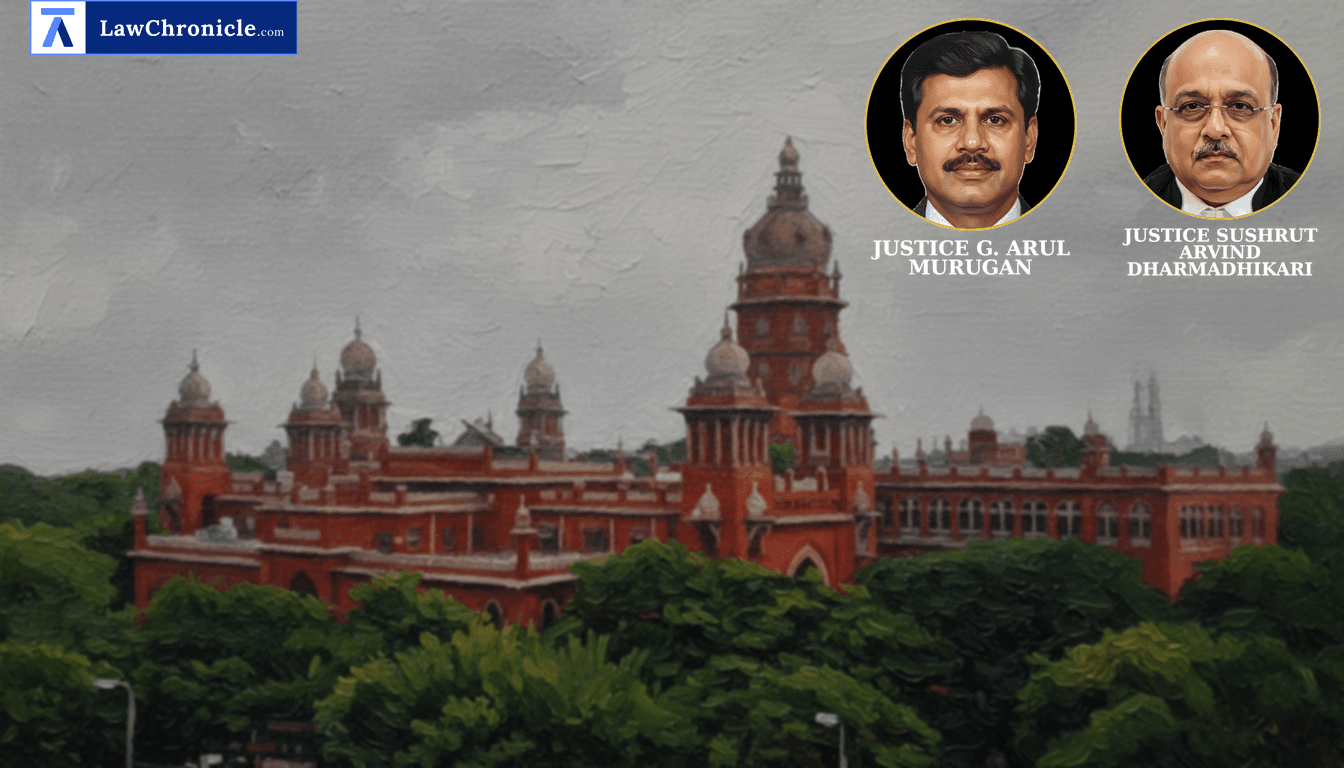
The Madras High Court has reaffirmed that the constitutional right to practice religion does not grant an absolute license to establish prayer halls in residential neighborhoods without statutory clearance, emphasizing that such activities remain subject to public order and municipal regulations.
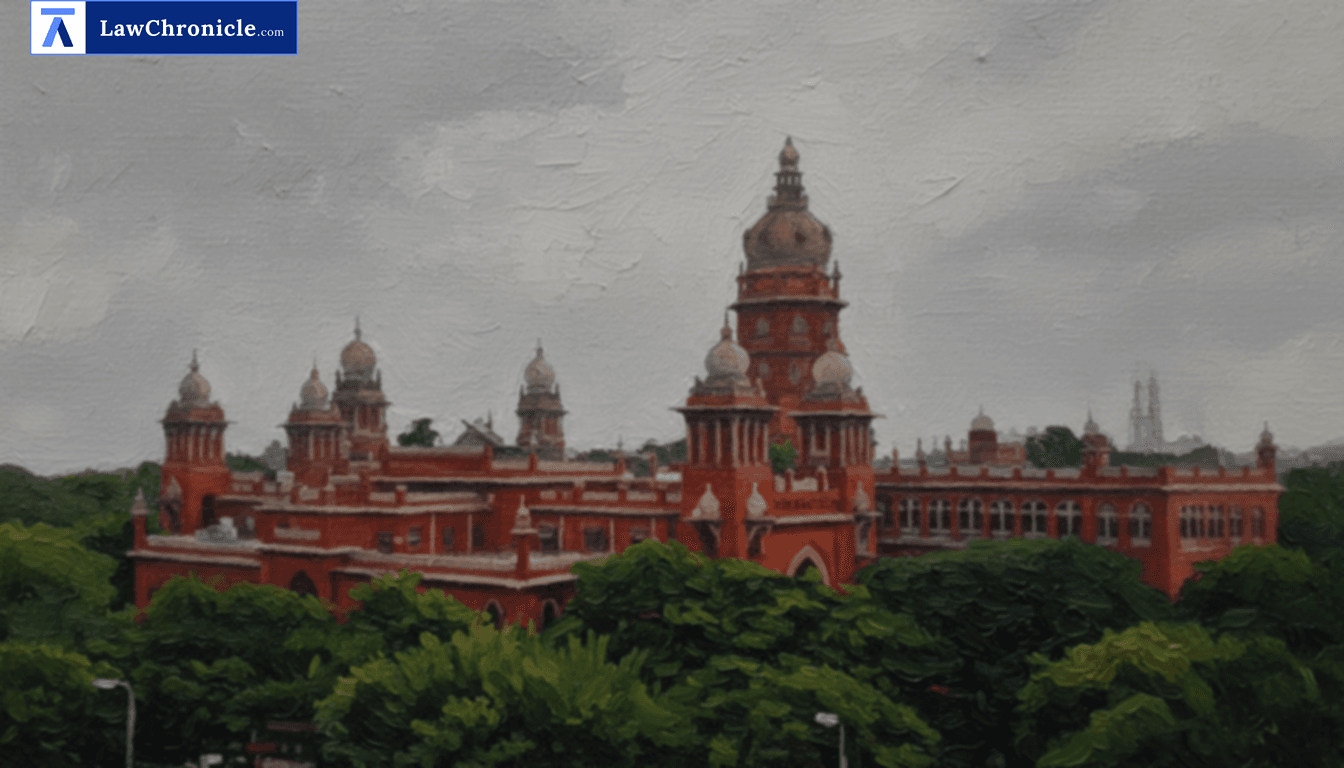
A Division Bench comprising Chief Justice Sushrut Arvind Dharmadhikari and Justice G. Arul Murugan heard an appeal challenging a Single Judge's order that restrained the operation of a religious hall in a residential locality. The Bench observed that the right to propagate religion under the Constitution of India, 1950 is not a shield against regulatory compliance or encroachment on government land. The Court upheld the previous direction requiring the appellant to obtain formal permission from the District Collector before continuing religious activities in the subject premises.
Regulation of Places of Worship in Residential Clusters
The Court noted that the establishment of places of worship in purely residential areas is a regulated activity intended to maintain public tranquility and prevent civic nuisances such as noise and parking issues. The Bench emphasized that the legal position on this matter is well-settled and does not permit unilateral conversion of residential buildings into religious centers.
The Court, in its reasoning, observed: "Religious activities cannot be carried out in a purely residential neighborhood without obtaining explicit permission of the District Collector under the relevant rules. This regulation is essential to maintain public order, tranquility, and to prevent civic nuisance regarding parking, sanitation, and noise in residential clusters."
Fundamental Rights vs. State Regulation
Addressing the appellant's contention regarding their fundamental rights under Constitution of India, 1950 and Articles 25 and 26 of the Constitution of India, the Bench clarified that these rights are not absolute. The State maintains the power to regulate secular or temporal activities associated with religious practices to ensure public welfare.
The Court, in its reasoning, observed: "The appellant’s invocation of Articles 25 and 26 of the Constitution of India, 1950 is entirely misplaced. While the Constitution guarantees the right to freely profess, practice, and propagate religion, such rights are not absolute and are expressly subject to public order, morality, and health. The State retains the absolute power to regulate secular or temporal activities associated with religious practices. Fundamental rights cannot be brandished as a license to encroach upon government land or to bypass municipal and regulatory frameworks."
The Court has the following directions:
"The learned Single Judge directed the official respondents to ensure that the appellant herein does not use the subject residential premises as a prayer hall without obtaining prior permission from the District Collector. ... the learned Single Judge disposed of the writ petition with a direction to the official authorities to enforce the regulations, while leaving it open to the appellant to apply for appropriate permission under the rules."
Background:
The dispute originated from a writ petition filed by a resident seeking a mandamus to stop the appellant from operating a church/prayer hall in a residential area without approvals. Revenue records submitted by the Tahsildar revealed that the property was situated on 'Sarkar Poramboke' land classified under the 'Indian Institute of Technology'. It was found that while the ground floor was residential, the first floor had been converted into a prayer hall.
The appellant argued that the Single Judge's order violated natural justice as no notice was served and claimed they had been functioning peacefully for 25 years. They also alleged that the original petitioner was an encroacher. However, the Division Bench found that the decision was based on admitted revenue records rather than disputed facts. The Court noted that the appellant had already applied for permission following the Single Judge's order. Finding no merit in the appeal, the Bench dismissed the matter and confirmed the requirement for statutory permission.
Case Details:
Case No.: WA No.1570 of 2026 and CMP No.14576 of 2026
Case Title: Samathana Vazhvu A.G. Jebha Veedu Sabai v. Rukkumani and Others
Appearances:
For the Petitioner(s): Mr. N.Moorthi, Advocate
For the Respondent(s): Mr.Mohammed Fayaz Ali, Government Pleader (for R2 and R4); Mr.M.Dinesh, Government Advocate (Criminal Side) (for R3 and R5)
Source: 2026 CaseBase(MAD) 301
Similar Articles
 Breaking News