Public Interest Prevails Over Individual Rights In Organizing Festivals on Public Roads: Orissa HC
 Copy Link
 Share
 Save
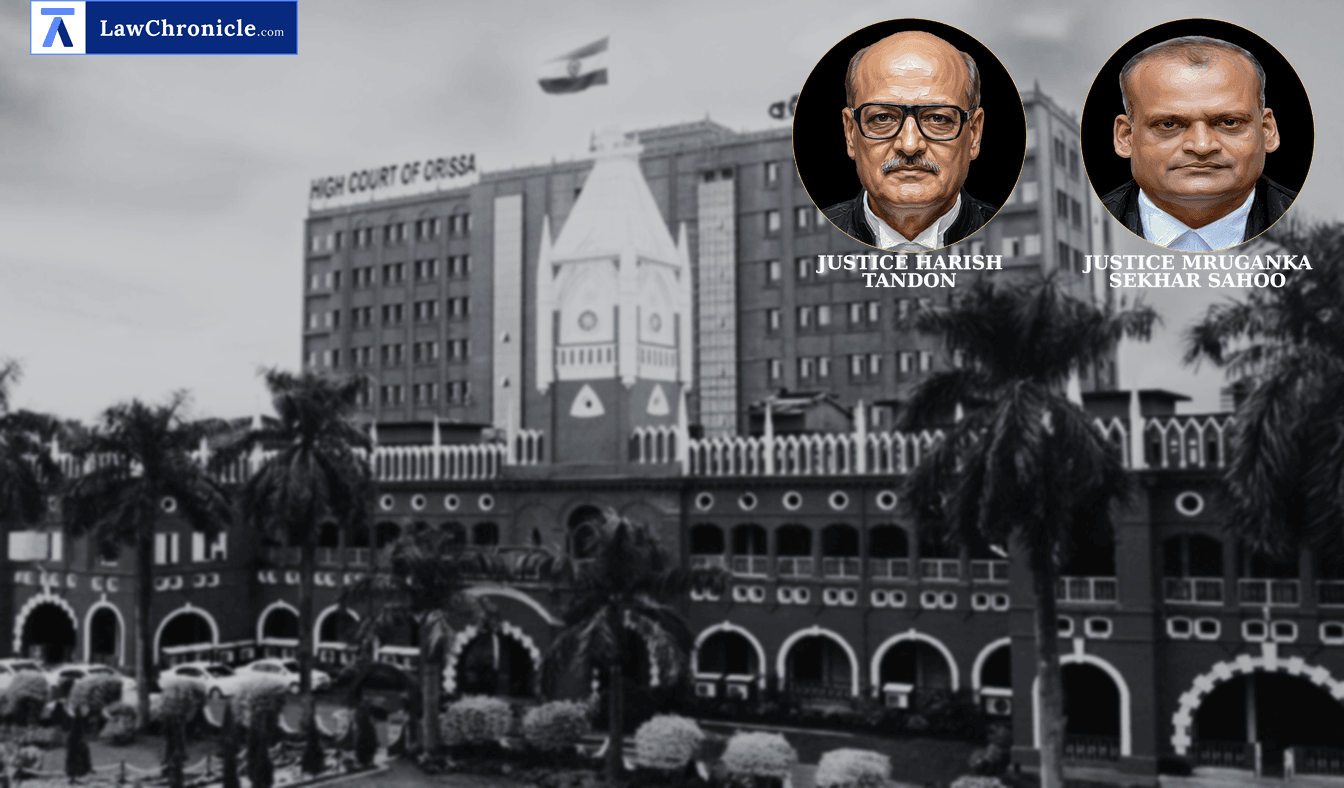
In a decisive clarification of religious and civil rights, the Orissa High Court ruled that individual rights to unhindered road access must yield to the larger public interest of community religious festivals, provided the state ensures reasonable passage for emergency services and residents. The Bench emphasized that while the right to free movement is a facet of life under Article 21 of the Constitution of India, it does not grant an absolute right to block community traditions sanctioned by the State under reasonable restrictions.
A bench comprising Chief Justice Harish Tandon and Justice Mruganka Sekhar Sahoo adjudicated upon a Public Interest Litigation (PIL) challenging the temporary construction of puja pandals on public roads. The Orissa High Court balanced the constitutional aspirations of Article 25 of the Constitution of India with the practicalities of urban life, noting that the State possesses the power to regulate such activities to maintain public order.
Key Takeaways
Primacy of Public Interest
Individual claims of inconvenience regarding road blockages are subordinate to the collective right of the community to practice religion and celebrate festivals.
State's Regulatory Mandate
The Government is duty-bound to ensure that permissions for temporary structures on public roads include strict conditions for maintaining a minimum width for vehicular movement.
Emergency Access Safeguards
Religious pandals must not be constructed in a manner that completely eclipses the passage for emergency vehicles like ambulances and fire engines.
Harmonious Construction of Rights
Rights under Article 25 of the Constitution of India must be read in tandem with Article 19 of the Constitution of India, ensuring that freedom of religion does not negate the fundamental freedom of movement and residence.
The Balance Between Individual and Collective Rights
The Orissa High Court observed that fundamental rights are not absolute and are subject to reasonable restrictions. It noted that the country's constitutional ethos embraces the equality principles in professing religion, especially during festivals which propagate peace and harmony. The Bench observed that "There is no scintilla of doubt in our mind that if the fundamental right of a person is overlapping the fundamental rights of a large section of the society, the law respects the larger interest over an individual interest."
The Orissa High Court relied on the precedent set in Tarak Singh and another v. Jyoti Basu and others to reinforce that in conflicts between private and public interests, the latter must prevail. The Bench highlighted that while Article 25 of the Constitution of India guarantees the freedom of conscience and the right to practice religion, it is specifically made subject to public order, morality, and health.
Court Observations and Directions
The Orissa High Court found that the State had already implemented measures, such as leaving a 22-foot passage for vehicular movement, which mitigated the petitioner's grievances. The Court issued the following directions for the State "Suffice to say that while granting such license to a community in performing such religious festivals, the Government should ensure that there is no complete disruption in the movement of the vehicles nor the person should be denied a passage for ingress and egress. Adequate distance should be strictly adhered to, which makes the movement of the emergency vehicles, so that in case of any emergency, such facilities and/or amenities are available at their doorstep. The Government shall also maintain the permissible sound limit while organizing those festivals and the deadline which is fixed beyond which it should not be allowed. Since the temporary pandals are put for the religious purposes, a congenial and religious environment should be maintained as there is hardly any room for any other activities to be performed therein. The Government shall also ensure that the temporary structures put on the public road should be of such measurement which would not eclipse the right of movement, as the reasonable restrictions are permissible and adequate space should be left for vehicular movement."
Ratio
Individual fundamental rights, including the right to unhindered access to one's residence, are subservient to the larger public interest and collective religious rights under Article 25 of the Constitution of India of the Constitution of India, provided the state imposes reasonable restrictions to ensure vehicular movement and access for emergency services. The law respects the larger interest over an individual interest when such rights overlap.
Background
The petitioner, Sarat Kumar Gajendra, filed the PIL alleging that the construction of temporary pandals for Ganesh Puja and Durga Puja 50 meters from his house resulted in a complete blockade of the road, rendering his home inaccessible. He argued that such blockades infringed upon his right to free movement.
The State, however, filed affidavits clarifying that permissions were granted only on the condition that roads were not blocked in their entirety. In this specific instance, a 22-foot passage was maintained for residents. Interveners from the locality supported the festival, refuting the petitioner's claims. The Orissa High Court, while acknowledging the petitioner's concerns, ultimately held that the state's guidelines for maintaining passage and sound limits were sufficient to balance competing interests. The petition was disposed of with directions to the government to strictly enforce these guidelines in the future.
Case Details:
Case No.: W.P.(C) No. 26356 of 2025
Neutral Citation: 2026:OHC:220-DB
Case Title: Sarat Kumar Gajendra v. Collector & District Magistrate, Khordha and others
Appearances:
For the Petitioner(s): Sarat Kumar Gajendra (In Person), Mr. Laxman Pradhan (Advocate)
For the Respondent(s): Mr. Debashis Tripathy (Additional Government Advocate)
For Intervener: Mr. P.K. Ray (Senior Advocate)
Source: 2026 CaseBase(ORI) 1966
Similar Articles
 Breaking News