


Magistrate Cannot Dismiss FIR Request Solely Due To Civil Nature Of Title Disputes: Madras HC
 Copy Link
 Share
 Save
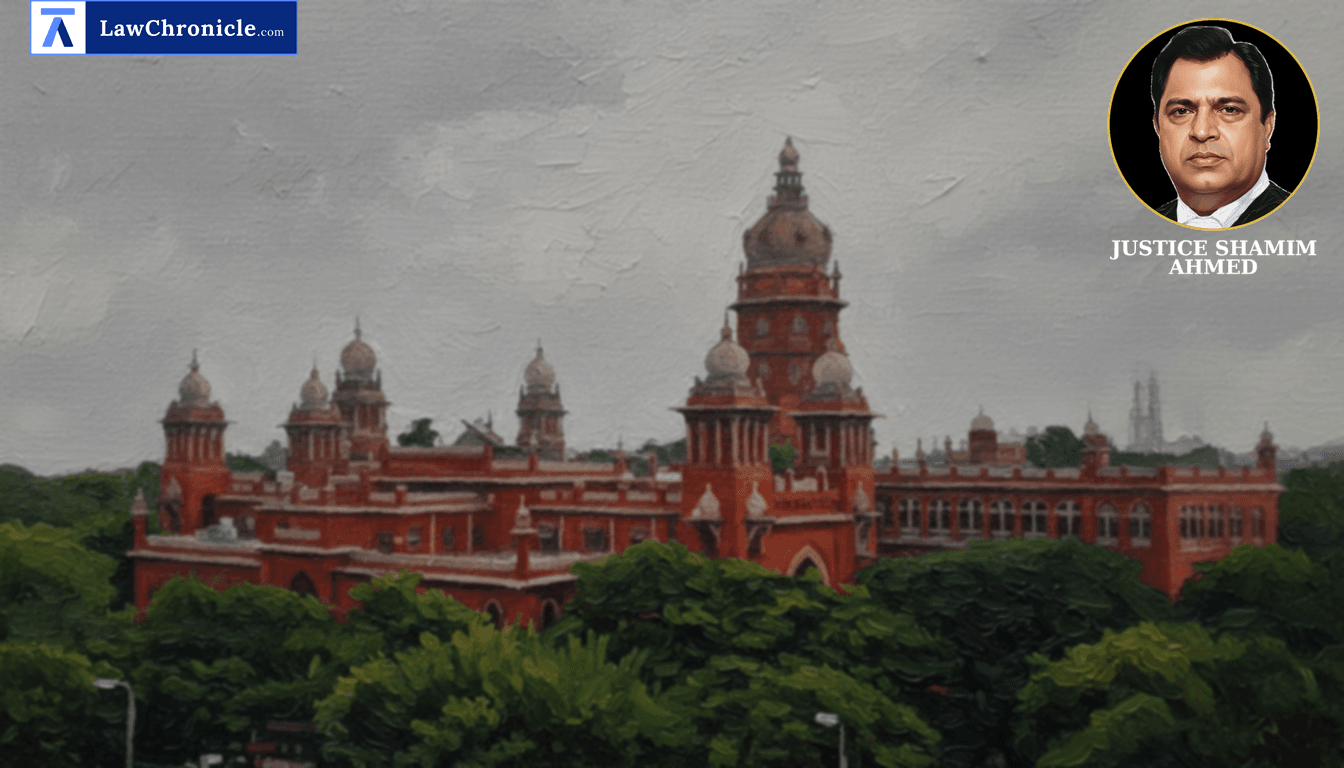
In a decisive intervention against the premature dismissal of criminal complaints, the Madras High Court has ruled that the existence of a civil remedy does not create a legal embargo on criminal investigation where allegations prima facie disclose cognizable offences like forgery and fraud. The Bench clarified that Magistrates exercising jurisdiction under Section 175(3) of the Bharatiya Nagarik Suraksha Sanhita, 2023 are not permitted to conduct 'mini-trials' or adjudicate title rights at the threshold stage of directing an investigation.
Justice Shamim Ahmed presided over the revision petition challenging a lower court order that had refused to direct the registration of an FIR in a property-related forgery case. The Madras High Court emphasized that the statutory function of a Magistrate at the pre-cognizance stage is strictly limited to examining whether the complaint discloses the commission of cognizable offences requiring police intervention.
Key Takeaways
Civil-Criminal Independence
Criminal liability must be examined independently of civil proceedings, as a single set of facts can validly support both civil remedies and criminal prosecution.
Limited Scrutiny at FIR Stage
Magistrates cannot adjudicate the reliability of witnesses or the correctness of allegations when deciding whether to order an investigation under Section 175(3) of Bharatiya Nagarik Suraksha Sanhita, 2023.
Registration Not A Shield For Fraud
The mere fact that a document is registered before a Sub-Registrar does not validate its contents or cleanse it of underlying fraud and forgery in the eyes of criminal law.
Mandatory Investigation Duty
Once a complaint prima facie discloses cognizable acts like creating false documents or criminal conspiracy, the police and the Magistrate are under a statutory obligation to ensure an investigation is conducted.
Court Observations on Section 175(3) BNSS
The Madras High Court noted that the Revision Petitioner had purchased properties in 2005 and obtained mutated revenue records, but subsequently discovered that the respondents had allegedly created forged Settlement and Release Deeds in 2014. The Judicial Magistrate-II, Chengalpattu, had dismissed the petitioner's plea for an FIR, terming the dispute "purely civil."
Reversing this stance, the Madras High Court observed that the jurisdiction under Section 175(3) of Bharatiya Nagarik Suraksha Sanhita, 2023 is neither adjudicatory nor determinative. The Court, in its reasoning, observed: “The Magistrate does not adjudicate the correctness of the allegations. Equally, the Magistrate does not pronounce upon the civil rights of parties nor determine the criminal liability of the proposed accused. The statutory function discharged by the Magistrate is confined to examining whether the complaint, read as a whole, discloses the commission of cognizable offences requiring police investigation.” The Bench further clarified the distinction between Sections 175(3) and 223 of Bharatiya Nagarik Suraksha Sanhita, 2023, noting that the former merely decides if an investigation should commence, while the latter involves an enquiry for taking cognizance.
Ratio
The existence of civil proceedings or the pendency of a title dispute does not bar criminal prosecution if the allegations independently disclose the essential ingredients of cognizable offences under the Bharatiya Nyaya Sanhita, 2023. Under Section 175(3) of Bharatiya Nagarik Suraksha Sanhita, 2023, a Magistrate is only required to reach a prima facie satisfaction regarding the commission of an offence and cannot conduct a meticulous dissection of the complaint or weigh competing probabilities as if conducting a trial.
Background
The petitioner, A. Chidambaram, alleged that despite owning 2.98 acres of land in Paiyanoor Village through 2005 sale deeds, the private respondents created a parallel chain of fabricated title documents in 2014, including a Settlement Deed and Release Deed. The petitioner contended these acts attracted Sections 336, 338, 340, and 61 of the Bharatiya Nyaya Sanhita, 2023 (corresponding to Sections 463, 467, 471, and 120B of the Indian Penal Code).
The respondents argued that the dispute was civil, citing parent documents from 1949 and alleging a 19-year delay in filing the complaint. The Madras High Court, however, relied on precedents such as Accamma Sam Jacob Vs. The State of Karnataka ( "2026 INSC 362": 2026 CaseBase(SC) 315) and Nazibul Rahimkhan and others Vs. State of UP ( "2026 INSC 619": 2026 CaseBase(SC) 4126), which established that criminal law can be set in motion even if civil remedies are available. The Bench also cited State of Bihar v. A.C. Saldanna regarding the Magistrate's power to monitor investigations. Consequently, the Madras High Court allowed the revision, set aside the Magistrate's order, and remanded the matter for the registration of an FIR.
Case Details:
Case No.: CRL RC No. 919 of 2026
Neutral Citation: 2026:MHC:4155
Case Title: A.Chidambaram v. The Superintendent of Police and others
Appearances:
For the Petitioner(s): Mr.S.Haja Mohideen Gisthi, Assisted by Mr.Jaga Jeevan and Mr.S.Abdul Mussawir Khan
For the Respondent(s): Mr.M.Dinesh, GA (Criminal Side) for RR1&2; Mr.M.P.John Peter for RR3&4
Source: 2026 CaseBase(MAD) 28378
Similar Articles


 Breaking News


