Majority Decision Of Trustees Binds Society; Priority In Time Does Not Validate Votes: SC
 Copy Link
 Share
 Save
The Supreme Court has clarified that a majority decision by trustees is legally binding on a society if the governing by-laws so provide, overriding the general principle of unanimity typically associated with trust execution. In a significant ruling concerning corporate governance and internal society management, the Court held that the validity of a vote cast on behalf of a juristic entity must rest upon lawful authority rather than the speed at which it was recorded.
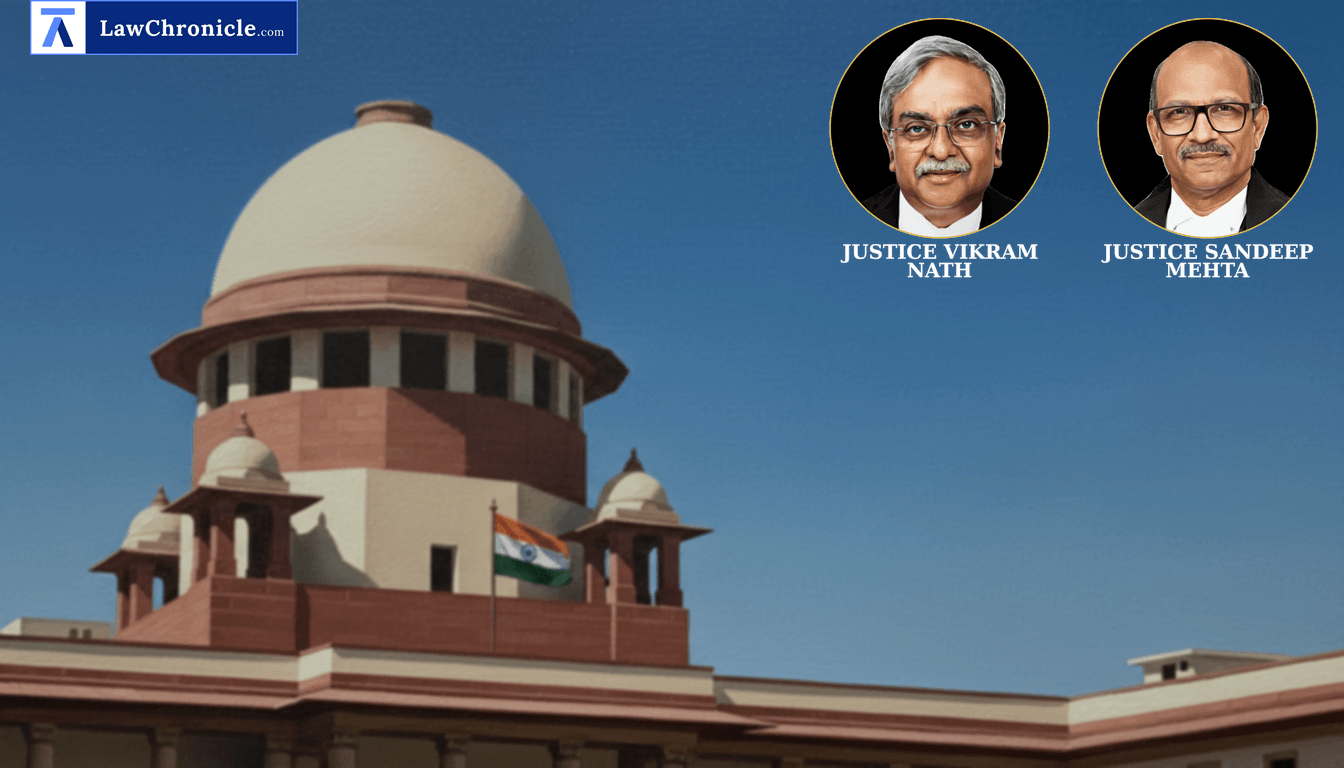
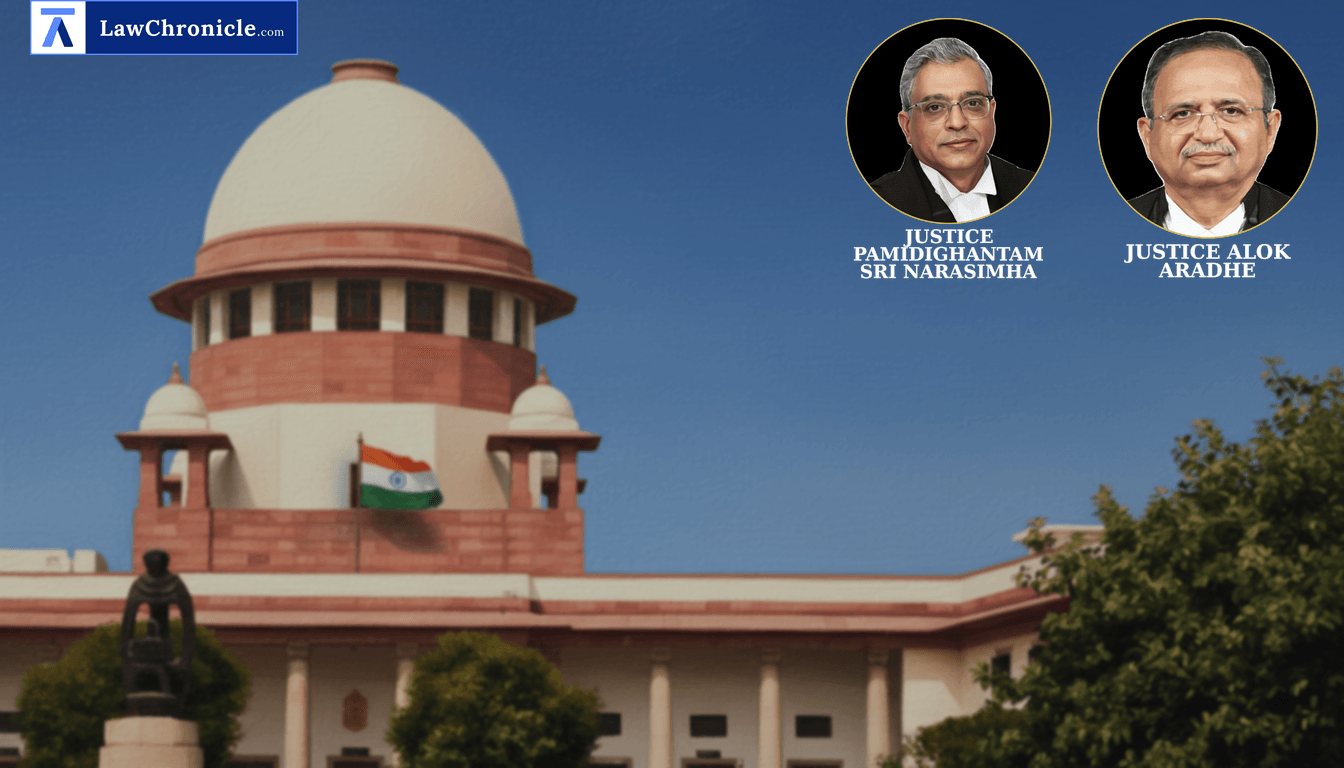
A bench of Justice Vikram Nath and Justice Sandeep Mehta heard the appeals challenging a decision of the Calcutta High Court involving three prominent societies Hindustan Medical Institution, Eastern India Educational Institution, and Belle Vue Clinic and their voting rights in Birla Corporation Limited. The primary dispute revolved around whether a decision by a majority of trustees could be considered a valid act of the society and whether a "first-come, first-served" rule could be applied to rival claims of voting authority during electronic voting.
Trustees Must Act by Majority if By-Laws Permit
The Court scrutinized Clause 24 of the societies' by-laws, which explicitly allowed for delegation of authority via a resolution signed by a majority of trustees. The Court rejected the High Court’s reliance on Section 48 of the Indian Trusts Act, 1882 and the precedent in Janakirama Iyer v. Nilakanta Iyer, which generally require trustees to act in consonance.
The Court, in its reasoning, observed: "Clause 24 of the by-laws, therefore, cannot be read as insisting upon unanimity for every act of delegation or authorization by the trustees. On the contrary, it incorporates a clear rule of efficacy in favor of a written resolution supported by the majority of the trustees. The deeming effect built into the clause is crucial. It places an act done pursuant to such majority-backed resolution on the same legal footing as a resolution passed at a meeting of the trustees."
Two-Tier Governance Structure: Trustees vs. Managing Committee
Analyzing the constitutive documents, including the Memorandum of Association and Rules and Regulations, the Bench identified a clear hierarchy. It noted that all properties vest in the trustees, and the Managing Committee only exercises powers delegated to it. The Court found that the High Court erred by treating these two bodies as interchangeable for the purpose of exercising voting rights attached to the shares held by the societies in Birla Corporation Limited.
Chronology Cannot Substitute Authority in E-Voting
The Supreme Court struck down the High Court's direction that the "vote cast first" should prevail in cases of rival claims. The Court emphasized that Section 108 of the Companies Act, 2013 and Rule 20 of the Companies (Management And Administration) Rules, 2014 require a valid authorization for a vote to be legitimate. The Court held that simply being the first to click the button does not validate an unauthorized act.
The Court has the following directions:
"(i) In the case of the present societies, a decision or delegation evidenced in writing under the hands of the majority of the trustees, in terms of Clause 24 of the by-laws, is capable in law of constituting a valid decision or authorization on behalf of the society.
(ii) The direction in the impugned judgment that the vote cast first by the plaintiff society, irrespective of whether it was cast through the Managing Committee or through the Board of Trustees, shall be taken into consideration, is unsustainable in law and is set aside.
(iii) The suits and interlocutory applications out of which the present appeals arise shall stand restored to the file of the High Court. The Single Judge shall proceed to consider the same afresh, if anything survives for consideration, in accordance with law and in the light of the observations made in the present judgment."
Background:
The dispute arose following the death of Priyamvada Devi Birla in 2004, leading to prolonged testamentary proceedings and the appointment of an Administrators Pendente Lite (APL) Committee for her estate. Rivalry within the three societies registered under the West Bengal Societies Registration Act, 1961 led to conflicting resolutions and authorizations regarding their shareholding in Birla Corporation Limited. During the 2021 and 2022 Annual General Meetings (AGM), the scrutinizer invalidated the societies' votes due to these rival claims.
The societies filed suits seeking to restrain Birla Corporation Limited from ignoring their authorized representatives. A Single Judge of the Calcutta High Court declined ad-interim relief, and a Division Bench subsequently affirmed this while adding a caveat that the "vote cast first" should be counted. The Supreme Court, however, found that the High Court misapplied Reserve Bank of India v. Peerless General Finance and Investment Co. Ltd. and Others and Babu Verghese v. Bar Council of Kerala ( "(1999) 3 SCC 422": 1999 CaseBase(SC) 1070) regarding the interpretation of trust law and statutory mandates, ultimately allowing the appeals and setting aside the "priority in time" rule.
Case Details:
Case No.: Civil Appeal No. of 2026 (Arising out of SLP (C) No. 1182 of 2023)
NeutralCitation: 2026 INSC 554
Case Title: Hindustan Medical Institution v. Birla Corporation Limited & Ors.
Source: 2026 CaseBase(SC) 481
Similar Articles
 Breaking News