


Managing Director Cannot Sue For Company Dues Without Explicit Board Authorization: Chhattisgarh HC
 Copy Link
 Share
 Save
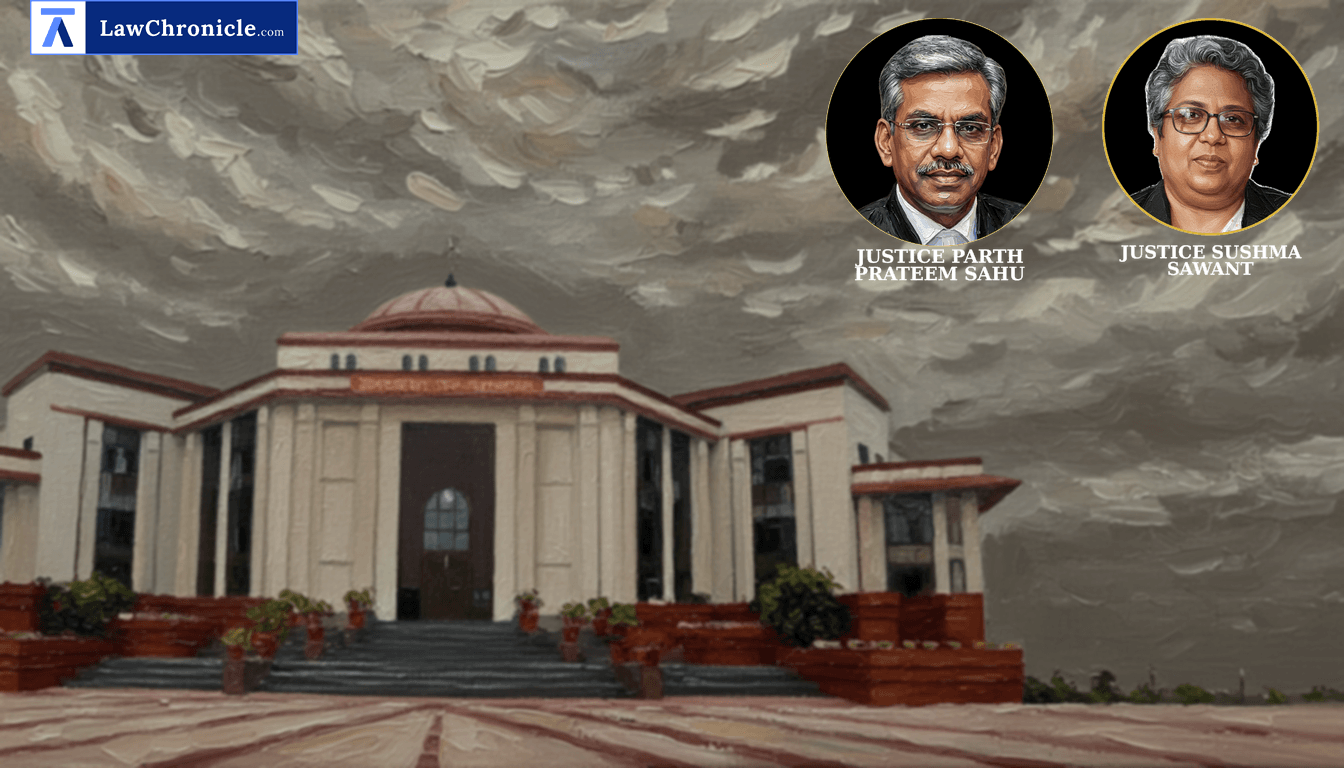
The Chhattisgarh High Court has reinforced the strict corporate identity doctrine, ruling that a Managing Director lacks the inherent authority to institute recovery suits for a company unless specifically empowered by a board resolution or the Articles of Association. A Division Bench comprising Hon'ble Shri Parth Prateem Sahu, J. and Hon'ble Smt. Sushma Sawant, J. adjudicated on a first appeal filed under Section 96 of the Code of Civil Procedure, 1908. The Bench was hearing a challenge against a trial court decree which had partially allowed a recovery suit filed by an individual in his capacity as a Managing Director against a private limited company for alleged outstanding bus hire charges.
Key Takeaways
Corporate Identity Distinct from Individuals
Lawsuits must be filed in the name of the registered company, and individual officers cannot maintain personal claims for corporate contractual dues.
Inherent Authority of Directors Limited
Being a Managing Director does not automatically confer the right to sue; such powers must be explicitly granted by the Board of Directors or the company's governing documents.
Burden of Proof on Plaintiffs
Plaintiffs must prove the execution of documents and specific commercial transactions through primary evidence rather than relying on the weakness of the defendant’s case.
Strict Compliance with Company Law
Adherence to the Companies Act, 2013 is mandatory regarding the 'key managerial personnel' powers and the capacity of an incorporated entity to sue and be sued.
Court's Rationale on Corporate Authorization
The Chhattisgarh High Court scrutinized the maintainability of the suit, observing that the plaintiff failed to produce any document, power of attorney, or resolution authorizing him to file the suit on behalf of the company. It clarified that while Order 29 Rule 1 of the Code of Civil Procedure, 1908 allows officers to sign and verify pleadings, it does not equate to the authority to institute a legal action. The Bench reasoned that "...unless a power to institute a suit is specifically conferred on a particular director, he has no authority to institute a suit on behalf of the company. Needless to say that such a power can be conferred by the Board of Directors only by passing a resolution in that regard."
Inadequacy of Evidence and Presumptions
The Telangana High Court critiqued the trial court for relying on presumptions and an unproved work order. It noted that the plaintiff failed to produce the actual written agreement and did not provide details of the buses, such as registration numbers or permits under the Motor Vehicles Act, 1988, to substantiate the claim of providing services.
Ratio
A suit for recovery of dues belonging to a company must be instituted in the name of the company by a person specifically authorized via a board resolution or the Articles of Association. A Managing Director does not possess an inherent right to sue on behalf of a corporate entity under the Companies Act, 2013 or the Code of Civil Procedure, 1908 without such explicit delegation of power.
Background
The dispute originated from a claim by the plaintiff, acting as the Managing Director of Durg Roadways Pvt. Ltd., asserting that he provided buses to the defendant company for employee transportation under a work order. He claimed an outstanding balance of ₹24,95,278/- after partial payments. The defendant denied any privity of contract with the individual plaintiff and questioned his locus standi.
The trial court had partially decreed the suit for ₹22,20,512/-, relying on the work order and the fact that the defendant did not reply to the legal notice. However, the Telangana High Court set this aside, citing U.P. State Electricity Board v. Aziz Ahmad and Punjab Urban Planning & Development Authority vs. Shiv Sarswati Iron & Steel Re-rolling Mills ( "(1998) 4 SCC 539": 1998 CaseBase(SC) 1110) to emphasize that pleadings must be proved by cogent evidence and that the plaintiff cannot benefit from the defendant's failure to produce bank statements. The Telangana High Court also relied on Nibro Ltd. v. National Insurance Co. Ltd. and State Bank of Travancore vs. Kingston Computers India Pvt. Ltd. regarding the necessity of a specific board resolution for instituting suits.
Case Details:
Case No.: First Appeal No. 531 of 2019
Neutral Citation: 2026:CGHC:46838-DB
Case Title: Jai Balaji Industries Ltd. vs. Nemichand Naher
Appearances:
For the Petitioner(s): Mr. Ankit Pandey, Advocate with Ms. Rakhi Chaturvedi, Advocate
For the Respondent(s): Mr. Ashish Surana, Advocate
Source: 2026 CaseBase(CTH) 21299
Similar Articles

 Breaking News


