


Possession by Opposing Party Negates Injunction Claims in Decade-Old Property Dispute: Manipur HC
 Copy Link
 Share
 Save
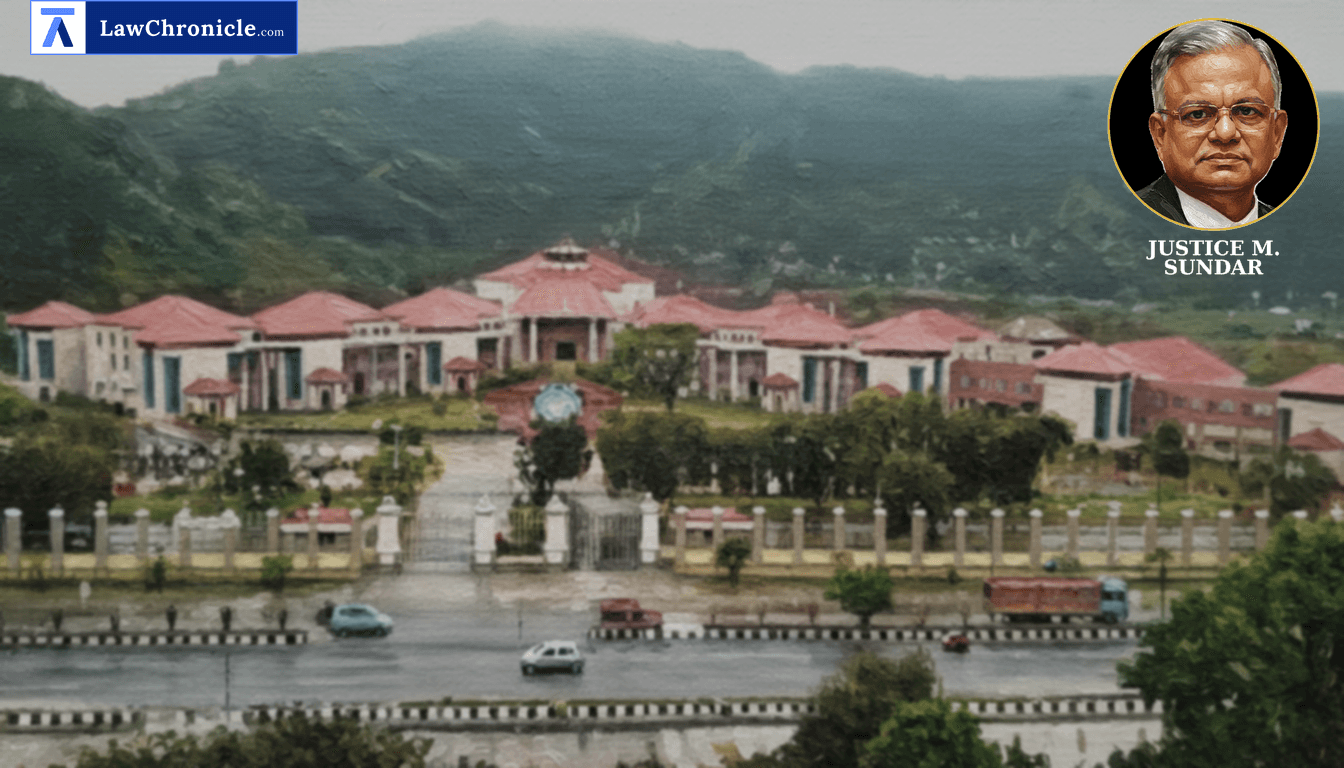
The Manipur High Court has slammed the brakes on interlocutory delays in a thirteen-year-old property suit, ruling that a party cannot seek an injunction for property they admit is currently in the possession of the opposing side. This decision reinforces the principle that interim reliefs like status quo or injunctions are meant to balance rights and prevent injury, rather than serving as tools for litigation posturing in long-pending civil disputes.
In a proceeding presided over by Hon’ble the Chief Justice Mr. M. Sundar, the Court addressed a revision petition challenging an appellate order that had set aside a status quo directive in a complex land title suit. The bench emphasized the need for an expedited trial to resolve a dispute that has lingered in the judicial system since 2013.
Key Takeaways
Possession as a Bar to Injunction
If a defendant seeking an injunction admits that the suit property is in the possession of the plaintiff who has already erected structures, the legal basis for an interim injunction ceases to exist.
Expedited Trial Priority
The High Court prioritized the final disposal of decade-old suits, directing trial courts to conclude proceedings untrammelled by observations made during interlocutory stages.
Alignment of Property Descriptions
Interim relief cannot be granted for land descriptions that do not tally with the original plaint or the counter-claim schedules.
Court Observations and Directions
The Court observed that the defendants, while seeking an injunction under Order XXXIX Rules 1 and 2 of the Code of Civil Procedure, 1908, eventually admitted that the land in question was in the possession of the plaintiffs. The Court noted that the First Appellate Court correctly identified discrepancies between the property descriptions in the injunction application and the original pleadings.
The Court, in its reasoning, observed: "As learned counsel for defendants submits in unambiguous terms that the land for which injunction was sought vide Judl. Misc. Case No. 116 of 2023 is now in the possession of plaintiffs, the question of an injunction in favour of the defendants does not arise. As regards status quo, it would now only mean that the plaintiffs can continue to be in possession but the plaintiffs have not sought any order of interim injunction."
The Court has the following directions:
"Said Trial Court is directed to expedite the trial in said suit and return a verdict subject only to any suit instituted prior to 18-09-2013 pending on its file. Though obvious, said Trial Court will now decide said suit on its own merits and in accordance with law untrammelled by any observation/s made in the interlocutory order dated 11-08-2023 made by said Trial Court in Judl. Misc. Case No. 116 of 2023, observations made by First Appellate Court in the impugned order dated 11-08-2025 and in instant order, this Court has left open all questions."
Ratio
An order of interim injunction or status quo is intended solely to balance the rights of the parties and avoid irreversible legal injury; such reliefs are legally unavailable to a party who admits that the subject property is already in the settled possession of the adversary, especially when the description of such property fails to align with the primary pleadings of the suit.
Background
The litigation originated from Original Suit No. 18 of 2013/20 of 2014, involving a prayer for declaration of title and the nullification of a gift deed executed in 2012. The dispute escalated through various miscellaneous applications, including an impleadment attempt involving Section 52 of the Transfer of Property Act, 1882, which was previously addressed by the High Court. The current revision arose from an order by the Code of Civil Procedure, 1908 First Appellate Court (District Judge, Thoubal), which set aside a Trial Court's status quo order. The Appellate Court found that the property described in the defendants' injunction application did not match the schedules in the plaint or the written statement. During the High Court hearing, the defendants conceded that the plaintiffs held possession and had constructed superstructures, leading the Court to close the revision and order an expedited final trial.
Case Details:
Case No.: CRP(C.R.P. Art.227) No. 47 of 2025
Neutral Citation: 2026:MNHC:219
Case Title: Moirangthem Sunilkumar Singh & Anr. v. Smt. Sambanduram (Ningol) Heikham (Ongbi) Tilotama Devi (represented by LRs)
Appearances:
For the Petitioner(s): Mr. A. Sachikumar, Advocate
For the Respondent(s): Mr. M. Shyam Singh, Advocate
Source: 2026 CaseBase(MAN) 93


 Breaking News


