


Manipur HC Voids NSA Detention For Linguistic Barriers And Time Limit Caps
 Copy Link
 Share
 Save
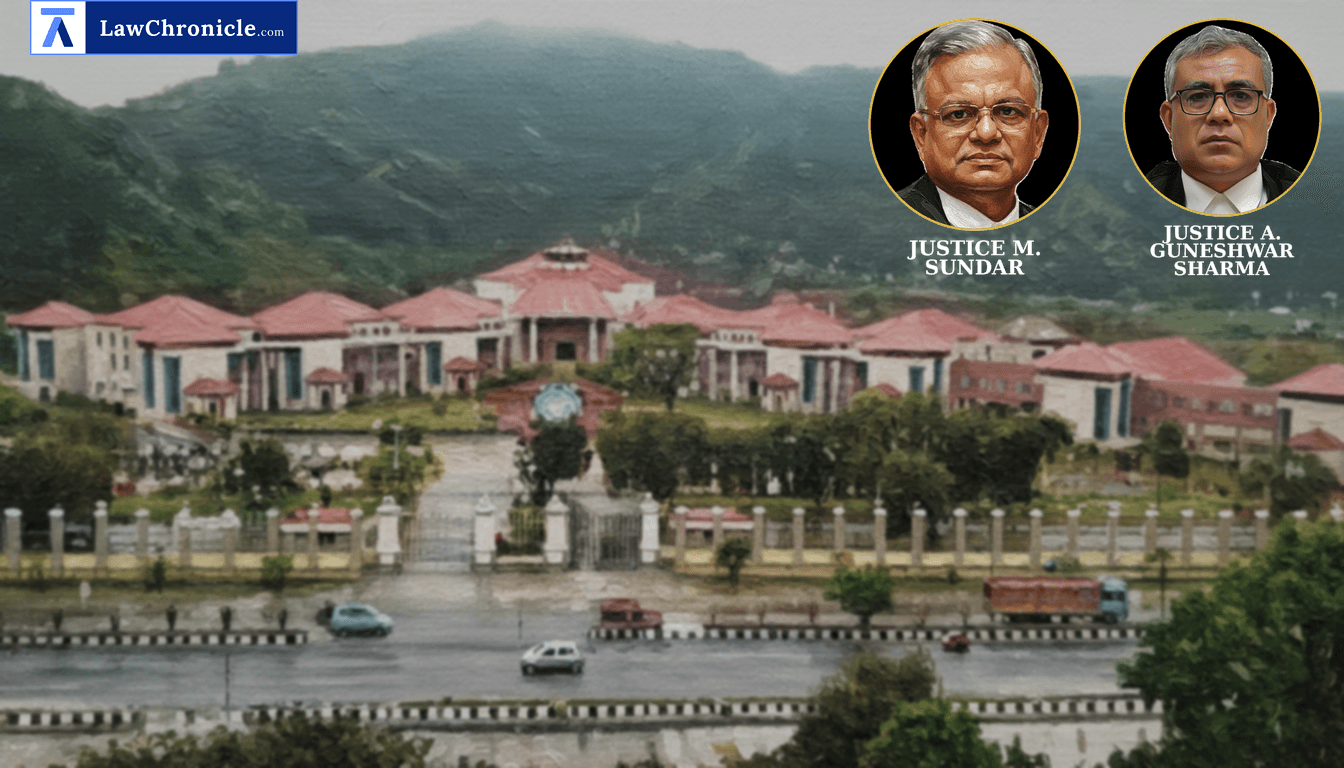
The Manipur High Court has dismantled the executive's use of preventive detention where the state fails to provide translated documents to a semi-literate detenu, ruling that such failures render the right to make an effective representation a mere formality. In a scathing rebuke of procedural overreach, the court also held that the administration cannot unilaterally fix time limits for a detenu to submit representations, as the constitutional right to challenge incarceration under the National Security Act, 1980 persists for as long as the detention order operates.
In a Habeas Corpus petition heard by a Division Bench comprising Chief Justice M. Sundar and Justice A. Guneshwar Sharma, the court addressed the detention of a young man allegedly linked to the People's Liberation Army (PLA). The petitioner challenged the impugned preventive detention order made by the District Magistrate of Imphal East, arguing that the detenu's limited literacy and the lack of translated materials had effectively silenced his constitutional voice.
Key Takeaways
Linguistic Access is Non-Negotiable
Failure to provide relied-upon documents in a language the detenu understands constitutes a fatal infraction of Article 22(5) of the Constitution of India, 1950.
Unlawful Representation Caps
Detaining authorities lack the power to fix a 'three-week' or any other specific timeline for representations; the right to challenge detention exists throughout the period of incarceration.
Communicated Means Written
Oral explanations of grounds for detention do not satisfy the legal requirement of 'communication'; translated scripts must be served to ensure a purposeful defense.
Impact on Law Enforcement
State authorities must ensure rigorous procedural compliance under the National Security Act, 1980, especially when dealing with semi-literate individuals, to avoid the judicial quashing of detention orders.
The Mandate of Article 22(5): Communication vs. Explanation
The Court analyzed the State's failure to furnish translated copies of 11 documents mentioned in the grounds of detention. Despite the detenu only having studied up to Class II, the State provided only the detention order and grounds in the Meitei Mayek script, leaving the core evidentiary documents in English. The Court, in its reasoning, observed: "'Communicate' is a strong word. It means that sufficient knowledge of the basic facts constituting the 'grounds' should be imparted effectively and fully to the detenu in writing in a language which he understands. The whole purpose of communicating the 'ground' to the detenu is to enable him to make a purposeful and effective representation. If the 'grounds' are only verbally explained to the detenu and nothing in writing is left with him, in a language which he understands, then that purpose is not served, and the constitutional mandate in Article 22(5) is infringed."
The Court relied heavily on the principles established in Shri Lallubhai Jogibhai Patel -Versus- Union of India and others and Powanammal v. State of Tamil Nadu and Another ( "(1999) 2 SCC 413": 1999 CaseBase(SC) 1095), which dictate that the amplitude of the safeguard embodied in Article 22(5) extends to supplying the translated script understandable to the detenu.
Illegality of Fixing Time Caps for Representations
Addressing the second point of contention, the Bench found that the detaining authority had wrongly fixed a three-week limit for sending representations by misinterpreting Section 10 of the National Security Act, 1980. The Court noted that Section 10 sets a timeline for the Government to place matters before the Advisory Board, not a limitation period for the detenu. Citing Prem Lata Sharma v. District Magistrate, Mathura and Ors., the Court reiterated that the right to make a representation subsists as long as the preventive detention order operates. The Bench further noted its own recent precedents in Philip Khaikholal and Yambem Manichandra Singh -vs- State of Manipur & 2 Ors. to emphasize this legal position.
The Court has following directions:
"The impugned detention order dated 21.04.2026 bearing reference No. Cril/NSA/No.5 of 2026 made by R2/detaining authority, 2(two) approval orders, one dated 29.04.2026 bearing reference No. H-14/9/2026-HD-HD and another dated 01.05.2026 bearing reference No. H-14/9/2026-HD-HD made by R1 and impugned confirmation order dated 27.05.2026 bearing No. H-14/9/2026-HD-HD made by R1 are all set-aside and Mr. Phanjoubam Rabi Meitei @ Luwangngamba... is directed to be set at liberty forthwith if not required in any other case/s."
Ratio
A preventive detention order is vitiated if the detaining authority fails to provide translated copies of relied-upon documents to a detenu who is not conversant with the language of the original documents. Furthermore, the fixing of a time-frame or 'cap' for a detenu to submit a representation is a violation of Article 22(5) of the Constitution of India, 1950, as the right to represent against detention continues as long as the detention is in force.
Background
The dispute arose following the arrest of Phanjoubam Rabi Meitei on March 25, 2026, in connection with an FIR filed at Andro Police Station. While in judicial custody, he was served with a preventive detention order under Section 3(2) of the National Security Act, 1980. The detenu, who had only reached the second standard in school, requested Manipuri translations (Meitei Mayek script) of the detention documents. While the State provided translations for the order and grounds after Central Government intervention, it failed to translate 11 key documents referred to in the grounds. Additionally, the detaining authority had informed the detenu that his representation must be submitted within three weeks, leading the detenu to believe he had lost his right to challenge the order once that period elapsed. The High Court, finding these actions to be constitutional infractions, allowed the writ petition and set aside the detention, approval, and confirmation orders.
Case Details:
Case No.: WP(Crl.) No. 21 of 2026
Neutral Citation: 2026:MNHC:205-DB
Case Title: Shri Phanjoubam Kula Meitei -Versus- The State of Manipur and others
Appearances:
For the Petitioner(s): Mr. Ph. Sanajaoba along with Mr. RK Kulajit Singh, advocates
For the Respondent(s): Mr. S. Chittaranjan, Additional Advocate General, State of Manipur along with Mr. A. Priyokumar Sharma, State Counsel for R1 & R2; Mr. S. Vijayanand Sharma, Sr. PCCG for R3.
Source: 2026 CaseBase(MAN) 84
Similar Articles
 Breaking News


