


Non-Supply of Kannada Translated Detention Documents Vitiates KAA(P) Act Custody: Kerala HC
 Copy Link
 Share
 Save
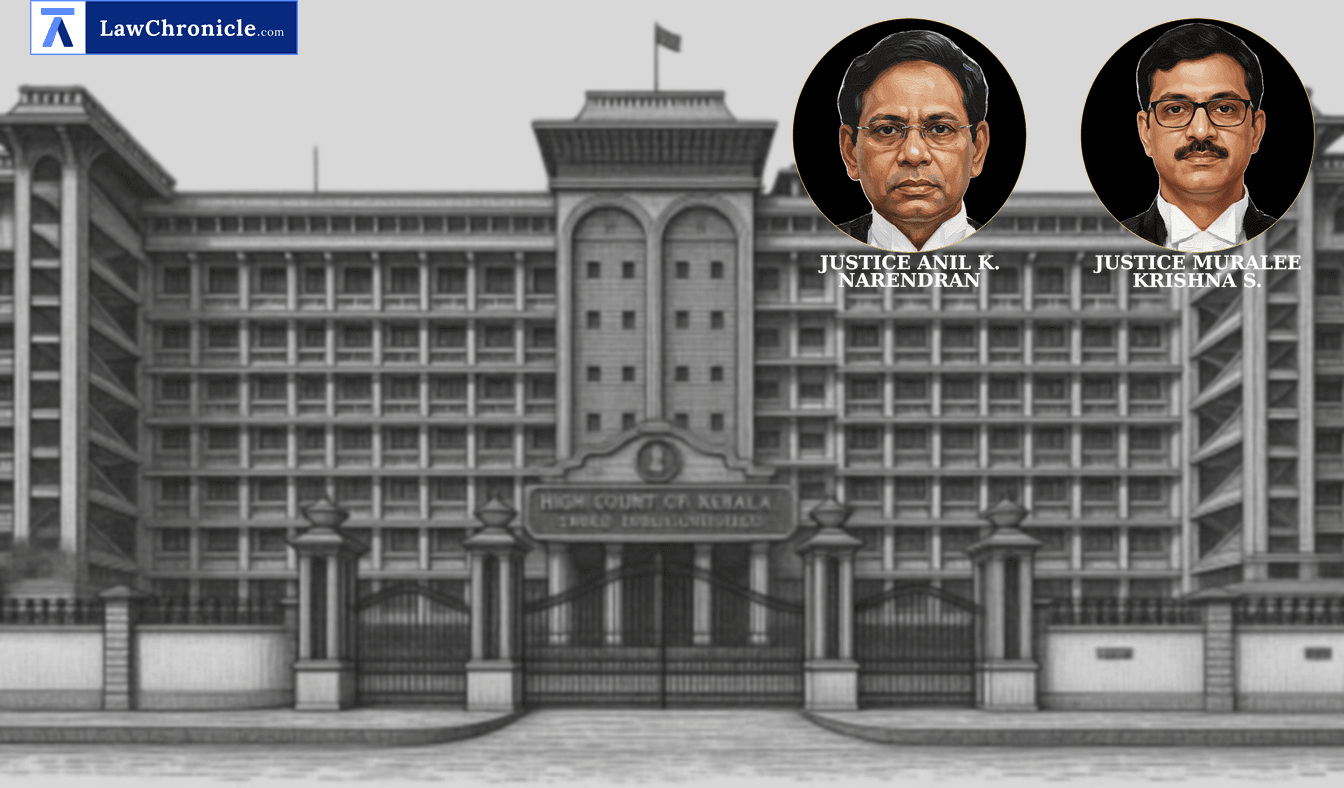
The Kerala High Court has reinforced the sanctity of constitutional safeguards in preventive detention by ruling that the failure to provide translated copies of detention orders to linguistic minority detainees constitutes a fatal violation of the Right to Life and Liberty. This decision underscores that mere oral explanations of complex legal grounds cannot substitute the mandate of effective communication in a language the detenu understands, rendering the detention order constitutionally untenable.
A bench of Justice Anil K. Narendran and Justice Muralee Krishna S. delivered this ruling while hearing a writ of habeas corpus filed by the wife of a detenu hailing from Karnataka. The petitioner challenged the detention order issued by the District Magistrate, Kasaragod, under the Kerala Anti-Social Activities (Prevention) Act, 2007, contending that the detenu's inability to understand Malayalam prevented him from making an effective representation.
Key Takeaways
Mandatory Linguistic Compliance
Detaining authorities must provide translated copies of grounds and material documents in the language known to the detenu to satisfy the requirements of Constitution of India, 1950.
Oral Explanations Insufficient
Providing a verbal summary or oral translation by a police officer does not constitute 'communication' of grounds as required under preventive detention laws.
Vitiation of Detention
Failure to supply readable and understandable documents results in the denial of the right to make a representation, leading to the immediate quashing of the detention order.
The Court clarified that the word "communicate" in the context of preventive detention is a strong term requiring that sufficient knowledge of basic facts be imparted effectively in writing.
The Court has the following directions:
"In the result, this writ petition is allowed by setting aside the impugned Exts.P2 and P4 orders and the 5th respondent, Superintendent of Central Prison, Kannur, is directed to release the detenue forthwith, if his detention is not required in connection with any other case. The Registry shall communicate this order to the 5th respondent by e-mail at once."
The Court, in its reasoning, observed: "From the principles stated in the aforementioned judgments, it is clear that it is the duty of the detaining authority to supply the detention order and the material documents relied therein to the detenue in the language known to him, so as to facilitate the detenue to understand the grounds of detention and to submit a proper representation before the authorities concerned as provided under Section 7(2) of the KAA(P) Act and Article 22(5) of the Constitution of India."
Ratio
Linguistic barriers in communicating the grounds of preventive detention violate the fundamental right under Article 22(5) of the Constitution of India, 1950. The detaining authority is under a constitutional obligation to provide grounds and supporting documents in a language and script the detenu understands to ensure the right to make an effective representation is not illusory.
Background
The detenu was classified as a 'known rowdy' following his involvement in six criminal cases, including a recent case under Sections 305, 331(4), and 334(1) of the Bharatiya Nyaya Sanhita, 2023. Based on a sponsoring report by the District Police Chief, the District Magistrate issued a detention order on May 5, 2026. While the authorities acknowledged the detenu was a Kannada speaker from Karnataka, the documents served were in Malayalam.
The petitioner relied on Hadibandhu Das v. District Magistrate, Cuttack ( "AIR 1969 SC 43": 1968 CaseBase(SC) 135) and Lallubhai Jogibhai Patel v. Union of India ( "(1981) 2 SCC 427": 1980 CaseBase(SC) 23) to argue that the lack of translation caused prejudice. The state argued that the contents were orally explained. However, the Court, following Mortuza Hussain Choudhary v. State of Nagaland ( "2025 SCC Online SC 502": 2025 CaseBase(SC) 364), held that oral communication does not satisfy the constitutional mandate. Finding a clear violation of Constitution of India, 1950, the Court set aside the detention and ordered the detenu's release.
Case Details:
Case No.: W.P.(crl.)No.1247 of 2026
Neutral Citation: 2026:KER:77781
Case Title: Ayishath Ruksana v. State of Kerala & Ors.
Appearances:
For the Petitioner(s): Sri. Anil K. Muhamed, Shri. Krishnakumar G., Shri. Ajin Salam, Shri. Amith Leo James (Advocates)
For the Respondent(s): Shri. M. Muhammed Shafi (Addl. State Public Prosecutor), Shri. Chethan Krishna R. (Government Pleader)
Source: 2026 CaseBase(KER) 29491
Similar Articles



 Breaking News


