


Manual Records Collection Justifies Detention Delay: Kerala High Court
 Copy Link
 Share
 Save

The Kerala High Court has reinforced the validity of preventive detention even amidst procedural delays, ruling that the time-consuming process of manually gathering legacy criminal records from various departments constitutes a legitimate explanation for the gap between a crime and a detention order. In a significant clarification of the 'live-link' doctrine, the Court held that the absence of digital records for older cases necessitates a manual verification process that prevents the snapping of the nexus required for valid detention.
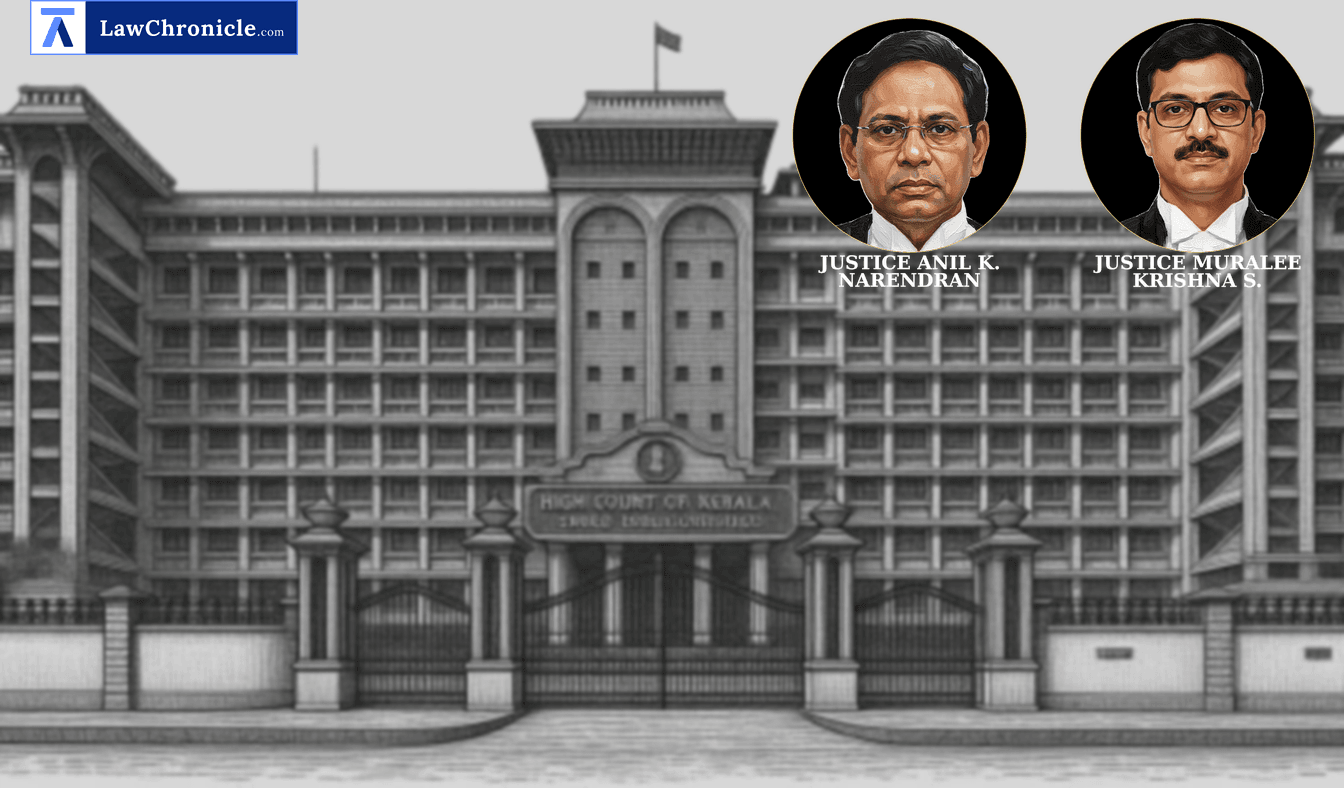
A division bench comprising Justice Anil K. Narendran and Justice Muralee Krishna S. delivered the judgment while hearing a writ petition filed by a sibling of a detenue. The petitioner challenged the detention order issued against his brother, who was allegedly involved in seven criminal cases related to drug trafficking since 2021.
Key Takeaways
Manual Record Exception
While digital systems like iCoPS facilitate quick data retrieval, the lack of digital data for older cases or different departments (like Excise) justifies reasonable administrative delays.
Departmental Coordination
Delays arising from the necessity to collect records from multiple jurisdictions and departments are acceptable if properly explained by the detaining authority.
Subjective Satisfaction
Confirmation of the maximum detention period is valid if the order reflects a full application of mind regarding the Advisory Board's opinion and the sponsoring report.
The Court examined whether a 78-day delay from the last prejudicial activity to the issuance of the detention order under Section 3(1) of the Prevention of Illicit Traffic in Narcotic Drugs and Psychotropic Substances Act invalidated the proceedings. The petitioner, relying on Shifna K v. State of Kerala ( "2026 KHC Online 2020": 2026 CaseBase(KER) 415), argued that the "live link" between the activity and the detention was snapped.
However, the Bench distinguished the present facts, noting that while the 'iCoPS' (integrated Core Policing System) exists, legacy data from before 2023 and records from the Excise Department are not fully integrated.
The Court has following directions:
"In the result, the writ petition stands dismissed."
The Court, in its reasoning, observed: "The collection of documents from various Excise Range offices pertaining to the criminal cases registered against the detenue is a time consuming process. So also, after the submission of the sponsoring report, the time consumed till the issuance of Ext.P1 order is sufficiently explained... sometime necessarily would have been consumed for scrutinising the proposal and the accompanying documents for arriving at the subjective and objective satisfaction by the empowered authority."
Ratio
Administrative delay in passing a preventive detention order does not automatically invalidate the detention if the authority provides a satisfactory explanation based on the complexities of record collection, especially when dealing with non-digitized legacy data or multi-departmental records.
Background
The detenue, Majesh Abraham John, was involved in seven criminal cases, the most recent being a 2025 narcotics case under the Narcotic Drugs and Psychotropic Substances Act. He was granted bail on February 9, 2026, the same day the proposal for preventive detention was initiated. The detention order was eventually issued on April 28, 2026, following a screening committee report and later confirmed for a one-year period on June 22, 2026.
The petitioner contended that the delay was fatal and that the maximum detention period was imposed without sufficient reasoning. The State countered that the time was spent gathering historical case files from various excise ranges. The Court referred to precedents like Frances Coralie Mullin v. W. C Khambra ( "(1980) 2 SCC 275": 1980 CaseBase(SC) 126) and L.M.S Ummu Saleema v. B. B Gujaral to emphasize that "time imperative can never be absolute" and that "eternal vigilance" must be balanced with the practicalities of bureaucratic verification. Finding the explanation for the delay reasonable, the Court dismissed the habeas corpus petition.
Case Details:
Case No.: WP(Crl.) NO. 1283 OF 2026
Neutral Citation: 2026:KER:78024
Case Title: Manoj Abraham John V. State Of Kerala
Appearances:
For the Petitioner(s): Sri.K.V.Anil Kumar, Smt.Radhika S.Anil, Shri.Nijaz Jaleel, Shri.Neeraj S.
For the Respondent(s): Shri.Joseph Rony Jose (Cgc), Shri.Chethan Krishna R (Government Pleader)
Source: 2026 CaseBase(KER) 29482
Similar Articles



 Breaking News


