


Unexplained Delay Snaps 'Live Link': Kerala High Court Quashes Detention Order Under PITNDPS Act
 Copy Link
 Share
 Save
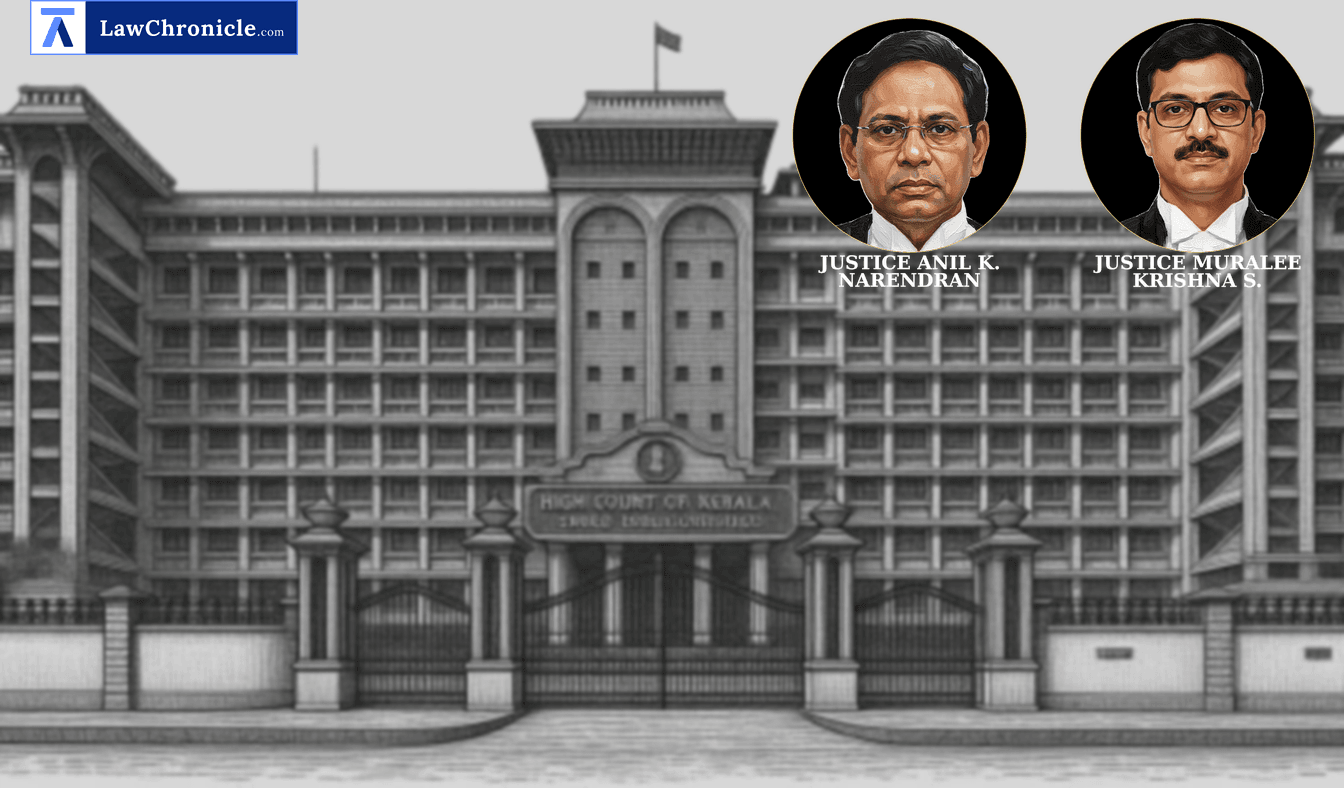
In a decisive intervention for personal liberty, the Kerala High Court has quashed a preventive detention order, ruling that an unexplained delay of even forty days in the administrative processing of a file is fatal to the 'live and proximate link' required to justify detention without trial. The court emphasized that the bureaucratic 'red tape' cannot override the constitutional safeguards of freedom when the state fails to provide a tenable explanation for its lethargy in executing preventive measures.
A Division Bench comprising Justice Anil K. Narendran and Justice Muralee Krishna S. delivered the judgment while hearing a Habeas Corpus petition filed by the daughter of a 55-year-old woman detained for alleged narcotic peddling. The Bench examined whether the detention order issued by the Additional Chief Secretary could withstand judicial scrutiny given the significant time gap between the last alleged criminal activity and the issuance of the detention warrant.
Key Takeaways
Live Link Vitality
Any unreasonable and unexplained delay between the last prejudicial activity and the detention order snaps the 'live and proximate link', rendering the subjective satisfaction of the detaining authority questionable.
Administrative Diligence Required
While the law does not prescribe a specific deadline, the State must account for every period of inactivity during administrative processing to prove the detention is truly preventive and not punitive.
Bail Cancellation vs. Preventive Detention
Preventive detention is not barred merely because the State could seek cancellation of bail; the two remedies operate in different spheres and serve distinct legal purposes.
Strict Construction of Personal Liberty
Laws of preventive detention must be strictly construed as they jeopardize liberty without a trial, requiring the Court to maintain 'eternal vigilance' against bureaucratic indifference.
Court's Observations on Administrative Delay
The Bench scrutinized the timeline of the case, noting that the last prejudicial activity occurred in April 2025, while the detention order was only issued in October 2025. The Court found that while initial steps involving investigation and committee screening were documented, a period from September 8, 2025, to October 17, 2025, remained entirely unexplained.
The Court, in its reasoning, observed: "From the principles stated in the aforementioned judgments regarding delay, it can be seen that the delay has to be considered on a case-to-case basis. Whether the delay is unreasonable or not depends upon the facts of each case. If there is sufficient explanation, the delay is not fatal. But in the instant case, there is no explanation for the delay from 08.09.2025 onwards. Mere mention of steps taken till the date of issuance of the detention order is not sufficient, since preventive detention is the curtailment of the liberty of a citizen without trial."
Addressing the petitioner's argument regarding the non-exhaustion of bail cancellation remedies, the Court clarified that such steps are not a mandatory prerequisite in every case. Citing precedents like Sujodh K v. State of Kerala ( "2025 KHC Online 648": 2025 CaseBase(KER) 14888) and Sulaiman M.V v. State of Kerala ( "2026 KHC Online 1994": 2026 CaseBase(KER) 26069), the Bench noted that the procedure for bail cancellation is often time-consuming and may not address the 'imminent danger' that preventive laws like the Prevention of Illicit Traffic in Narcotic Drugs and Psychotropic Substances Act, 1988 are designed to mitigate.
Directions Issued to Authorities
The Court has the following directions:
"The 7th respondent Superintendent, Women Prison and Correctional Home, Thiruvananthapuram, is directed to release the detenue Kamarunnisa C.V forthwith if her detention is not required in connection with any other case. The Registry shall communicate this order to the 7th respondent by e-mail at once."
Ratio
An unexplained and inordinate delay in the administrative processing of a preventive detention proposal, specifically between the receipt of authenticated reports and the final issuance of the order, snaps the live and proximate link between the prejudicial activity and the purpose of detention, thereby vitiating the subjective satisfaction of the detaining authority under Article 22 of the Constitution of India, 1950.
Background
The dispute arose from a detention order dated October 17, 2025, passed against Kamarunnisa C.V. under Section 3(1) of the Prevention of Illicit Traffic in Narcotic Drugs and Psychotropic Substances Act, 1988. The authorities relied on six criminal cases involving narcotic drugs, the most recent being Crime No. 334 of 2025 at Kozhikode Town Police Station involving 4.331 kg of Ganja.
The petitioner challenged the detention on two primary grounds: first, the unexplained delay of over six months from the last incident; and second, the failure of the State to seek cancellation of bail before resorting to the 'drastic' measure of preventive detention. The State defended the order by citing cases like Frances Coralie Mullin v. W.C. Khambra ( "(1980) 2 SCC 275": 1980 CaseBase(SC) 126) and L.M.S. Ummu Saleema v. B.B. Gujaral, arguing that the delay was due to necessary administrative scrutiny and that the nature of the offenses posed a threat to public order.
While the Court rejected the argument that bail cancellation must always be pursued first, it found the administrative delay from September to October 2025 to be 'inordinate' and 'unexplained.' Relying on the principles in Sushanta Kumar Banik v. State of Tripura ( "AIR 2022 SC 4715": 2022 CaseBase(SC) 1088) and Kunjumol P.G v. State of Kerala ( "2026 KHC Online 2147": 2025 CaseBase(KER) 10845), the Court held that the causal connection had been broken. Consequently, the High Court allowed the writ petition and ordered the immediate release of the detenue.
Case Details:
Case No.: WP(CRL.) NO. 973 OF 2026
Neutral Citation: 2026:KER:77216
Case Title: Sajina C V V. Union Of India And Others
Appearances:
For the Petitioner(s): Smt. Anagha Krishna, Smt. Shabnam Kodalil, Advocates
For the Respondent(s): Shri. Ratheesh P.R., CGC; Shri. Chethan Krishna, Government Pleader
Source: 2026 CaseBase(KER) 29503
Similar Articles




 Breaking News


