


MARB Cannot Re-Quantify Disability Percentage: Allahabad High Court
 Copy Link
 Share
 Save
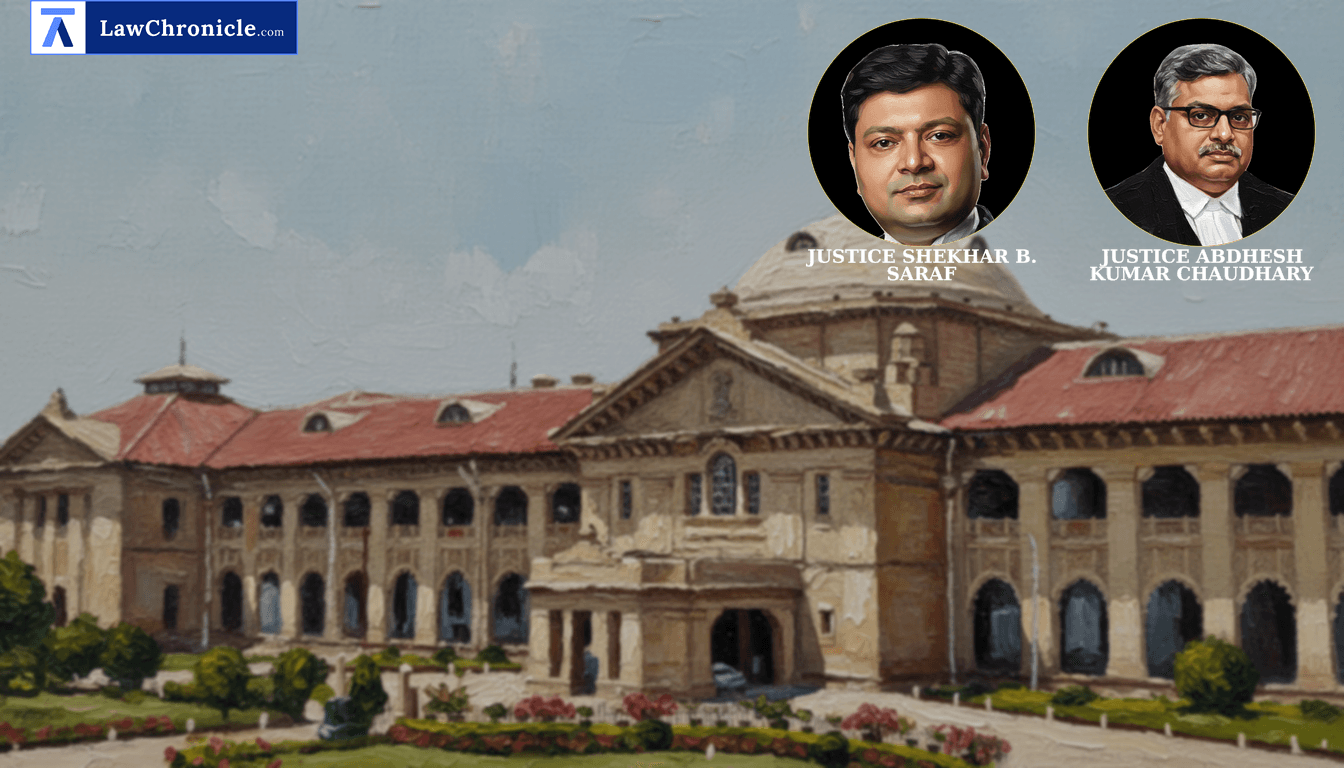
The Allahabad High Court rebuked administrative overreach by the National Medical Commission, ruling that Medical Assessment and Rating Boards (MARB) lack the jurisdiction to unilaterally reduce disability percentages certified by statutory authorities under Rights of Persons with Disabilities Act, 2016.
A bench comprising Justice Shekhar B. Saraf and Justice Abdhesh Kumar Chaudhary heard a batch of writ petitions challenging the actions of Medical Assessment and Rating Boards that had reduced candidates' disability percentages, thereby rendering them ineligible for reservation in the NEET (UG)-2026 admissions.
Key Takeaways
Statutory Primacy Restored
The Court affirmed that a Disability Certificate issued under Section 57 of the Rights of Persons with Disabilities Act, 2016 is a binding statutory determination that cannot be varied by NMC-constituted boards.
Functional vs. Quantified Assessment
Medical Assessment Boards are restricted to evaluating ‘Functional Competency’ (the ability to pursue the course) rather than re-calculating the extent of the physical disability itself.
Constitutional Safeguard
The ruling reinforces Constitution of India, 1950 rights, particularly Article 14, by preventing 'uncanalised and standard-less' re-determinations that defeat already crystallized legal rights.
Reasonable Accommodation Mandate
The Allahabad High Court emphasized that candidates cannot be disqualified based on mechanical percentage-based classifications without an individualized assessment of assistive technologies.
Invalidity of Unauthorized Re-quantification
The Allahabad High Court observed that the National Medical Commission (NMC) Guidelines, while regulating medical education, cannot arrogate powers that conflict with the Rights of Persons with Disabilities Act, 2016. The bench noted that despite candidates possessing valid Unique Disability IDs (UDID), assessment boards were "scaling down" disability percentages to bypass reservation quotas.
The Allahabad High Court issued the following directions:
"(i) The conclusion 'Ineligible for PwD Reservation' mentioned in the Eligibility Certificates issued by the Medical Assessment Boards, and the final medical opinions i.e. 'Ineligible under PwBD category' mentioned in the Medical Opinions on Appellate Reassessment, issued by the Appellate Medical PwD Assessment Board, are hereby quashed.
(ii) The finding of functional competency/eligibility for pursuing medical education recorded in the aforesaid Certificates and Medical Opinions shall remain undisturbed and shall be read as applicable to the petitioner(s) as a Person with Benchmark Disability.
(iii) The respondent authorities, shall treat the petitioner(s) as an “eligible candidate” under the PwBD Reserved Category for the purposes of NEET (U.G.)-2026 counselling, on the strength of the Disability Certificates and UDID Cards issued by the Chief Medical Officer, District concerned, read with the finding of functional competency recorded by and shall permit the petitioner to participate, on that basis, in the remaining round(s) of online counselling of NEET (U.G.)-2026, and to be considered for allotment of a seat strictly in accordance with the petitioner's All-India PwBD Rank and the applicable rules of counselling.
(iv) The interim orders whereby the petitioner(s) were permitted to participate in the ongoing counselling as a PwBD Reserved Candidate, are hereby made absolute and shall continue to enure to the benefit of the petitioner(s) till the seat allotment process attains finality.
(v) Any seat that may have already been provisionally allotted to, or joining permitted for, the petitioner pursuant to the interim orders shall not be disturbed on account of the impugned Certificates/Opinions, and shall be regularised in light of this judgment.
(vi) It is clarified that this judgment does not, in any manner, dilute the requirement of a Functional Competency Assessment as contemplated under Chapter II of the Guidelines dated 27.07.2026; it only holds that such assessment cannot extend to a re-quantification of the extent of disability already certified by the competent authority under Sections 56 and 57 of the Act of 2016.
(vii) The National Medical Commission, shall be at liberty to issue suitable clarificatory instructions to all Medical Assessment Boards constituted under the Guidelines dated 27.07.2026, reiterating that their mandate is confined to an individualized Functional Competency Assessment, consistent with the law laid down by the Supreme Court in Omkar Ramchandra Gond v. Union of India ( "2024 SCC OnLine SC 2860": 2024 CaseBase(SC) 771); Om Rathod v. The Director General of Health Services and Others ( "(2024) 19 SCC 70": 2024 CaseBase(SC) 753); and Anmol v. Union of India and Others ( "2025 SCC OnLine SC 387": 2025 CaseBase(SC) 71); and that any quantification of disability recorded in a certificate issued under Sections 56 and 57 of the Act of 2016 shall not be re-opened or varied by such Boards."
The Allahabad High Court further stated that "...once such a certificate is issued and remains unrevoked, unchallenged and subsisting, the percentage of disability recorded therein constitutes the statutory determination of that fact, binding on all authorities, unless set aside by a forum competent to do so in accordance with law... Any clause of the Guidelines, including Clause 12.4, that purports to authorize the Assessment Board to re-determine the quantum of benchmark disability, rather than merely to record a reasoned, individualized opinion on functional competency, would be ultra vires the Act of 2016 and would also offend the guarantee of equality under Article 14 of the Constitution of India."
Ratio
A Medical Assessment Board constituted under NMC Guidelines for MBBS admissions is not vested with the power to re-quantify or displace the percentage of disability certified by a competent authority under Sections 56 and 57 of the Rights of Persons with Disabilities Act, 2016. Its jurisdiction is strictly confined to an individualized functional assessment of the candidate's capability to pursue the course with or without reasonable accommodation.
Background
The petitioners, certified with permanent benchmark disabilities (ranging from Bell's Palsy to High Myopia) by their respective District Chief Medical Officers, had qualified for NEET (UG) 2026. Despite holding valid UDID cards reflecting disabilities above 40%, the Medical Assessment Boards at VMMC Safdarjung Hospital and BHU Varanasi reduced their disability percentages (in one case to 20% and another to zero), declaring them ineligible for the PwBD reservation category.
The petitioners argued that the NMC Guidelines were being misused to re-evaluate the extent of disability, which is a power exclusively reserved for the statutory certifying authority. The Allahabad High Court relied on its earlier decisions in Somya Pal Vs. Union of India and others, Shubham Rai Vs. Union of India and others, and Maaz Ahmad Vs. Union of India and others. Furthermore, it applied the binding principles laid down by the Supreme Court in Omkar Ramchandra Gond v. Union of India ( "2024 SCC OnLine SC 2860": 2024 CaseBase(SC) 771), Om Rathod v. The Director General of Health Services and Others ( "(2024) 19 SCC 70": 2024 CaseBase(SC) 753), and Anmol v. Union of India and Others ( "2025 SCC OnLine SC 387": 2025 CaseBase(SC) 71), which mandate a move toward functional classification rather than rigid percentage-based disqualification. The Allahabad High Court allowed the petitions, quashing the 'ineligible' findings while preserving the findings of functional competency.
Case Details:
Case No.: WRIT - C No. - 9769 of 2026
Case Title: Shubham Mishra Versus Union of India and 10 Others
Appearances:
For the Petitioner(s): Rajeiu Kumar Tripathi, Diwakar Singh Gautam, Mayankar Singh
For the Respondent(s): S.B. Pandey (DSGI), Anand Dwivedi, Gyanendra Kumar Srivastava, Shashank Bhasin, Syed Mohammad Haider Rizvi, S.M. Singh Royekwar
Source: 2026 CaseBase(ALL) 1169
Similar Articles

 Breaking News


