


Mere Deferment of Promotion Based on Inconsequential Complaint Cannot Bar Seniority: Chhattisgarh HC
 Copy Link
 Share
 Save
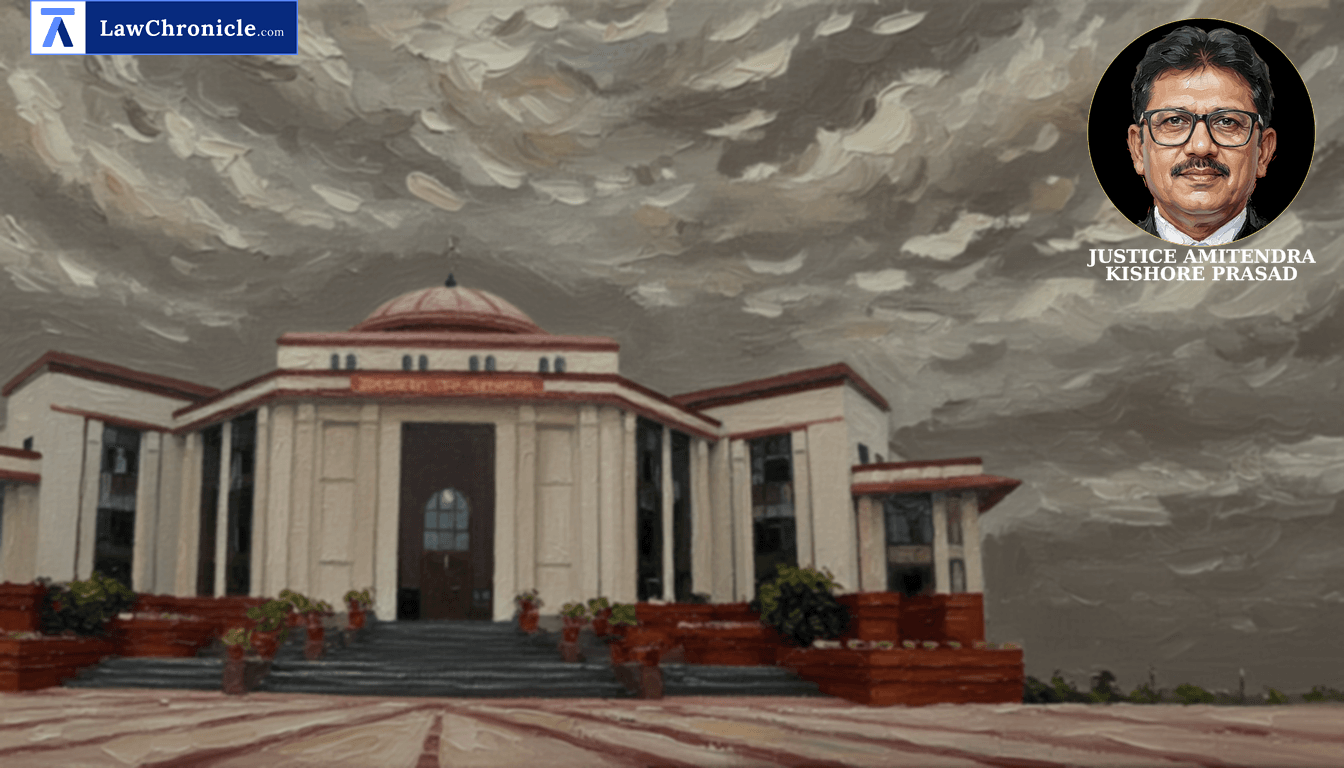
Shielding judicial officers from the deleterious effects of unsubstantiated complaints, the Chhattisgarh High Court has ruled that the temporary deferment of a promotion due to a complaint that eventually results in no adverse action cannot be used to permanently deprive an officer of their original seniority or promotional prospects.
Justice Amitendra Kishore Prasad, presiding as a single-judge bench, held that where an officer is found fit for promotion on the same service record that was available at the time of initial deferment, they are entitled to notional promotion and restoration of seniority from the date their juniors were promoted.
The Mandate for Fairness in Judicial Promotions
The High Court emphasized that the right to be fairly considered for promotion is a fundamental right under the Constitution of India, 1950. The Court observed that the petitioner, a Chief Judicial Magistrate, had her promotion to Civil Judge Class-I deferred in 2014 solely due to a complaint by a Superintendent of Police regarding judicial orders she had passed. Despite no departmental enquiry or disciplinary proceedings being initiated, she was denied her original seniority upon her eventual promotion in 2016.
The Court, in its reasoning, observed: "Once the complaint did not culminate in any disciplinary proceedings, enquiry, punishment or adverse finding, the deferment ceased to have any legal significance. Consequently, the petitioner cannot be made to suffer adverse service consequences merely because her case was temporarily deferred pending consideration of a complaint that ultimately proved inconsequential."
Reliance on Precedent and Statutory Rules
The petitioner placed heavy reliance on Rule 12(D) of the M.P. Civil Services (General Conditions Of Services) Rules, 1961, which provides for the restoration of original seniority when an employee is subsequently found fit. The Court also cited several landmark rulings, including Union of India and Others vs. Doly Loyi ( "2024 SCC OnLine SC 2613": 2024 CaseBase(SC) 484) and Ajit Singh (II) vs. State of Punjab, to underscore that seniority is a valuable civil right and its arbitrary unsettling impacts administrative efficiency.
Responding to the respondents' arguments regarding delay, the Court noted that issues involving seniority and promotion have recurring civil consequences. Referencing Mahendra Kumar Shrivastava vs. Chhattisgarh State Power Distribution Company Limited ( "2025 OnLine Chh 11506": 2025 CaseBase(CTH) 27779), the Court reiterated that in matters of pay fixation and seniority, the mere passage of time cannot extinguish legitimate entitlements unless prejudice to the administration is demonstrated.
Critique of Non-Speaking Administrative Orders
The Court further rebuked the practice of rejecting service representations through cryptic, unreasoned orders. Citing the Constitution Bench judgment in S.N. Mukherjee vs. Union of India ( "(1990) 4 SCC 594": 1990 CaseBase(SC) 367), the Court held that recording reasons is an essential requirement of fair decision-making and ensures transparency.
The Court has the following directions:
"Respondent Nos. 1 to 3 are directed to consider the case of the petitioner for grant of promotion to the post of Civil Judge Class-I (Senior Division) with effect from 14.08.2014, i.e., the date on which other eligible officers of her batch were promoted, and to examine her claim for restoration of seniority and all consequential service benefits in accordance with law. While undertaking such exercise, the competent authority shall keep in view the observations made in the present order and shall ascertain whether any legal impediment exists which may disentitle the petitioner from claiming such benefit. In the event no such legal impediment is found to exist, appropriate orders shall be passed granting the petitioner all consequential benefits, including fixation of seniority in accordance with the applicable rules. The aforesaid exercise shall be completed and a reasoned and speaking order shall be passed by the competent authority within a period of three months from the date of receipt of a certified copy of this order."
Background:
The petitioner was appointed as Civil Judge Class-II in 2008 and became eligible for promotion to Class-I in 2014. Her promotion was deferred while 45 of her batchmates were promoted, based on a complaint regarding her judicial conduct in directing the registration of an FIR against police officials. Although her explanation was accepted and no enquiry followed, she was only promoted in 2016 and placed at a lower seniority rank. This loss of seniority severely impacted her eligibility for promotion to the Higher Judicial Service (District Judge Entry Level) under the Chhattisgarh Higher Judicial Service (Recruitment and Conditions of Service) Rules, 2006. The High Court ultimately found that since the petitioner was promoted in 2016 based on the same ACRs available in 2014, the initial deferment lacked a permanent legal basis.
Key Takeaways:
Protection from Malicious Complaints
Judicial officers cannot be penalized in their career progression for passing judicial orders, especially when complaints against such orders do not result in formal disciplinary findings.
Continuing Cause of Action
Seniority and promotional disputes are recognized as having recurring consequences, meaning technical objections of delay may be overlooked if the injury to the employee's career persists.
Mandatory Restoration of Seniority
If a 'deferred' candidate is later found fit without any new adverse material appearing in the interim, the restoration of original seniority from the date of the batch's promotion is a legal necessity.
Ratio Decidendi:
Where an employee’s promotion is deferred solely due to a pending complaint that ultimately results in no disciplinary action or adverse finding, and the employee is subsequently promoted on the same service record, they are entitled to notional promotion and restoration of seniority from the date their juniors/batchmates were promoted. Deferment based on an inconsequential complaint cannot be converted into a permanent service penalty.
Case Details:
Case No.: WPS No. 7379 of 2023
NeutralCitation: 2026:CGHC:26195
Case Title: Smt. Chhaya Singh v. Hon’ble High Court of Chhattisgarh & Others
Appearances:
For the Petitioner(s): Mr. T.K. Jha & Mr. Anumeh Shrivastava, Advocates
For the Respondent(s): Mr. Ashish Surana, Mr. Abhishek Gupta, Mr. Gourav Singhal, Mr. Aman Kesharwani, Mr. Raja Sharma, Ms. Aditi Parakh, Ms. Smriti Ekka, Advocates
Source: 2026 CaseBase(CTH) 6
Similar Articles

 Breaking News


