


High Court Upholds Tribunal Order Reassigning Seniority of SC Employee Under Rule 13A
 Copy Link
 Share
 Save
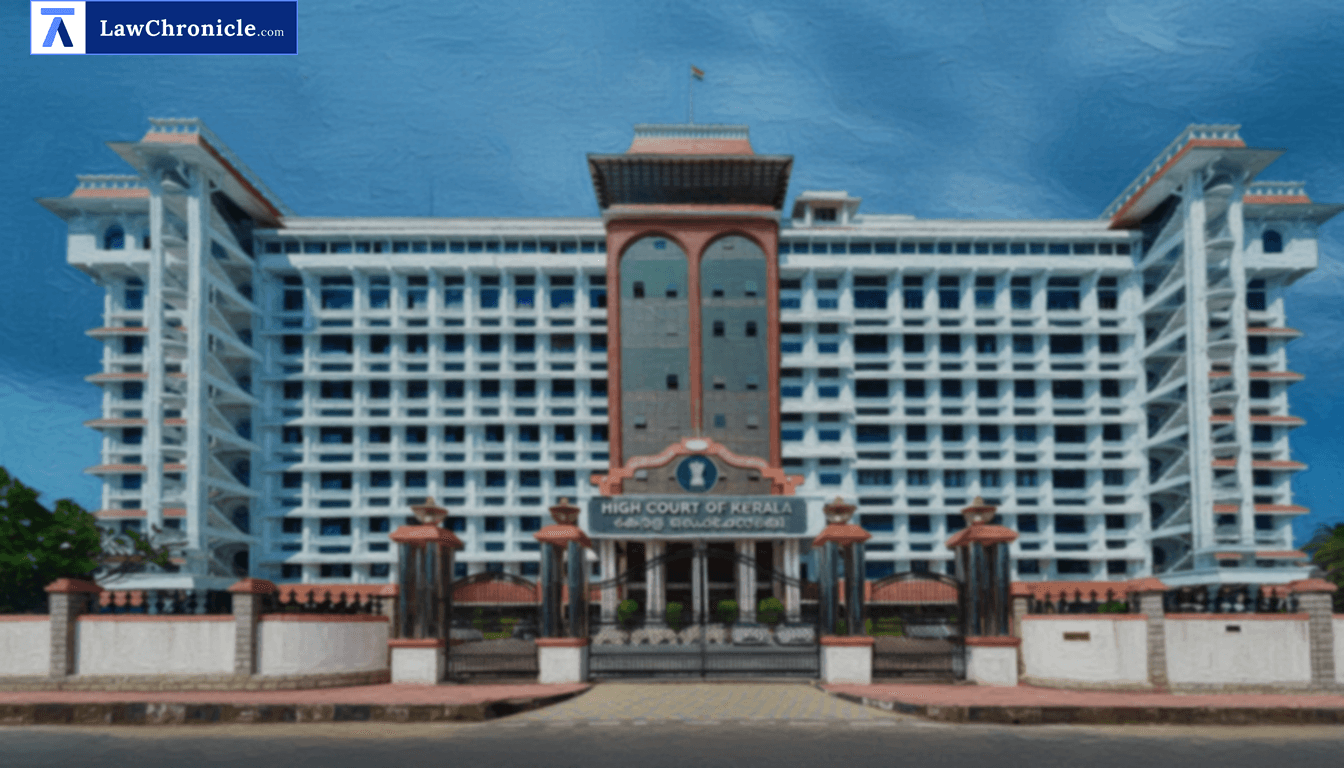
A Division Bench of Justice Anil K. Narendran and Justice Muralee Krishna S. heard a petition under Article 227 of the Constitution challenging the Kerala Administrative Tribunal’s order dated 26.09.2022 in O.A. No.1175 of 2018. The challenge concerned reassignment of seniority, retrospective promotions and cancellation of a promotion to the post of Superintendent in the light of Rule 13A and Rule 13AA of the Kerala State and Subordinate Service Rules (KS&SSR).
The High Court dismissed the petition and upheld the Tribunal’s conclusion that no interference was warranted under Article 227. The court held that temporary exemption under Rule 13A could only be claimed with effect from the date on which the immediate junior was promoted, and the three-year period to acquire the requisite test qualification ran from that date; failure to obtain the qualification within that period mandated reversion. The court agreed with the Tribunal that the “sit back” principle did not apply where the reassignment was challenged within a short period after the impugned order and where notice had been issued. The Court, in its reasoning, observed: “In view of the law laid down in the decisions referred to supra, the High Court in exercise of its supervisory jurisdiction under Article 227 of the Constitution of India cannot sit in appeal over the findings recorded by a lower court or tribunal. The supervisory jurisdiction cannot be exercised to correct all errors of the order or judgment of a lower court or tribunal, acting within the limits of its jurisdiction. The correctional jurisdiction under Article 227 can be exercised only in a case where the order or judgment of a lower court or tribunal has been passed in grave dereliction of duty or in flagrant abuse of fundamental principles of law or justice. Therefore, no interference under Article 227 is called for, unless the High Court finds that the lower court or tribunal has committed manifest error, or the reasoning is palpably perverse or patently unreasonable, or the decision of the lower court or tribunal is in direct conflict with settled principles of law or where there has been gross and manifest failure of justice or the basic principles of natural justice have been flouted.” The Tribunal itself had noted that the applicant’s immediate junior was promoted on 07.02.2001 and that, therefore, the exemption period would expire on 07.02.2004, whereas the petitioner obtained the test qualification only in June 2005.
Background The petitioner, a member of a Scheduled Caste, entered service in the Urban Affairs Department as Lower Division Clerk on 08.11.1991, completed probation on 31.03.1994, and obtained the departmental test qualification in June 2005. She received promotion to Senior Clerk on 12.01.2006. Government orders and circulars (GO(Ms)No.22/77/PD dated 13.01.1972, clarification of 28.11.1997, and Circular No.8130/GAD C3/2010 dated 24.02.2012) provided for temporary exemption from tests for SC/ST employees and for retrospective application and review in certain cases. Pursuant to departmental action, the 2nd respondent issued an order dated 11.01.2016 (Annexure A5) granting retrospective seniority placement between incumbents promoted in 2003; the petitioner accepted that reassignment and later obtained promotions to Head Clerk/Revenue Inspector and Superintendent. Subsequent representations by other incumbents led the department to issue a show-cause and, by order dated 21.05.2018 (Annexure A1), reassign the petitioner’s seniority to the original position with promotion dates revisited, cancel the Superintendent promotion and revert her to Head Clerk/Revenue Inspector.
The petitioner filed an Original Application before the Kerala Administrative Tribunal under Section 19 of the Administrative Tribunals Act to quash Annexure A1; the Tribunal dismissed the OA on the view that Rule 13A required counting the temporary exemption from the date the immediate junior was promoted and that the petitioner did not acquire the test qualification within the three-year period. The Tribunal also held that the sit-back doctrine did not apply because the reassignment was challenged within a short period after the retrospective seniority order and because notice had been issued and replied to. The High Court considered precedents on the scope of Article 227 (including Shalini Shyam Shetty v. Rajendra Shankar Patil, Jai Singh v. Municipal Corporation of Delhi and K.V.S. Ram v. BMTC), found the Tribunal’s reasoning neither perverse nor violative of fundamental principles of justice, and therefore dismissed the petition. The Tribunal’s earlier interim order had stayed operation of Annexure A1 on 03.07.2018; the final result in the High Court was dismissal of the Original Petition.
Case Details: Case No.: OP(KAT) No. 265 of 2023 Case Title: Ramani P. v. State of Kerala & Ors. Appearances: For the Petitioner(s): Shri V.N. Haridas, Advocate; Sri Lindons C. Davis, Advocate; Shri Saifudeen T.S, Advocate; Smt E.U. Dhanya, Advocate For the Respondent(s): A. J. Varghese, Senior Government Pleader; Shri Joice George, Senior Counsel (for Kothamangalam Municipality)
Similar Articles


 Breaking News


