


Mere Denial of Policy Issuance Cannot Prove Forgery: Gujarat HC
 Copy Link
 Share
 Save
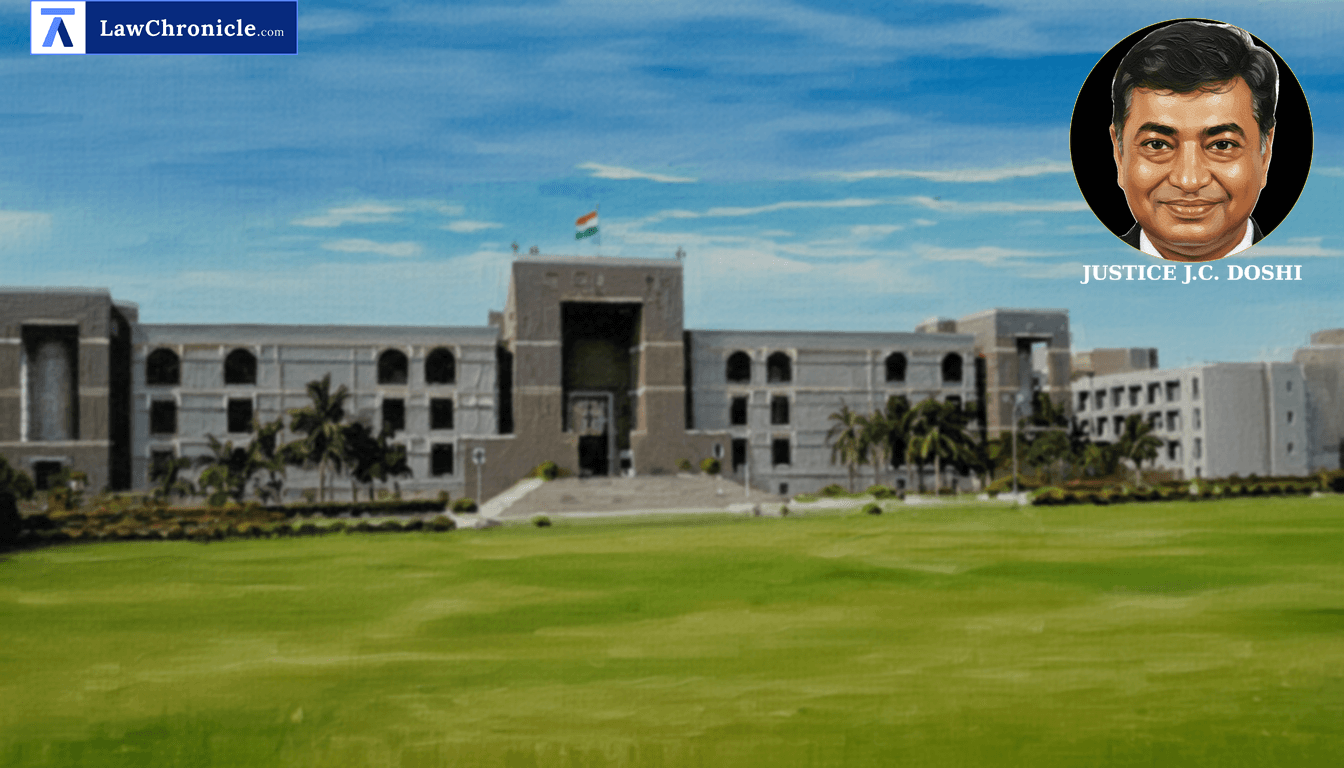
The Gujarat High Court has reinforced the evidentiary burden on insurance companies to substantiate claims of fabricated policies with cogent evidence, ruling that a mere assertion of non-issuance by an official is insufficient to avoid liability toward third-party claimants. This decision underscores that insurers must act with due diligence and provide verifiable records to prove fraud rather than relying on procedural denials.
In a judgment delivered by Justice J. C. Doshi, the Court dismissed an appeal filed by SBI General Insurance Company Ltd. challenging a Motor Accident Claims Tribunal (MACT) award. The High Court found that the insurer failed to meet the threshold of proof required to establish that a motor insurance policy was fake, particularly when compared against computer-generated standards and receipt protocols.
Key Takeaways
Heightened Proof for Fraud
Insurers must produce original issuance registers, electronic records, and testimony from competent witnesses of the specific branch to prove a policy is fabricated.
Diligence in Reporting
Failure to register an FIR or inform the Regional Transport Office (RTO) regarding an allegedly fake policy significantly weakens an insurance company's defense.
Protection for Third Parties
Third-party claimants remain protected under the "pay and recover" principle even when disputes exist between the insurer and the vehicle owner regarding policy genuineness.
Procedural Rigor
Insurers cannot raise fresh defenses at late stages of proceedings without proper evidentiary support and thorough cross-examination of claimants.
The Requirement of Cogent Evidence for Allegations of Fabrication
The Court analyzed whether the appellant insurance company had successfully discharged its burden of proof. It noted that the insurer failed to examine officials from the actual branch that purportedly issued the policy and relied on a witness who had no knowledge of the records from the period of the accident. The Court observed that while the company alleged a criminal complaint had been filed, no actual FIR or investigation report was placed on record to corroborate the claim of fraud.
The Court, in its reasoning, observed: "The central evidentiary principle in a case of raising a defence of fake, forged, and fabricated policy is that a mere denial by the insurance company that it has not issued the policy should not automatically be treated as proof of forgery. The insurer must establish its defence through legally admissible and sufficiently reliable evidence assessed in the context of the entire record."
Referring to National Insurance Company Limited v. K. Saravanan ( "(2026 INSC 339)": 2026 CaseBase(SC) 1053), the Court highlighted that the insurer must act diligently upon discovering an alleged fake policy, including reporting the matter to appropriate police authorities.
Judicial Scrutiny of "Pay and Recover" Orders
Regarding the Tribunal's decision to order the insurer to pay the compensation and later recover it from the owner, the High Court found no illegality. The Court noted that such directions safeguard the interests of third-party claimants while preserving the insurer's right to seek indemnity if the owner is later found at fault or if fabrication is conclusively established.
The Court has following directions:
"The appeal is bereft of merit and deserves to be dismissed. Accordingly, first appeal is dismissed. Interim relief granted earlier, if any, stands vacated. Connected Civil Application also stands disposed of."
Ratio
A mere assertion by an authorized officer that a policy was not issued by the insurance company cannot be treated as conclusive proof of fabrication without an adequate evidentiary foundation consisting of policy issuance records, premium accounts, and the testimony of competent witnesses from the relevant branch. The insurer’s duty to act diligently, as established in National Insurance Company Limited v. K. Saravanan ( "(2026 INSC 339)": 2026 CaseBase(SC) 1053), requires immediate reporting to authorities to maintain a defense of forgery.
Background
The dispute arose from a vehicular accident on March 9, 2015, resulting in the death of Babubhai Govabhai Desai, a government teacher. His heirs filed a claim petition under Section 166 of the Motor Vehicles Act, 1988. SBI General Insurance Company Ltd. contested the claim, alleging that the insurance policy produced by the claimants (Exh. 66) was fake and that the actual policy with that number was a long-term home insurance policy issued to a different individual (Exh. 80).
The Tribunal at Patan had awarded Rs. 37,00,420 with 9% interest, applying the "pay and recover" principle. In its appellate review, the High Court observed that the insurer had not cross-examined the claimants on the issue of fabrication early in the proceedings and failed to produce digital signature records to invalidate the claimant's document. Following the principles in Oriental Insurance Company Limited v/s. Jayeshbhai Bhagubhai Patel and Anitaben and other v/s. Abdulhakim Allarkhan Shaikh, the Court held that a hyper-technical approach should not be adopted in motor accident claims. The appeal was dismissed, and the insurer was held liable to fulfill the award.
Case Details:
Case No.: R/FIRST APPEAL NO. 5650 of 2019
Neutral Citation: 2026:GUJHC:67123
Case Title: SBI General Insurance Company Ltd Versus Radhaben Govabhai Desai (Rabari) (Deleted) & Ors.
Appearances:
For the Petitioner(s): Ms Kirti S Pathak
For the Respondent(s): Mr KK Thakkar, Mr Vibhuti Nanavati, Mr Anshul R Shah, Mr Nishit P Gandhi
Source: 2026 CaseBase(GUJ) 31757
Similar Articles


 Breaking News


