


Mere FIR Registration and 'Not Admitted' Closure No Basis for Compensation: J&K High Court
 Copy Link
 Share
 Save
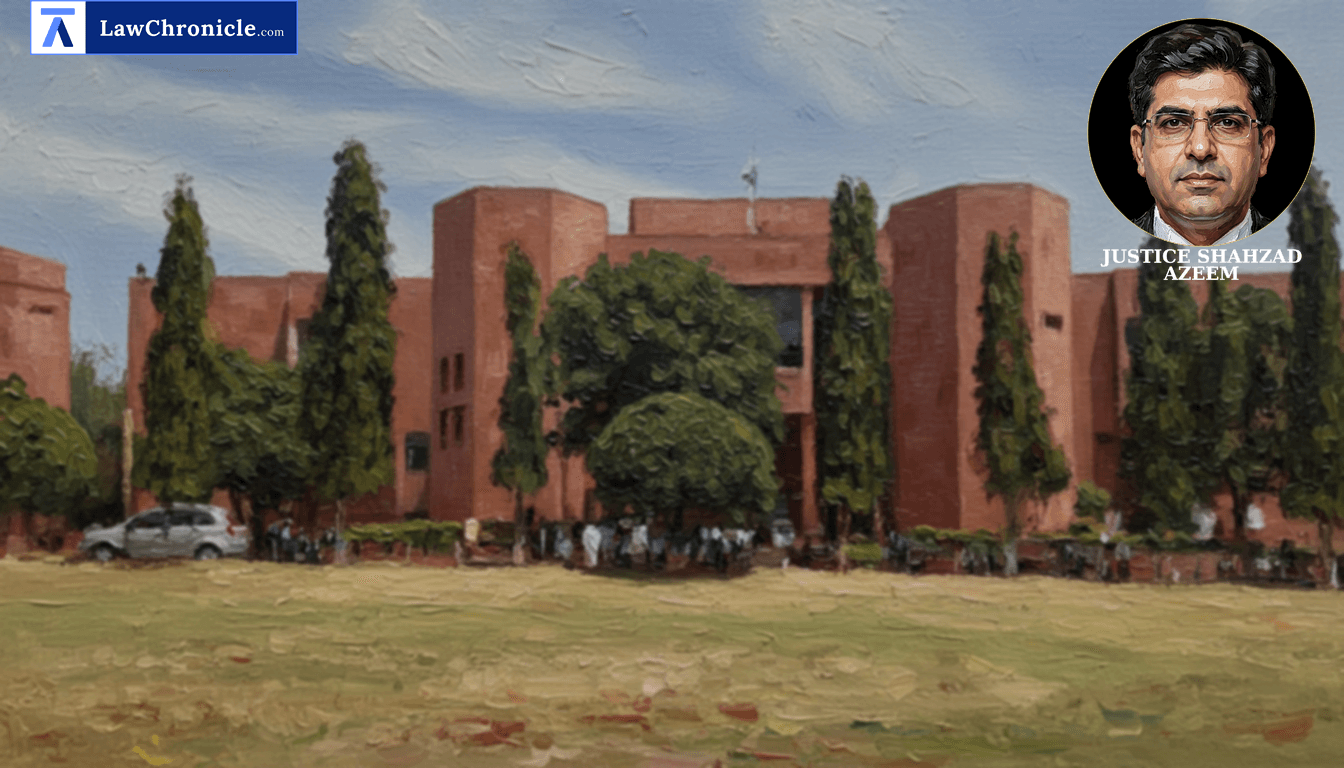
The Jammu & Kashmir and Ladakh High Court has slammed the brakes on claims for monetary compensation against the State for legal police actions, ruling that the mandatory registration of an FIR and its subsequent closure due to lack of evidence does not constitute a violation of fundamental rights. The court clarified that public law remedies for compensation are exceptional and require established proof of malafides or gross abuse of process, rather than the mere failure of an investigation to yield a charge sheet.
Justice Shahzad Azeem presided over the matter, evaluating a petition that sought the quashing of an FIR and an unprecedented demand for Rs. 50.00 lacs in compensation for each petitioner. The Court noted that since the investigation had already been closed by the police as "not admitted," the primary challenge to the FIR had become infructuous, leaving the bench to focus on the legality of the compensation claim and the conduct of the investigating authorities.
Police Duty vs. Harassment: The Legal Boundary
The court emphasized that the police were legally bound to register an FIR upon receiving information regarding cognizable offences under the Narcotic Drugs and Psychotropic Substances Act, 1985. Citing the landmark Constitutional Bench decision in Lalita Kumari vs. Government of Uttar Pradesh & Ors ( "(2014) 2 SCC 1": 2013 CaseBase(SC) 771), the bench observed that once an information discloses a cognizable offence, the police possess no discretion to refuse registration or conduct a preliminary inquiry into its veracity. The Court found that the investigation, which involved obtaining search warrants from an Executive Magistrate and seizing vehicles in his presence, followed the due process of law.
Regarding the petitioners' allegations of ulterior motives, the Court noted that the Investigating Officer’s (I.O.) decision to close the case for lack of evidence was, in fact, evidence of good faith. The Court, in its reasoning, observed: "Had the Investigating Officer been acting with any malafide intention or with the object of harassing the petitioners or extorting money, he could have attempted to somehow manipulate or fabricate evidence to file a false charge sheet and drag the petitioners into prolonged trial. Instead, the I.O. has bonafidely closed the investigation when the evidence was found insufficient."
Threshold for Compensation under Public Law Remedy
The High Court reiterated that compensation in writ jurisdiction is an exceptional remedy. Referring to the Supreme Court's stance in State of Rajasthan vs. Jainudeen Shekh & Anr. ( "(2016) 1 SCC 514": 2015 CaseBase(SC) 173), the bench held that acquittal or closure of a case does not automatically entitle an accused to compensation unless there is positive material showing false implication. The Court has following directions:
"The CD file be returned to Mr. Faheem Nisar Shah, learned GA for onward transmission to the concerned Police Station with due dispatch."
Key Takeaways
Mandatory FIR Registration Immunity
Police officers cannot be sued for compensation merely for fulfilling their statutory duty under Section 154 of the Criminal Procedure Code to register an FIR when cognizable offences are disclosed.
High Bar for Public Law Compensation
Monetary relief for alleged fundamental rights violations during criminal proceedings requires concrete proof of malafides, custodial torture, or gross abuse of power; simple lack of evidence for a charge sheet is insufficient.
Legality of NDPS 'Property' Offences
Sections 8A and 27B of the Narcotic Drugs and Psychotropic Substances Act, 1985 are enforceable against those involved in trafficking who attempt to conceal the illicit origin of their assets through movable or immovable property investments.
Ratio
The mere registration of an FIR based on reliable information of a cognizable offence, and its subsequent closure as 'not admitted' due to insufficient evidence, does not per se constitute a violation of fundamental rights or provide a cause of action for compensation under inherent or writ jurisdiction, provided the investigation followed due process and lacks evidence of malafides or physical harassment.
Background:
The dispute originated from FIR No. 11/2023 at Police Station Karnah, registered following source information that the petitioners were involved in smuggling narcotics across the Line of Control (LoC) and laundering the proceeds into properties. While the petitioners alleged the FIR was a tool for harassment and extortion, the State contended that they followed legal procedures, including obtaining warrants from an Executive Magistrate. The investigation eventually concluded as "not admitted" because admissible evidence was insufficient for a trial. The petitioners approached the High Court seeking compensation for the damage to their reputation and the alleged vagueness of the FIR. The Court dismissed the petition, finding that the petitioners failed to prove any custodial torture or malicious prosecution.
Case Details:
Case No.: CRM(M) No. 261/2023
NeutralCitation: 2026:JKLHC-SGR:232
Case Title: Javid Ahmad Lone & Others Vs. Union Territory of J&K Th. SHO P/S Karnah
Appearances:
For the Petitioner(s): Mr. Waseem Ramzan, Adv.
For the Respondent(s): Mr. Faheem Nisar Shah, GA.
Source: 2026 CaseBase(JK) 14
Similar Articles




 Breaking News


