


Himachal Pradesh HC Transfers Drug Seizure Case to CBI Over Unexplained Police Detention
 Copy Link
 Share
 Save
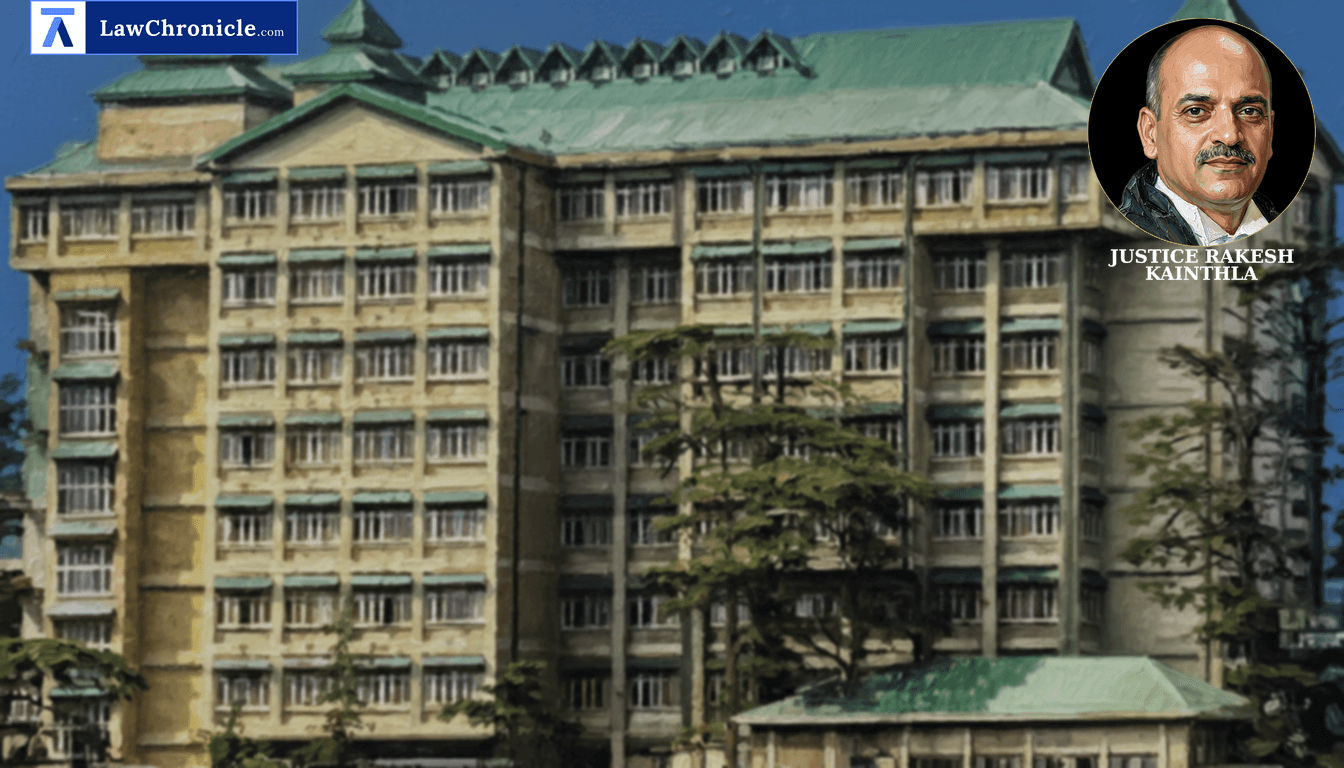
In a decisive move against potential custodial misconduct, the Himachal Pradesh High Court has ordered a CBI probe into a drug seizure case where the police failed to explain a seven-hour detention of suspects and a subsequent life-threatening injury to an accused on-site.
Justice Rakesh Kainthla, while hearing a petition for quashing of an FIR, highlighted significant procedural gaps that raised questions about the genuineness of the recovery of 28 grams of charas and the seizure of ₹4,00,000/- in cash.
The Doctrine of Conscious Possession Under NDPS
The petitioners challenged the FIR registered under Sections 20, 25 and 29 of the Narcotic Drugs and Psychotropic Substances Act, 1985, alleging that the police fabricated the recovery after they refused to submit to unlawful demands. However, the Court observed that since all petitioners were travelling in the same vehicle from which the contraband was recovered, the principle of conscious possession applied as established in Madan Lal versus State of H.P. ( "(2003) 7 SCC 465": 2003 CaseBase(SC) 1695).
While declining to quash the FIR at the threshold, the Court noted that a mini-trial to determine the reliability of allegations cannot be conducted under Section 482 of the Code of Criminal Procedure. Relying on Punit Beriwala v. State (NCT of Delhi) and Dharambeer Kumar Singh v. State of Jharkhand ( "(2025) 1 SCC 392": 2024 CaseBase(SC) 529), the Court held that it must treat the averments in the FIR as true at this stage. Further, the Court referenced B.N. John v. State of U.P. ( "2025 SCC OnLine SC 7": 2025 CaseBase(SC) 328) to underscore that inherent powers should be used sparingly, primarily to prevent the abuse of the process of any court.
Suspicious Circumstances and Unexplained Delays
The Court expressed concern over the police's failure to justify why the petitioners were kept at the spot from 6:50 PM until 1:30 AM, during which one petitioner was allegedly hit by another vehicle and grievously injured. The Court also took note of the non-functional status of the 'e-sakshya' app during the incident.
The Court has the following directions:
"Therefore, it is necessary that an independent investigation be carried out in the circumstances surrounding the injury to petitioner No.1 and the apprehension of the petitioners. Therefore, the CBI is directed to investigate the present matter surrounding the apprehension of the petitioners and injury to petitioner No.1. A copy of this order be forwarded to the Director, CBI."
In its reasoning, the Court observed: "The case diary maintained by the police does not provide any satisfactory explanation as to why the petitioners were kept on the spot from 6.50 PM till 1.30 AM. The entry in the case diary also mentions that the e-sakshya app was not functioning, and recording was not carried out. The circumstances in which petitioner No.1 was injured are also not properly explained."
Key Takeaways:
Judicial Mandate for Independent Probe
Where the conduct of local police during a seizure is shrouded in suspicion or unexplained delays, the Court can mandate an external agency like the CBI to ensure a fair investigation.
Limits of Quashing Power
Allegations of police planting evidence or procedural illegalities are matters of trial and do not automatically entitle an accused to the quashing of an FIR under Section 482 if the allegations prima facie disclose an offence.
Conscious Possession in Private Vehicles
Occupants of a private vehicle are presumed to be in conscious possession of any contraband recovered from it unless proven otherwise during trial.
Ratio Decidendi:
While a High Court cannot conduct a mini-trial to assess the truthfulness of an FIR at the quashing stage, it is obligated to secure the ends of justice by directing an independent investigation when the state machinery's actions involve unexplained custodial injuries and procedural lapses that compromise the fairness of the legal process.
Background:
The dispute began when the Bhunter Police allegedly intercepted the petitioners' vehicle and recovered 28 grams of charas and ₹4,00,000/- in cash. The petitioners contended that the police staged the recovery after they refused to pay a bribe or provide a lift. During the hours-long detention at the spot, Petitioner No. 1 was hit by a mini-bus, leading to serious injuries. The petitioners moved the High Court seeking to quash the proceedings on grounds of mala fides and malicious prosecution, citing the guidelines in State of Haryana v. Bhajan Lal and Maneesha Yadav v. State of U.P.. While the State argued that the recovery was witnessed by independent persons, the High Court found the circumstances sufficiently suspicious to warrant a central agency's intervention while keeping the criminal proceedings alive.
Case Details:
Case No.: Cr. MMO No. 425 of 2026
NeutralCitation: 2026:HHC:28243
Case Title: Jamyang Tesring & ors. Versus State of HP & ors.
Appearances:
For the Petitioner(s): Mr Nishant K. Sharma, Advocate.
For the Respondent(s): Mr Jitender Sharma, Additional Advocate General, assisted by HC Manoj Kumar.
Source: 2026 CaseBase(HP) 29
Similar Articles
 Breaking News


