


Mere Matrimonial Discord No Ground For Abetment Of Suicide: Rajasthan HC
 Copy Link
 Share
 Save

In a significant intervention protecting personal liberty against vague allegations, the Rajasthan High Court has ruled that domestic differences or marital quarrels do not inherently constitute the mens rea required for the offence of abetment of suicide. This decision underscores the necessity of proving intentional instigation or active participation by the accused before sustaining a conviction under Section 306 of the IPC.
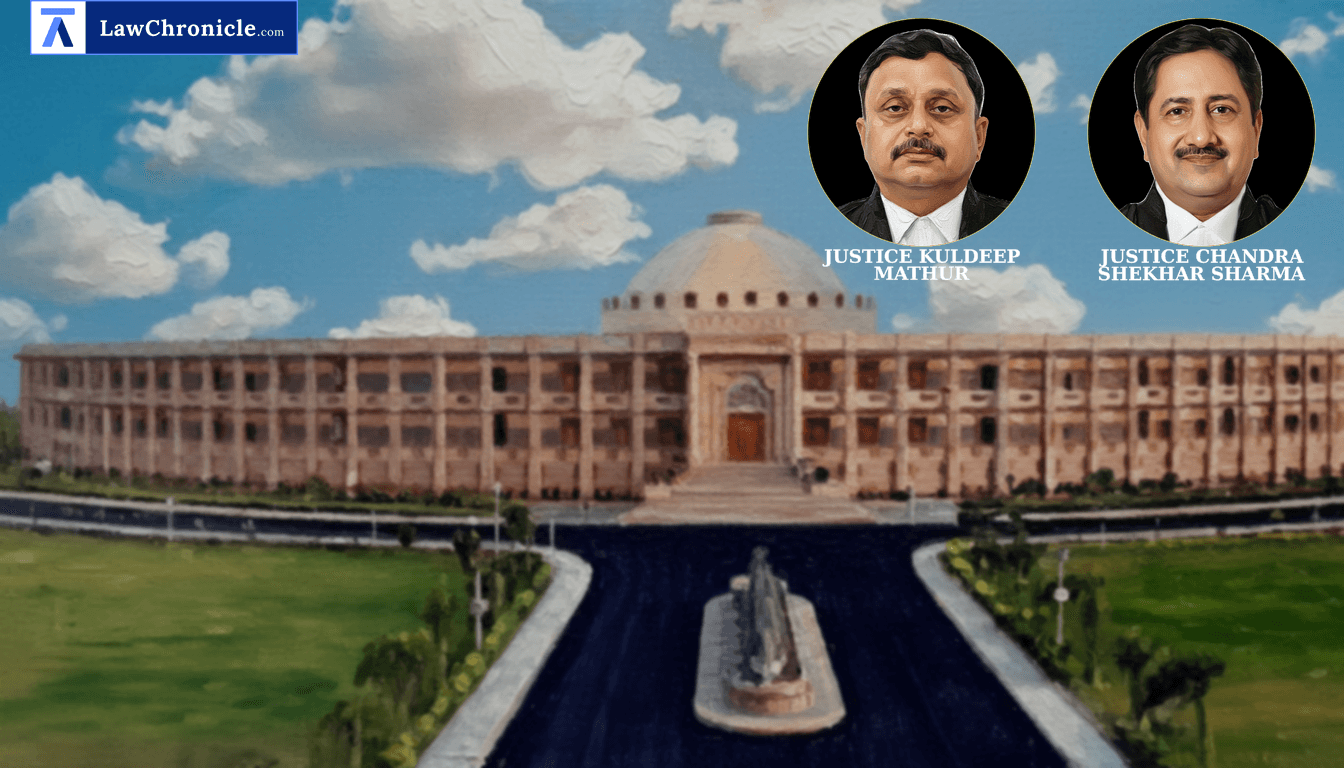
Justice Kuldeep Mathur presided over the hearing concerning an application for the suspension of sentence. The Court evaluated whether the allegations against the appellant, whose wife committed suicide by consuming poison, met the rigorous legal standards of abetment under Indian criminal law.
The Requirement of Positive Act and Mens Rea
The appellant challenged the trial court's conviction, asserting that the prosecution failed to demonstrate any positive act that drove the deceased to take her own life. The defense argued that while the marriage occurred in 2014, the subsequent allegations of misbehaviour and harassment were insufficient to establish the essential ingredients of Sections 306 and 107 of the IPC. Relying on the precedent set in Geo Varghese v. State of Rajasthan ( "(2021) 19 SCC 144": 2021 CaseBase(SC) 1372), the appellant contended that mere matrimonial discord cannot be equated to instigation.
Court's Observations on Legal Principles
The Court, in its reasoning, observed: "Learned counsel contended that the learned trial Court failed to appreciate that there is no evidence on record to establish the requisite mens rea or any positive act on the part of the appellant-applicant which could be said to have driven the deceased to commit suicide. It was submitted that mere allegations of matrimonial discord, quarrels or domestic differences, by themselves, do not constitute the offence of abetment of suicide."
Considering the heavy pendency of appeals and the fact that the appellant had no criminal antecedents, the Court found it a fit case for the suspension of sentence during the pendency of the appeal.
Specific Directions Issued by the Court
The Court has the following directions:
"1. That he/she/they will appear before the trial Court in the month of January of every year till the appeal is decided.
2.That if the applicant(s) changes the place of residence, he/she/they will give in writing his/her/their changed address to the trial Court as well as to the counsel in the High Court.
3. Similarly, if the sureties change their address(s), they will give in writing their changed address to the trial Court."
Key Takeaways
- Strict Interpretation of Abetment: Reaffirms that Section 306 requires proof of direct instigation or intentional aid, not just general evidence of a troubled marriage.
- Liberty During Appeal: Recognizes the judicial delay and 'heavy pendency' as valid grounds for suspending a sentence when the appeal raises substantial legal questions.
- Evidentiary Threshold: Highlights that domestic quarrels without the requisite 'mens rea' are insufficient to link an accused to a spouse's suicide.
Ratio
To constitute the offence of abetment of suicide under the IPC, there must be evidence of a positive act of instigation or intentional aid. Mere allegations of matrimonial discord or domestic differences do not fulfil the legal requirements of Sections 306 and 107 of the IPC in the absence of established mens rea.
Background:
The appellant was convicted by the Sessions Judge, Dungarpur, in Case No. 51/2022 for the suicide of his wife, Sharda. The prosecution alleged that his harassment led her to consume poison. The High Court, noting the lack of evidence regarding active instigation and the appellant's clean record, allowed the application under Section 430 of the BNSS (corresponding to Section 389 of the Cr.P.C.). The sentence remains suspended until final disposal of the appeal.
Case Details:
Case No.: S.B. Criminal Misc. Suspension Of Sentence Application (Appeal) No. 1250/2026
NeutralCitation: [2026:RJ-JP:34414]
Case Title: Shivlal v. State Of Rajasthan
Appearances:
For the Petitioner(s): Mr. Anuj Sahlot, Advocate
For the Respondent(s): Mr. Ramesh Dewasi, Public Prosecutor
Source: 2026 CaseBase(RAJ) 811
Similar Articles

 Breaking News


