


Mere Presence in Unlawful Assembly Invokes Vicarious Liability for Murder: Punjab & Haryana HC
 Copy Link
 Share
 Save
The Punjab and Haryana High Court has reinforced the stringent principles of vicarious liability in heinous crimes, ruling that active participation in an unlawful assembly with the knowledge of a common object is sufficient to deny bail even if no fatal injury is directly attributed to the accused.
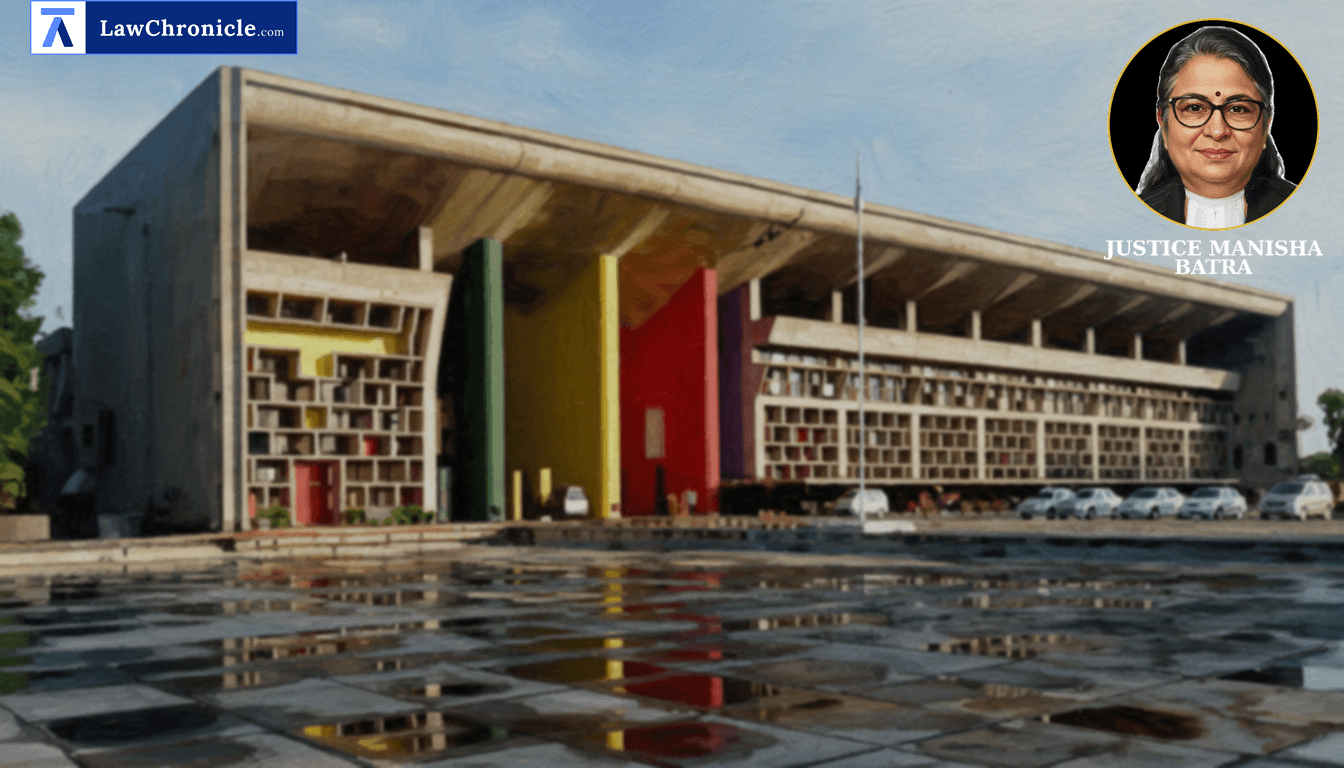
In a hearing presided over by Justice Manisha Batra, the Court dealt with a regular bail petition filed under Section 483 of the Bharatiya Nagarik Suraksha Sanhita, 2023. The petitioner sought relief in a case involving charges of murder and assault under the Bharatiya Nyaya Sanhita, 2023, following a violent confrontation sparked by a dispute over firecrackers.
Key Takeaways
Vicarious Liability Reaffirmed
Individual acts are secondary to the common object under Section 190 of Bharatiya Nyaya Sanhita, 2023, making all members of an assembly liable for the resulting murder.
Seriousness Over Incarceration
While the length of time spent in jail is a factor for bail, it cannot outweigh the gravity of accusations involving capital punishment or life imprisonment.
Knowledge of Consequences
Knowledge of a likely offence can be inferred from the nature of the assembly, the weapons used, and the behavior of participants at the scene.
Court Observations and Directions
The Punjab and Haryana High Court scrutinized the role of the petitioner, who was part of an assembly that assaulted a victim with iron rods and other weapons. Despite the petitioner's argument that he did not strike the fatal blow, the Court emphasized that liability rests on the collective mindset of the group. The Bench observed that “From a perusal of the above ingredients, it is apparent that even mere presence in the unlawful assembly but with an active mind to achieve the common object, makes a person vicariously liable for the acts of the unlawful assembly. Under Section 190 of BNS, the liability of the other members, for the offence committed during the continuance of the occurrence rests upon the fact whether the other members knew beforehand that the offence actually committed was likely to be committed in prosecution of the common object or not. Such knowledge can reasonably be collected from the nature of the assembly, the weapon used, the behaviour of the participants at or before the scene of action.”
Ratio
Under Section 190 of the Bharatiya Nyaya Sanhita, 2023, a member of an unlawful assembly is vicariously liable for any offence committed in prosecution of the common object, or such as the members knew was likely to be committed. The gravity of a murder charge under Section 103 of Bharatiya Nyaya Sanhita, 2023 and the prima facie involvement of an accused in a heinous crime preclude the exercise of discretionary bail, notwithstanding the duration of incarceration or the lack of a direct fatal blow by the specific accused.
Background
The case originated from an incident on November 1, 2024, where a dispute arose after one Monu was firing crackers using his motorbike. When the victim, Wazir Ram, attempted to intervene, he was allegedly assaulted by the petitioner and others. The petitioner was accused of using an iron rod, while others used a 'kara' and a 'danda'. The victim eventually succumbed to his injuries on November 3, 2024.
The petitioner argued for bail on the grounds of parity, noting that other co-accused had been granted bail, and claimed that the fatal head injury was attributed only to the co-accused Monu. The State opposed the plea, citing Section 190 of Bharatiya Nyaya Sanhita, 2023 and the heinous nature of the crime. The Punjab and Haryana High Court relied on precedents such as Parmod Kumar Saxena Vs. UOI, Chenna Boyanna Krishna Yadav Vs. State of Maharashtra ( "(2007) 1 SCC, 242": 2006 CaseBase(SC) 274), and State through CBI Vs. Amaramani Tripathi to reiterate that bail is a discretionary relief based on the severity of the punishment and the nature of the evidence. Finding the allegations of murder to be serious and the petitioner's participation evident, the Punjab and Haryana High Court dismissed the petition.
Case Details:
Case No.: CRM-M No.39220 of 2026
Case Title: Neeraj Kumar v. State of Punjab
Appearances:
For the Petitioner(s): Mr. G.S. Jagpal, Advocate
For the Respondent(s): Ms. Sakshi Bakshi, Assistant Advocate General, Punjab
Source: 2026 CaseBase(PNH) 30032
Similar Articles
 Breaking News


