


Active Participation in Unlawful Assembly Makes Murder Accused Vicariously Liable: PHHC
 Copy Link
 Share
 Save
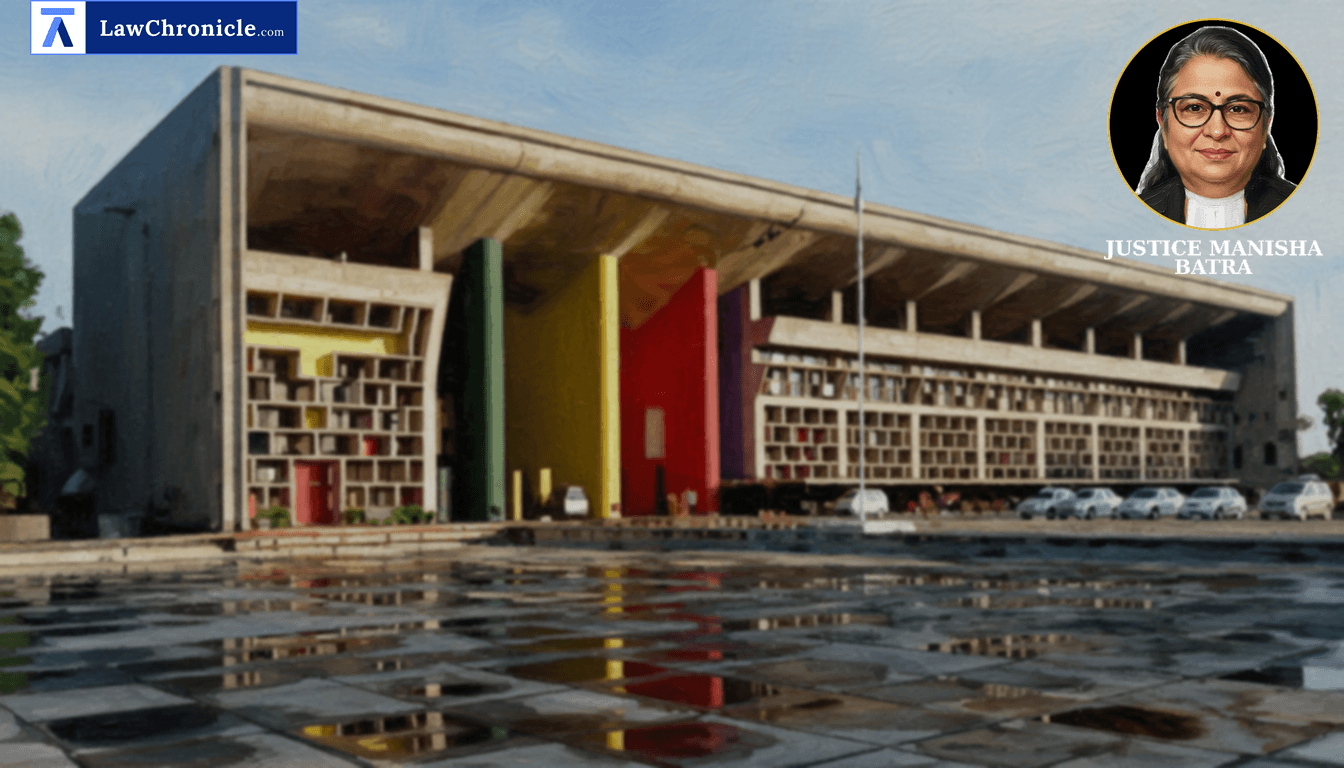
The Punjab and Haryana High Court has slammed the door shut on a murder accused, ruling that mere presence in an unlawful assembly with a shared common object is sufficient to invoke vicarious liability for heinous crimes. The Bench held that the severity of a murderous assault and the active participation of the accused outweigh the length of incarceration in bail considerations.
Justice Manisha Batra presided over the appeal challenging the denial of regular bail to the appellant, who is allegedly a member of a gang involved in a fatal assault. The Punjab and Haryana High Court examined the interplay between individual actions and collective responsibility in the context of a homicidal attack involving multiple assailants.
Key Takeaways
Vicarious Liability Solidified
Mere presence at a crime scene as part of an unlawful assembly, when coupled with a shared common object, creates full legal liability for the resulting outcome, even if a specific injury is not attributed.
Gravity Over Incarceration
While the duration of time spent in jail is a factor for bail, it cannot overshadow the seriousness of accusations involving capital punishment or life imprisonment.
Antecedents and Conduct Matter
Previous criminal history, particularly under drug laws, serves as a significant deterrent in the judicial exercise of discretionary bail powers.
Preservation of Trial Integrity
Bail may be denied to prevent the potential tampering of evidence or intimidation of material witnesses who are yet to be examined.
Court Observation on Vicarious Liability
The Punjab and Haryana High Court delved into the requirements for establishing guilt through collective intent. It emphasized that Section 190 of the Bharatiya Nyaya Sanhita, 2023, which corresponds to the erstwhile Section 149 of the Indian Penal Code, 1860, creates a legal framework where every member of an assembly is responsible for acts committed in prosecution of their common goal.
The Bench observed that “From a perusal of the above ingredients, it is apparent that even mere presence in the unlawful assembly but with an active mind to achieve the common object, makes a person vicariously liable for the acts of the unlawful assembly. Under Section 190 of BNSS, the liability of the other members, for the offence committed during the continuance of the occurrence rests upon the fact whether the other members knew beforehand that the offence actually committed was likely to be committed in prosecution of the common object or not. Such knowledge can reasonably be collected from the nature of the assembly, the weapon used, the behaviour of the participants at or before the scene of action.”
Ratio
Under Section 190 of the Bharatiya Nyaya Sanhita, 2023, vicarious liability is established if an offence is committed in prosecution of a common object or if members knew such an offence was likely. The discretionary relief of bail must prioritize the nature of accusations, the severity of potential punishment, and the risk to witnesses over the mere period of custody in cases involving heinous crimes.
Background
The case originated from an FIR registered at Police Station Jalandhar Cantt following a violent incident on the night of March 17/18, 2025. The victim, Haramandeep Singh, was allegedly attacked by a group including the appellant, "Sunny Boxer," while attending a friend's birthday party. The victim later succumbed to his injuries, which included severed fingers and a thumb, allegedly caused by the appellant using a sword.
The appellant sought bail under Section 14-A (2) of the Scheduled Castes and Scheduled Tribes (Prevention of Atrocities) Act, 1990, arguing that there was a delay in the FIR and that no specific weapon or injury was attributed to him in the initial report. He claimed he was merely present and did not share a common object with the principal assailants.
However, the State opposed the plea, highlighting that the appellant was an active participant and that the weapon of offence had been recovered at his instance. The Punjab and Haryana High Court relied on principles laid down in Parmod Kumar Saxena Vs. UOI, Chenna Boyanna Krishna Yadav Vs. State of Maharashtra ( "(2007) 1 SCC, 242": 2006 CaseBase(SC) 274), and State through CBI Vs. Amaramani Tripathi to reiterate that bail is a discretionary relief and must be denied when the accusations are of a grave nature and supported by prima facie evidence. Finding no illegality in the Trial Court's order, the Punjab and Haryana High Court dismissed the appeal.
Case Details:
Case No.: CRA-S-2624-2026 (O&M)
Case Title: SANJEEV KUMAR @ SUNNY BOXER Versus STATE OF PUNJAB AND ANOTHER
Appearances:
For the Petitioner(s): Mr. Narinder S. Lucky, Advocate
For the Respondent(s): Ms. Sakshi Bakshi, Assistant Advocate General, Punjab
Source: 2026 CaseBase(PNH) 22239
Similar Articles
 Breaking News


