Miscellaneous Application Can't Be Used For Substantive Relief: Supreme Court
 Copy Link
 Share
 Save
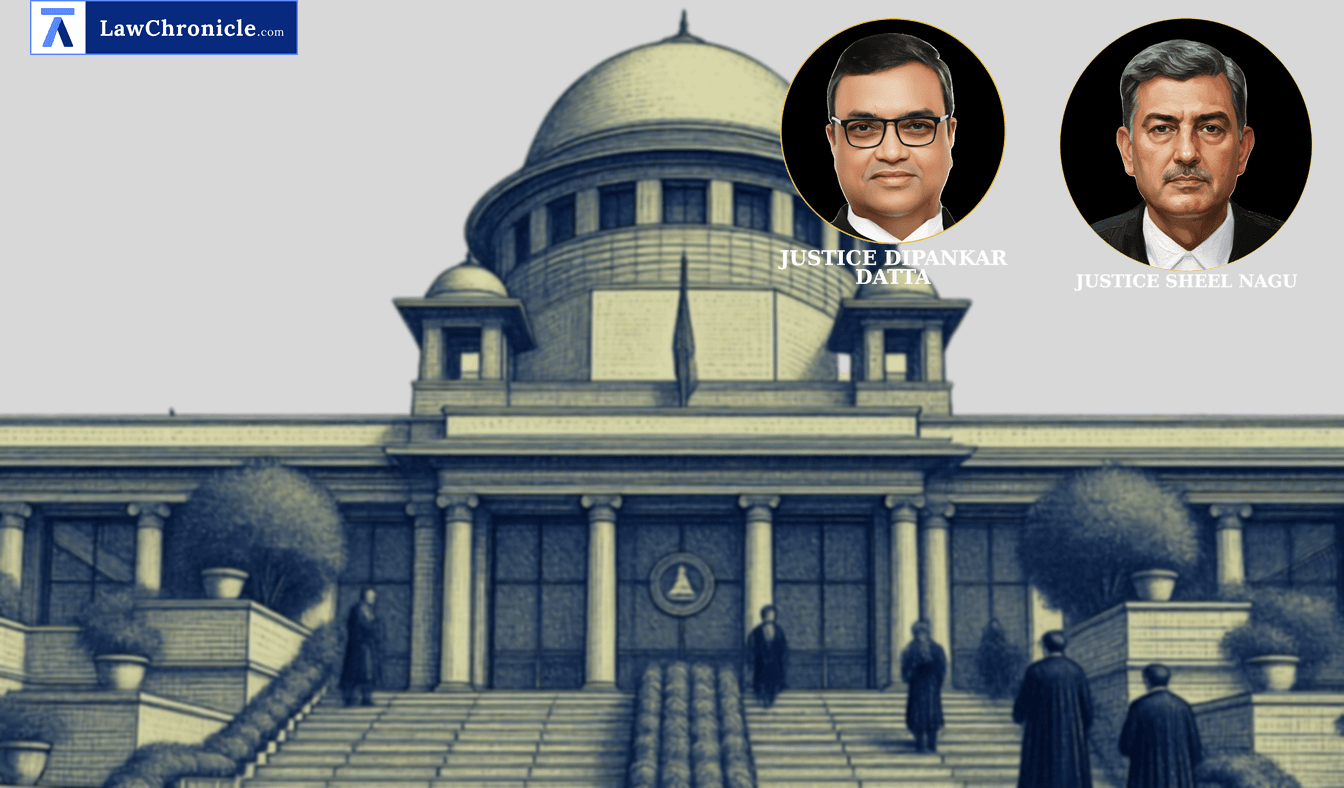
Invoking its extraordinary constitutional powers to do complete justice, the Supreme Court granted relief to a septuagenarian ex-employee fighting a five-decade-old legal battle, while reinforcing that miscellaneous applications cannot be weaponized to agitate independent, substantive claims post-final disposal of a case.
A Bench of Justice Dipankar Datta and Justice Sheel Nagu heard an appeal against the judgment of the Punjab and Haryana High Court, which had dismissed a bank employee's application seeking interest on delayed payment of back wages following his illegal suspension and eventual acquittal.
Key Takeaways
Narrow Scope of Miscellaneous Applications
Procedural applications post-final judgment are strictly limited to clerical corrections, clarifications, or procedural extensions, and cannot serve as a vehicle to agitate substantive or fresh causes of action.
Res Judicata Excludes Subsequent Causes of Action
Constructive res judicata under Code of Civil Procedure, 1908 does not bar claims like interest on delayed post-judgment disbursements when such right accrued due to subsequent procedural delays rather than the original cause of action.
Invocation of Constitutional Equity
Exercising powers under Article 142 of the Constitution of India, the apex court can grant equitable monetary relief to prevent procedural mistakes from denying a litigant substantive justice late in life.
Court Observations and Directions
The Supreme Court affirmed that a miscellaneous application in a finally decided writ petition holds a narrow scope and cannot be treated as an independent proceeding. The Court, in its reasoning, observed that "It is trite that a miscellaneous application in a finally decided writ petition is not an independent proceeding. It has a narrow scope, deriving its sustenance from the main proceeding and can be maintained only for matters ancillary to the disposal: such as correction of an arithmetical or a clerical error, clarification of an ambiguity in the operative part of the order of disposal, modification of the mode of compliance and/or extension of time for implementation, recall of an order of dismissal, etc. It is procedural, not substantive, and cannot be used as a vehicle to agitate, on merits, a subsequent or independent cause of action. Once the main proceedings stand decided, the Court becomes functus officio..."
Addressing the nature of interest on monetary dues, the Bench highlighted that interest is a normal accretion on capital rather than a penalty, relying on Alok Shanker Pandey v. Union of India ( "(2007) 3 SCC 545": 2007 CaseBase(SC) 1264). Applying the principles in Jeypore Sugar Company Ltd. v. Sales Tax Officer and the maxim actus curiae neminem gravabit, the Apex Court observed that procedural missteps in choosing the appropriate forum should not entirely deprive an elderly litigant of relief otherwise due.
Ratio
Once a main proceeding is finally decided, the Court becomes functus officio, and a miscellaneous application cannot be entertained for substantive reliefs or fresh causes of action. However, constructive res judicata under Order II Rule 2 and Section 11 of the Code of Civil Procedure, 1908 does not bar a subsequent independent claim for interest when the cause of action accrued due to pendente lite delay after the initiation of the original writ petition.
Background
The appellant joined the Central Bank of India in 1969 and was suspended in 1978 following an FIR under Sections 409, 420, 465, 468, 471, and 120B of the Indian Penal Code, 1860. Though acquitted by the trial court in 1983, a decision upheld by the High Court in 1991, the Bank initiated departmental proceedings in 1990. The appellant challenged the charge-sheet in a writ petition under Article 226 filed in 1991. The High Court quashed the enquiry in 2007 and ordered reinstatement with consequential benefits.
Subsequent challenges by the Bank, including an intra-court appeal and a special leave petition before the Supreme Court, were dismissed by July 2011. The appellant retired upon superannuation in 2009. In December 2011, during contempt proceedings, the Bank disbursed over Rs. 42 Lakhs towards back wages and provident fund dues.
In 2015, the appellant filed a fresh writ petition claiming interest on the delayed salary payments. The High Court rejected this in December 2023, reasoning that failure to claim interest in the original 1991 writ petition barred the claim. Instead of appealing that dismissal, the appellant filed a miscellaneous application under Section 151 of the Code of Civil Procedure, 1908 in the 1991 writ petition. The Single Judge and later a Division Bench dismissed the application as non-maintainable and barred by constructive res judicata, relying on precedents such as CIT v. T.P. Kumaran.
On appeal, the Supreme Court analyzed judicial precedents regarding the limitations of post-disposal applications, referring to State of U.P. v. Brahma Dutt Sharma, Budhia Swain v. Gopinath Deb ( "(1999) 4 SCC 396": 1999 CaseBase(SC) 1252), Ram Chandra Singh v. Savitri Devi ( "(2004) 12 SCC 713": 2004 CaseBase(SC) 155), and K.A. Ansari v. Indian Airlines Ltd. ( "(2009) 2 SCC 164": 2008 CaseBase(SC) 499). The Apex Court clarified that while the High Court correctly held the miscellaneous application non-maintainable, the appellant's substantive claim for interest was not barred by res judicata since the cause of action arose from subsequent systemic delays post-1991. Exercising its powers under Article 142 of the Constitution of India, the Supreme Court awarded a lumpsum of Rs. 5,00,000 to the appellant as full and final settlement.
Case Details:
Case No.: Civil Appeal No. of 2026 (Arising out of SLP (C) No. 29916 of 2024)
Neutral Citation: 2026 INSC 1242
Case Title: Ashok Kumar v. Central Bank of India & Ors.
Appearances:
For the Petitioner(s): Appellant-in-person, Mr. Gopal Jha (Amicus Curiae)
For the Respondent(s): Mr. R. Basant (Senior Counsel)
Source: 2026 CaseBase(SC) 10314
Similar Articles
 Breaking News