


Navi Mumbai Redevelopment Rules | Podium-Level Recreational Open Spaces Permissible: Bombay HC
 Copy Link
 Share
 Save
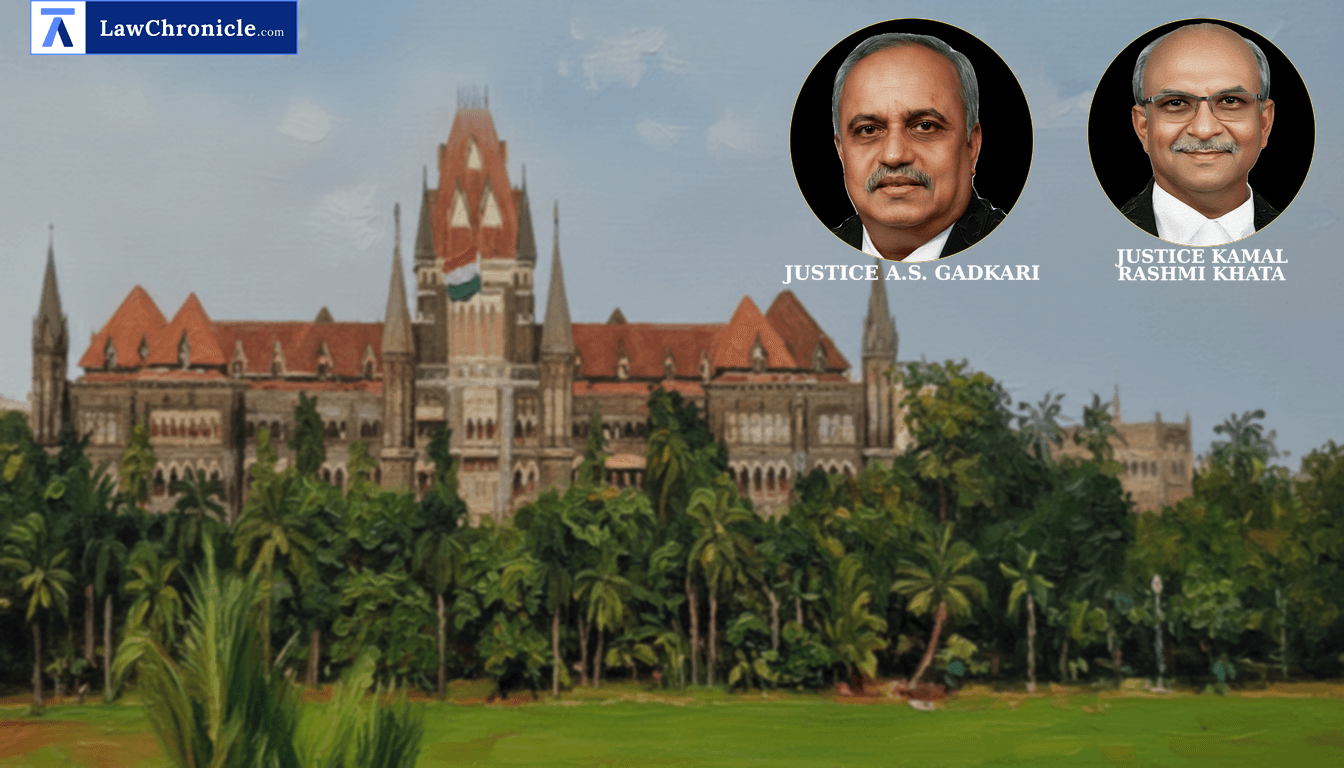
The Bombay High Court has ruled that mandatory recreational open spaces in Navi Mumbai redevelopment projects can be provided at the podium level instead of natural ground without violating environmental or safety norms. In a significant clarification of the Unified Development Control and Promotion Regulations, 2020, the Bench held that city-specific regulations must be read harmoniously with general planning provisions, preventing a rigid interpretation that could otherwise stall critical housing projects.
A division bench comprising Justice A. S. Gadkari and Justice Kamal Khata delivered the judgment in a Public Interest Litigation (PIL) that challenged development permissions granted to several housing societies. The bench was tasked with determining whether the non-obstante clause in Chapter 10 of the Unified Development Control and Promotion Regulations, 2020 mandated that recreational open spaces (ROS) must strictly be on 'mother earth' or 'natural ground.'
Key Takeaways
Discretionary Planning Powers Upheld
The ruling affirms that Municipal Commissioners retain the authority under Regulation 2.4 to grant concessions in specific cases of hardship, provided safety and health standards are maintained.
Harmonious Construction of UDCPR
The Bombay High Court clarified that city-specific regulations do not operate in isolation; the word 'notwithstanding' at the start of Chapter 10 does not exclude the application of general regulations in Chapters 1, 2, and 3.
Redevelopment Viability Protected
By allowing ROS on podiums, the court recognized the practical constraints of urban redevelopment, such as airport height restrictions and mandatory parking requirements, which often limit ground coverage.
PIL Bona Fides Scrutinized
The judgment highlights that public interest litigants must demonstrate specific harm and move the court without delay, cautioning against 'publicity interest litigation' that targets specific projects selectively.
Judicial Interpretation of 'Open to Sky' and Podium Spaces
The Bombay High Court scrutinized the definition of 'Recreational Open Space' and 'Podium' under the Unified Development Control and Promotion Regulations, 2020. It observed that the regulations do not specifically mandate that such spaces must be on 'virgin soil' or 'natural ground.' The bench emphasized that if the legislature intended such a strict requirement, it would have been explicitly stated in the definitions.
The Bombay High Court, in its reasoning, observed: "In our view, the discretion conferred by Regulation 2.4 of UDCPR must be exercised on a case-to-case basis. The pertinent words ‘over and above podium garden’ must be read in context. If read in context, the intention of the subordinate legislation will be clear. That is, where larger ROS is mandated and has to be provided at the podium level, the minimum required ROS shall be ‘clearly open to sky’, even where it is on ‘ground over and above podium garden’. This means that 100% ROS can be provided on podium level, provided it is entirely open to sky."
Addressing the interaction between different chapters of the Unified Development Control and Promotion Regulations, 2020, the Bombay High Court relied on the principles of statutory interpretation to avoid making city-specific chapters unworkable.
Ratio
The non-obstante clause in Regulation 10 of the Unified Development Control and Promotion Regulations, 2020 does not exclude the application of general regulations regarding discretionary relaxations (Regulation 2.4) or general land development requirements (Chapter 3). A harmonious construction is required to ensure that city-specific mandates do not render the broader planning framework unworkable. Furthermore, 'Recreational Open Space' (ROS) as defined under the Unified Development Control and Promotion Regulations, 2020 does not inherently prohibit the provision of such space at the podium level, provided it remains 'open to sky' as mandated by the specific context of the redevelopment project.
Background
The litigation was initiated by a social activist who contended that the Navi Mumbai Municipal Corporation (NMMC) had illegally granted concessions to Respondent housing societies by permitting them to provide 10% to 15% ROS on podiums rather than on the ground. The petitioner argued that this would lead to overcrowding of public parks as residents would lack adequate ground-level space.
The Respondent societies, represented by Senior Advocates including Mr. Girish Godbole and Mr. Chetan Kapadia, argued that their buildings were dilapidated (C-1 category) and redevelopment was only viable under the Unified Development Control and Promotion Regulations, 2020. They pointed out planning constraints like the 130-meter height limit due to the Navi Mumbai International Airport and the necessity of surrendering road setbacks, which made ground-level ROS impossible.
The court noted that the petitioner failed to provide factual evidence that podium-level ROS would cause public harm. It also referred to Mohd. Abdul Samad Vs. State of Telangana & Another ( "(2025) 2 SCC 49": 2024 CaseBase(SC) 626) to explain that a non-obstante clause only overrides other provisions in case of an irreconcilable conflict, which was not present here. The Bombay High Court also cited R & M Trust Vs. Koramangala Residents Vigilance Group and Others ( "(2005) 3 SCC 91": 2005 CaseBase(SC) 945) regarding the impact of delay in filing PILs when third-party rights (like those of home buyers) are involved. The bench concluded that the NMMC had applied its mind on a case-to-case basis, as concessions were not granted to all applicants.
Case Details:
Case No.: PUBLIC INTEREST LITIGATION NO.26 OF 2024
Case Title: Sandeep S. Thakur V/s. State of Maharashtra and Others
Appearances:
For the Petitioner(s): Mr. Sandeep S. Thakur (Petitioner in person)
For the Respondent(s): Mr. O.A. Chandurkar (Addl. G.P.), Mr. Tejas Dande (Advocate for NMMC), Mr. Saket Mone (Advocate), Mr. Girish Godbole (Senior Advocate), Mr. Chetan Kapadia (Senior Advocate), Mr. Rahul Sarda (Advocate)
Source: 2026 CaseBase(BOM) 6504
Similar Articles
 Breaking News


