


No Express Bar on Interim Release of Vehicle Seized under NDPS Act: Uttarakhand HC
 Copy Link
 Share
 Save
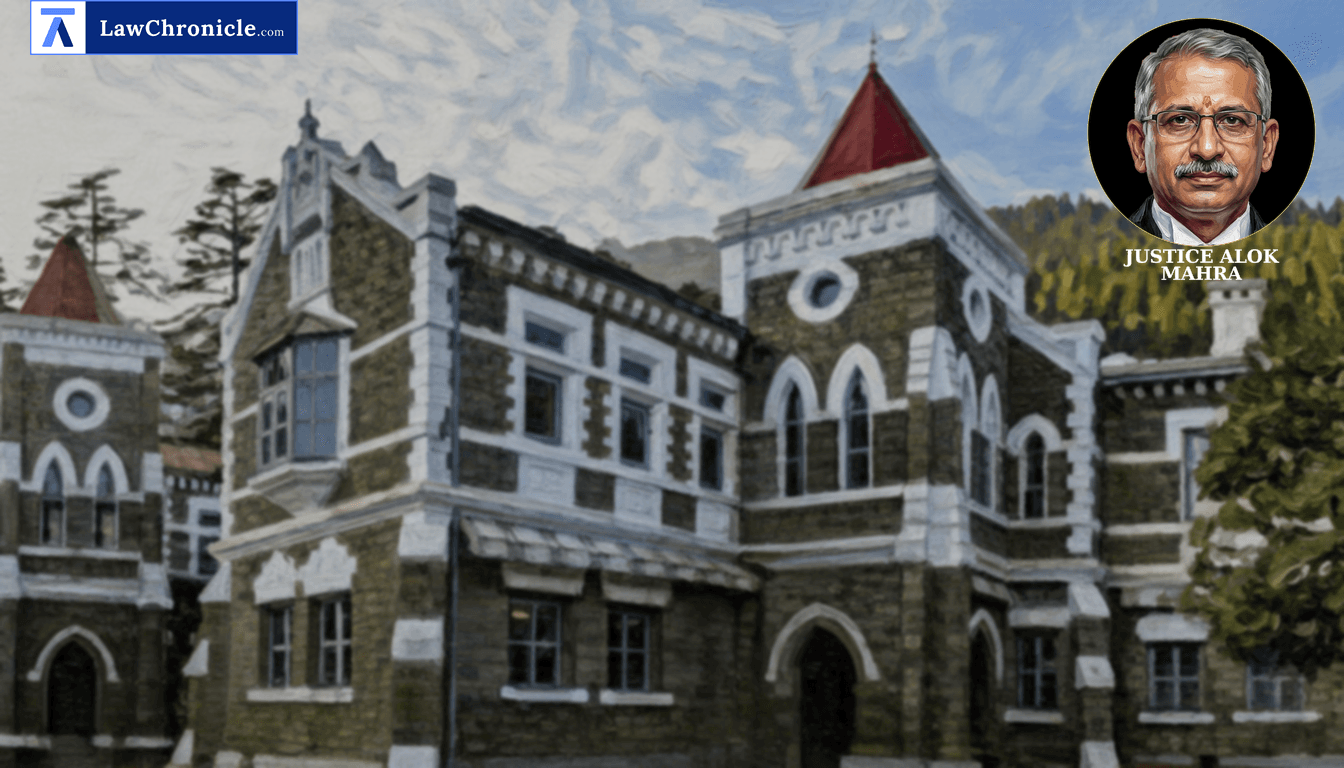
Reaffirming that vehicles seized during drug busts cannot be left to rot indefinitely in open police yards, the Uttarakhand High Court ordered interim release of vehicle seized under NDPS Act. The High Court has ruled that trial courts possess full jurisdiction to grant interim release of such property under strict safeguards.
In a criminal revision challenging a trial court order, Justice Alok Mahra quashed the trial judge's refusal to release a two-wheeler vehicle seized under NDPS Act, and laid down clear operational conditions for interim custody pending trial.
Key Takeaways
No Automatic Retention: Vehicle seized under NDPS Act does not automatically strip the registered owner of the right to seek its interim custody.
Preservation Over Decay: Trial courts must actively prevent the mechanical and financial loss of seized assets caused by exposure to weather in police premises.
Confiscation Post-Trial Only: Confiscation proceedings under Sections 60 and 63 of Narcotic Drugs and Psychotropic Substances Act, 1985 are maintainable only upon the final conclusion of the trial and adjudication by a competent court.
Mandatory Digital Evidence: Investigating officers must prepare detailed inventories alongside high-resolution photography or videography before release of seized vehicle.
Bail and Release of Vehicle Seized under NDPS Act
The Uttarakhand High Court noted that the owner had already been granted regular bail and that keeping the vehicle parked in an open space within the police station premises subjected it to inevitable corrosion and depreciation. Reaffirming established legal principles, the bench held that continuing to retain the vehicle in such conditions serves no legal purpose and inflicts severe financial damage on the rightful owner.
On Trial Court’s Order
The Uttarakhand High Court found the Trial Court’s approach restricting release of vehicle seized under NDPS Act incorrect. The Court ordered that "In the facts and circumstances of the present case, this Court is of the considered opinion that the learned trial Court failed to exercise the jurisdiction vested in it in accordance with the settled principles of law and rejected the application on considerations which are legally unsustainable. Accordingly, the impugned order warrants interference in exercise of the revisional jurisdiction of this Court."
Conditions for Vehicle Seized under NDPS Act
Setting aside the trial court's order dated 06.05.2026, the Uttarakhand High Court directed the release of the vehicle to the revisionist. The Court has following directions:
"(i) The revisionist shall not transfer, alienate, create any third-party interest or alter the identity of the vehicle during the pendency of the trial without prior permission of the trial Court.
(ii) The revisionist shall produce the vehicle before the trial Court or the Investigating Agency as and when directed.
It is made clear that before release, the Investigating Officer shall prepare a detailed inventory of the vehicle, mentioning its registration number, engine number, chassis number and present condition, and shall also take coloured photographs/videography thereof, which shall form part of the judicial record. The release of the vehicle shall remain subject to the final order regarding confiscation, if any, to be passed by the competent Court in accordance with law after conclusion of the trial."
Ratio
There exists no express statutory prohibition under the Narcotic Drugs and Psychotropic Substances Act, 1985 against the interim release of a seized vehicle under NDPS Act pending trial. A criminal court holds ample jurisdiction to grant interim custody (supurdgi) of a vehicle to its registered owner under Section 451/457 mechanisms, provided adequate security bonds and documentation safeguards are enforced to preserve evidence.
Background of Vehicle Seized
The case stems from an FIR registered on 16.09.2025 at Police Station Raipur, District Dehradun under Sections 8, 20, 29, and 60 of the Narcotic Drugs and Psychotropic Substances Act, 1985. Police intercepted a Scooty (Registration No. UK-12 G-1215) driven by the revisionist with a co-accused on the pillion, allegedly recovering contraband (charas) during the search. The revisionist was arrested and the vehicle was seized.
Although the revisionist secured regular bail on 06.04.2026, his application for interim release (supurdgi) of the seized vehicle was rejected by the Special Judge, NDPS Act / 1st Additional Sessions Judge, Dehradun on 06.05.2026 on the apprehension that release would defeat future confiscation proceedings.
Challenging the rejection, the revisionist submitted that the order ignored settled Supreme Court precedents in Sunderbhai Ambalal Desai v. State of Gujarat ( "(2002) 10 SCC 283": 2002 CaseBase(SC) 113) and Bishwajit Dey v. State of Assam ( "2025 (1) RCR (Criminal) 486": 2025 CaseBase(SC) 244), which firmly establish that criminal courts must release seized vehicles to prevent devaluation, as no statutory embargo restricts interim custody during trial. The State concurred with the cited legal principles, leading the High Court to set aside the trial court's order and allow the criminal revision.
Case Details:
Case No.: Criminal Revision No. 561 of 2026
Neutral Citation: 2026:UHC:6924
Case Title: Rishabh Butola v. State Of Uttarakhand
Appearances:
For the Petitioner(s): Mr. Amit Tyagi and Mr. Gaurav Nagpal, Counsel
For the Respondent(s): Mr. Prabhat Kandpal, learned A.G.A. along with Mr. Jai Prakash Kandpal, learned Brief Holder
Source: 2026 CaseBase(UTT) 31
Similar Articles

 Breaking News


