


No Investigation Case: SC Acquits Murder Accused as Proof Fails
 Copy Link
 Share
 Save

Exposing glaring lapses where criminal investigation descended into complete non-investigation, the Supreme Court has set aside the conviction of accused persons in a murder case, ruling that courts cannot presume guilt merely because an investigating officer was recalcitrant or collusive.
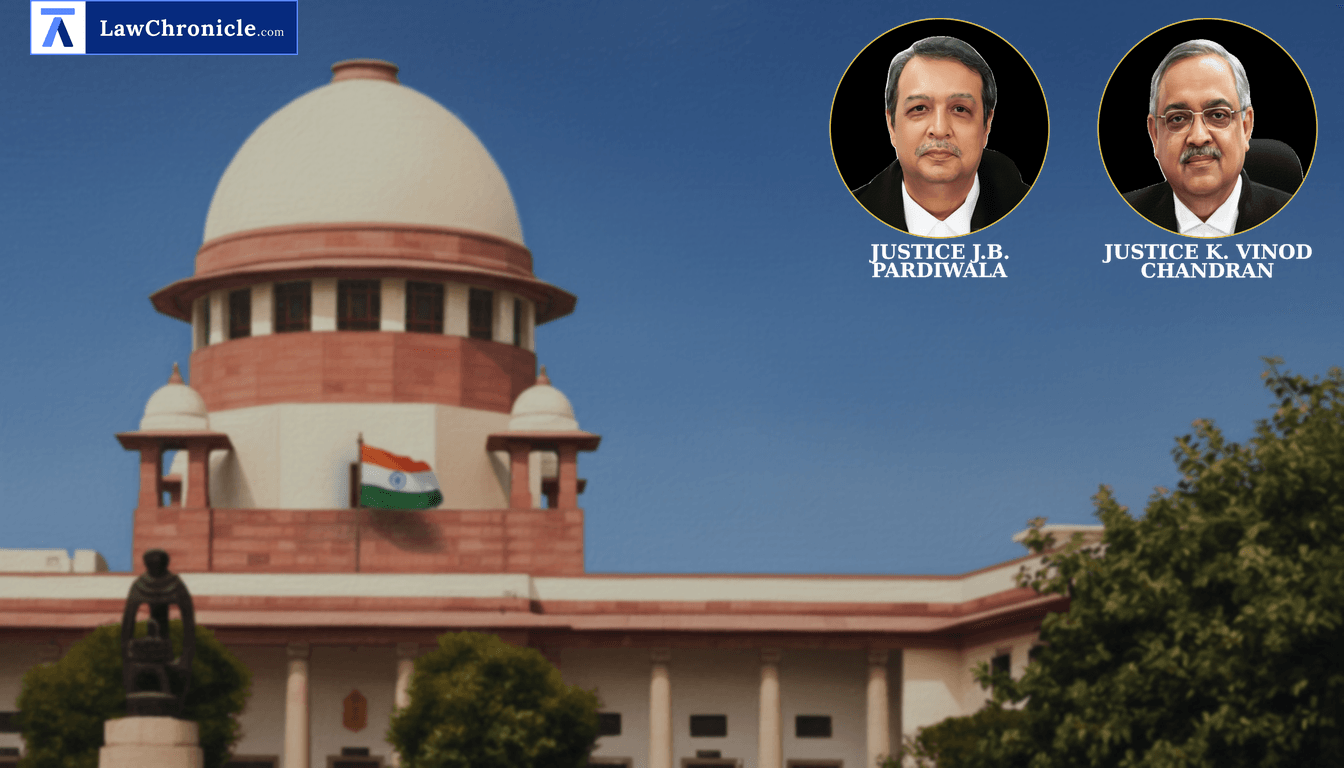
A Division Bench comprising Justice J.B. Pardiwala and Justice K. Vinod Chandran delivered the judgment while allowing appeals against the conviction of five individuals under Sections 302, 307, 147, 148, and 149 of the Indian Penal Code, 1860 and Section 27 of the Arms Act. The High Court had earlier upheld their conviction by relying on a complaint against the investigating officer to excuse major evidentiary gaps, a practice firmly rejected by the apex court.
Key Takeaways
No Presumption of Guilt: Courts cannot presume the guilt of an accused merely due to a collusive or recalcitrant investigating officer in the absence of reliable evidence.
Medical Evidence Trumps Ocular Version: Serious discrepancies between medical trajectory of bullets and eyewitness accounts cast fatal doubts on the prosecution story.
Pre-Meditated FIS Invalidates Trial: Carrying out an inquest before recording the First Information Statement (FIS) indicates pre-meditation, rendering the narration suspect.
Court's Assessment of Investigation and Evidence
The Supreme Court analyzed the testimony of related eyewitnesses and pointed out multiple irreconcilable flaws. The medical evidence provided by the doctor showed entry and exit wounds indicating that the deceased was shot in a sitting position from close range, directly contradicting the ocular accounts that he was ambushed and shot from behind while walking. Furthermore, no cartridges were recovered from the scene despite allegations of indiscriminate firing, no weapons were seized, and blood-stained earth collected from the spot was never sent for chemical testing.
The Court noted that the First Information Statement was recorded after conducting the inquest, creating severe doubts regarding the scene of occurrence and the authenticity of the narrative.
The Court has following directions:
"12. We, hence, acquit the accused and direct that they be released forthwith if any of the appellants are in custody, if not required in any other case, and if they were released on bail, their bail bonds shall stand cancelled."
The Court, in its reasoning, observed: "11. We are unable to find the prosecution having established the culpability of the accused beyond reasonable doubt. As we noticed, the eye-witness testimony does not inspire confidence and there are no recoveries made or seizures effected as would have been done in a proper investigation. The case is not of a faulty investigation but of no investigation having been carried out. Even the inquest was carried out before the FIS was recorded; making it pre-meditated. The High Court egregiously erred in looking at a complaint against the I.O not produced in the trial, to find the evidence led to be clinching insofar as the culpability of the accused. A faulty investigation cannot inure to the benefit of the accused, but when there is no reliable evidence, merely because the I.O was recalcitrant or a complaint of collusion was raised against him, the Court cannot presume the guilt of the accused. There is complete lack of evidence in the present case and the testimonies, as we observed, do not inspire confidence."
Ratio
Where there is a complete lack of reliable evidence, a faulty or collusive investigation cannot be used by courts to presume the guilt of the accused or bridge fundamental gaps in the prosecution's case.
Background
The incident pertained to a daylight murder allegedly taking place on an election day when six accused ambushed a party led by the deceased and fired indiscriminately, leading to his death. The prosecution alleged political rivalry and an earlier kidnapping incident as motives. The trial court convicted the accused under Sections 302 and 307 read with Section 149 IPC, alongside charges under Section 147 and Section 148 of the Indian Penal Code, 1860 and Section 27 of the Arms Act. Procedure under Section 161 of the Code of Criminal Procedure, 1973 was also examined.
On appeal, the High Court noticed a complaint against the investigating officer alleging collusion. The High Court used this complaint to excuse prosecution failures such as not sending blood-stained earth for testing or failing to record independent witness statements and sustained the conviction on eyewitness evidence. Reversing the conviction, the Supreme Court held that the High Court committed an egregious error and held that there was a complete absence of credible evidence to sustain the conviction.
Case Details:
Case No.: Criminal Appeal Nos.1434-1438 of 2017
Neutral Citation: 2026 INSC 935
Case Title: Dhrub Singh Etc. v. The State of Bihar
Appearances:
For the Petitioner(s): Mr. Pankaj Kumar Mishra, AOR, Mr. Adarsh Kumar Tiwari, AOR, Ms. Vartika Maurya, Adv., Ms. Akanksha Raj Mishra, Adv., Mr. Amritesh Anand, Adv., Mr. Vinit Pathak, Adv., Mr. Sagar Khaushik, Adv., Mr. Rajeev Kumar Dubey, Adv., Mr. Anand Mishra, Adv., Mr. Rajiv Nanda, Sr. Adv., Mr. Manish Kumar Vikkey, AOR, Mr. Loveleen Kaithwas, Adv., Mr. Kanchan Kumar Jha, Adv.
For the Respondent(s): Mr. Manish Kumar, AOR, Mr. Divyansh Mishra, Adv., Mr. Kumar Saurav, Adv.
Source: 2026 CaseBase(SC) 906
Similar Articles



 Breaking News


