


No Vested Right To Subsidy in Incentive Scheme for Industries, If Registration Delayed: Sikkim HC
 Copy Link
 Share
 Save
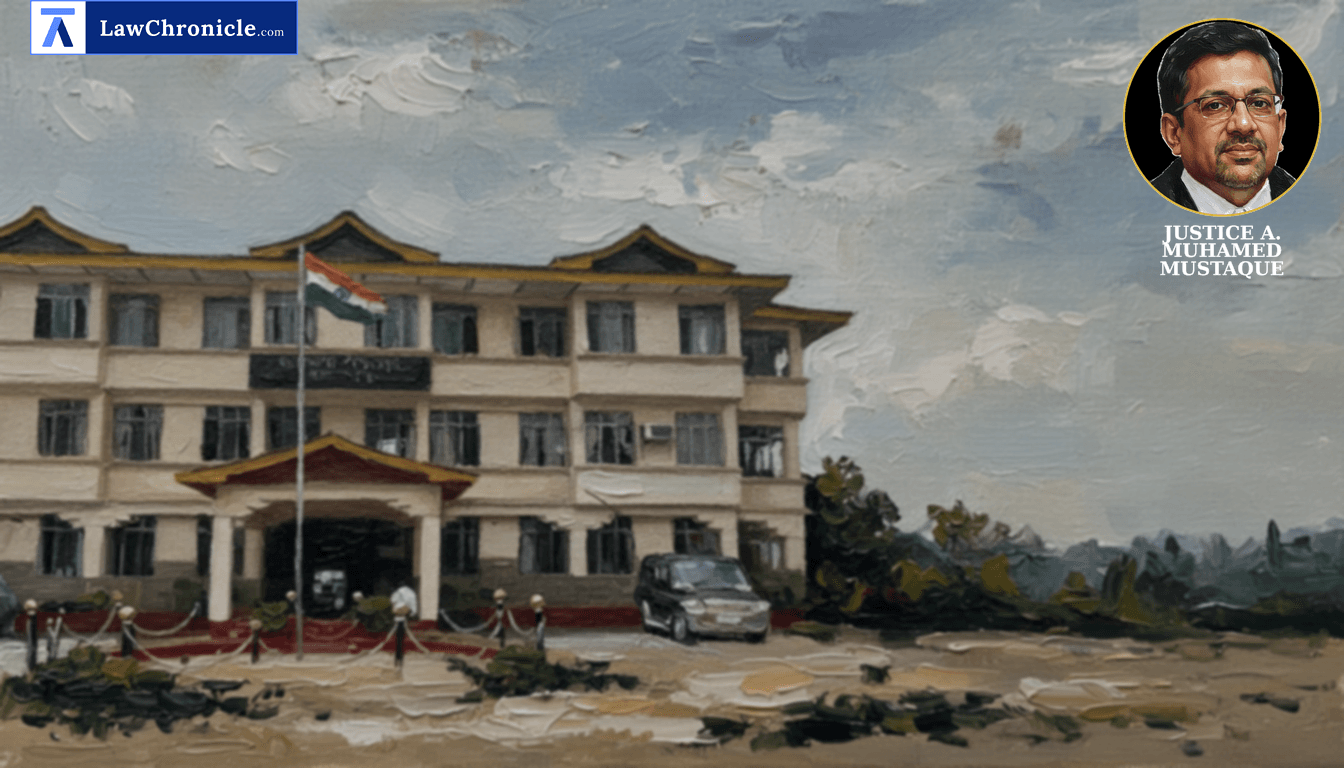
In a significant blow to pharmaceutical major Lupin Limited, the Sikkim High Court ruled that the doctrine of promissory estoppel does not prevent the government from modifying subsidy caps where a claimant has not secured an underlying entitlement under the governing scheme. The Bench reinforced that vested right to higher subsidies cannot be claimed under incentive schemes for industries, solely on the basis of prior investments, if they fail to meet mandatory registration requirements before a policy amendment takes effect.
A Single Bench of Chief Justice A. Muhamed Mustaque heard the challenge against the denial of full benefits under the Central Capital Investment Subsidy Scheme (CCISS) following a 2016 modification that capped manufacturing subsidies at ₹5 crores.
Key Takeaways
Registration as a Condition Precedent
Entitlement to Incentive Scheme for Industries does not accrue merely upon commencing investment or production; they depend on satisfying all mandatory procedural requirements, including registration, before policy changes.
Limits of Promissory Estoppel
Equitable doctrines like promissory estoppel cannot be invoked to create a substantive legal right where the claimant had no underlying entitlement under the scheme on the date of its amendment.
Government's Power to Modify Policy
The State retains the authority to alter or revoke fiscal concessions in the public interest, as tax exemptions are defeasible concessions rather than perpetual rights.
'Vested Rights' vs. 'Mere Expectation'
The Sikkim High Court clarified that a vested right is one that is fixed and not dependent on future contingencies. While the petitioner argued that substantial expenditure was incurred under the original 2007 policy, the Court found that the right to the subsidy only crystallizes upon meeting all eligibility criteria. The Bench explained that "A vested right is a right which is fixed and is not dependent upon the fulfillment of a future contingency... mere expectancy of future benefits, or contingent interest in property founded on anticipated continuance of existing laws, does not constitute 'vested rights.'"
The Sikkim High Court further highlighted that the Government may modify or revoke exemptions granted under a scheme, subject to the doctrine of promissory estoppel and considerations of equity and public interest, referencing State of Rajasthan and Another v. J.K. Udaipur Udyog Ltd. and Another ( "(2004) 7 SCC 673": 2004 CaseBase(SC) 1047) to emphasize that concessions are not indefeasible.
Direction of the Court
The Court has following directions:
"Consequently, the Petitioner has failed to establish that a vested right to receive the subsidy of ₹13,65,75,271/- had accrued in its favour under the NEIIP, 2007 and that such right was subsequently taken away by the Notification dated 22.11.2016. Accordingly, the challenge to the denial of the subsidy claimed under the NEIIP, 2007, cannot be sustained on the ground of violation of any vested right. The Petitioner is therefore not entitled to claim the balance subsidy solely on the basis of the unamended Policy. Accordingly, this Writ Petition fails and is dismissed."
Ratio
The mere existence of an incentive scheme for Industries and the commencement of investment do not confer an indefeasible or vested right to a specific quantum of subsidy. A right is considered 'vested' only when all mandatory eligibility conditions, including registration, are fulfilled. Until such conditions are met, the interest remains a 'mere expectancy,' allowing the government to modify the policy in public interest without violating Article 14 of the Constitution of India, 1950.
Background
The petitioner, Lupin Limited, established a factory in Sikkim and commenced commercial production on February 10, 2017. The project was initiated under the North-East Industrial and Investment Promotion Policy, 2007 (NEIIP, 2007), which initially offered a 30% subsidy on plant and machinery without a specific upper cap. However, the Union Government modified the scheme via a notification on November 22, 2016, restricting the subsidy to ₹5 crores.
Although the petitioner had executed a lease in 2008, it only applied for registration with the District Industries Centre on February 23, 2017. The Respondents credited only ₹5 crores to the petitioner, leading to the challenge for the balance amount of over ₹8 crores. The Respondents relied on Union of India & Anr. v. M/s V.V.F. Ltd. & Anr. and M/s Sidhbali Steels Ltd. & Ors. v. State of U.P. & Ors. to argue that the Government possesses the power to modify policies in public interest. The Petitioner cited Mahabir Vegetable Oils (P) Ltd. and Another v. State of Haryana and Others and Manjushree Extrusions Ltd. and Anr. v. State of Assam & Ors. to argue that legitimate expectations arose from the government's promise. However, following the principles in MGB Gramin Bank v. Chakrawarti Singh ( "(2014) 13 SCC 583": 2013 CaseBase(SC) 397) and Mst. Bibi Sayeeda and Others v. State of Bihar and Others ( "(1996) 9 SCC 516": 1996 CaseBase(SC) 561), the Orissa Hih Court concluded that since registration occurred after the 2016 amendment, no vested right existed under the original terms.
Case Details:
Case No.: WP(C) No.23 of 2025
Case Title: Lupin Limited vs. Union of India and Others
Appearances:
For the Petitioner(s): Mr. Prakash Shah, Senior Advocate (through VC) with Ms. Menuka Gurung, Advocate.
For the Respondent(s): Ms. Sangita Pradhan, Deputy Solicitor General of India with Mr. Amit Kumar Sharma, Advocate for Respondent No. 1; Mr. S. K. Chettri, Government Advocate for Respondent Nos. 2 and 3.
Source: 2026 CaseBase(SIK) 62
Similar Articles


 Breaking News


