


Non-Communication of ACRs and Weeding Out Records is Unfair Practice: SC Directs Promotion
 Copy Link
 Share
 Save
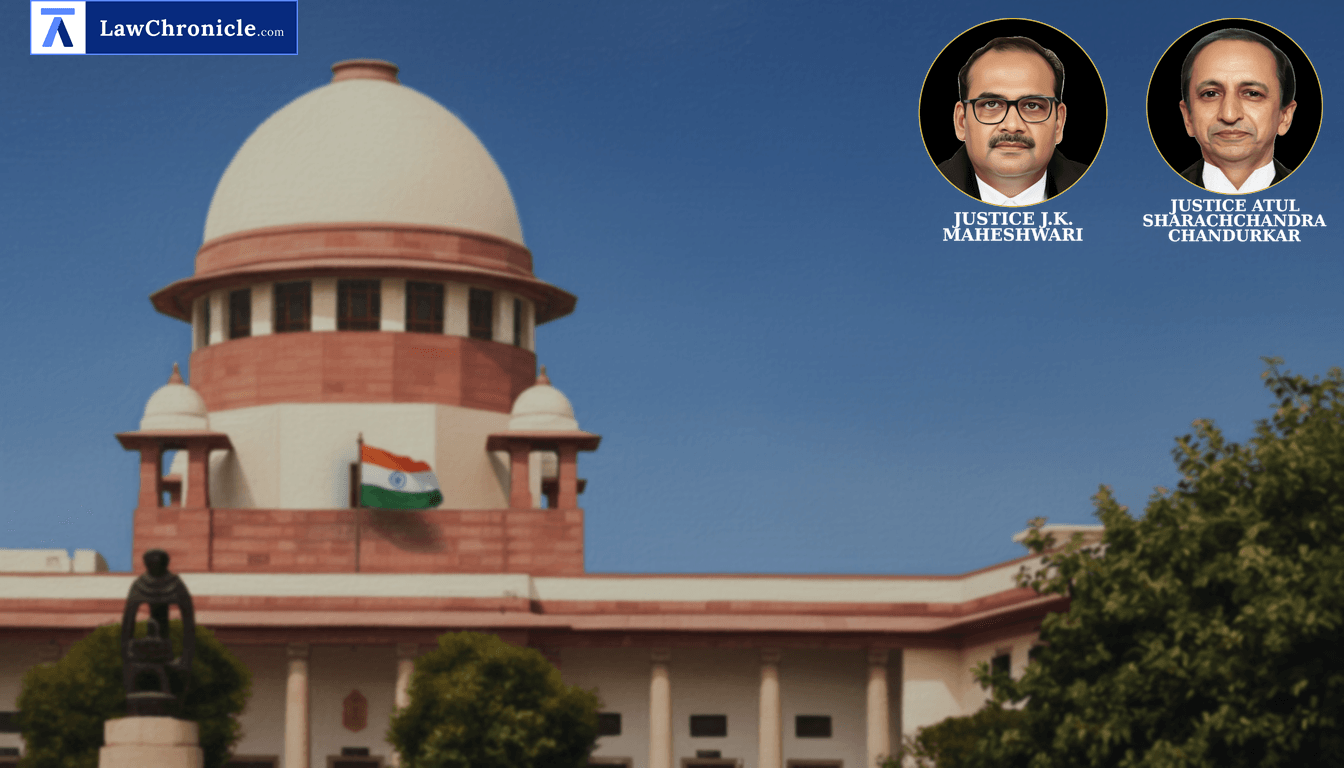
The Supreme Court in Dr. Indira Saranath v. Union of India and Another has held that the failure to communicate Annual Confidential Reports (ACRs) coupled with the destruction of service records during litigation amounts to unfair treatment, entitling the employee to notional promotion and revised pensionary benefits.
A bench comprising Justice J.K. Maheshwari and Justice Atul S. Chandurkar heard the appeal concerning the promotion of a medical officer in the Indian Railway Medical Service. The Court examined whether the Railway Board’s failure to supply ACR entries and its subsequent 'inadvertent' destruction of those records prejudiced the appellant’s career progression.
Court Rationale on Fairness and Transparency
The Court observed that while the Railways are empowered to frame their own service rules, they cannot bypass the principles of natural justice regarding ACR communications. The bench emphasized that the nomenclature of an entry is irrelevant if its effect is to deny promotion.
The Court, in its reasoning, observed: "...the appellant was entitled to receive her ACRs notwithstanding the ‘Very Good’ entries as she was not considered suitable for empanelment despite such grading... various factors referred to above when taken cumulatively, it is clear that the appellant has been prejudiced by the non-supply of her ACRs, destruction of her service records and award of points in fraction. Though the appellant was assessed under the prevailing promotion policy of the Railways, we find sufficient material on record to hold that she was not treated fairly in the matter."
In reaching this conclusion, the Court relied on Dev Dutt Vs. Union of India and others ( "2008 INSC 630": 2008 CaseBase(SC) 478) and Sukhdev Singh Vs. Union of India and others ( "2013 INSC 275": 2013 CaseBase(SC) 614), which established that all ACR entries—not just adverse ones—must be communicated to employees to allow them to seek redressal. The Court also noted that under the Constitution of India, 1950, the Ministry of Railways has the power to lay down service conditions, but these must be exercised fairly.
Directions Issued to the Union of India
The Court has following directions:
"The appellant is held entitled to notional promotion in HAG grade ₹22,400-24,500/- and to receive pensionary benefits in that grade alongwith other benefits admissible in that regard. The arrears be accordingly paid to the appellant within a period of two months from today."
Background:
The dispute began when the appellant, an officer in the Indian Railway Medical Service, was overlooked for promotion to the post of Chief Medical Director (Higher Administrative Grade) in 2006. Despite having a consistent record, she was awarded 19.5 marks by the Selection Committee, falling short of the required 'Very Good+' benchmark.
The appellant contended that she had repeatedly requested copies of her ACRs to understand why she was being bypassed, but these were never provided. Furthermore, during the pendency of the appeal, the Railway Board informed the Court that her service records had been "weeded out" in 2013, despite internal rules requiring retention during judicial proceedings.
The Court distinguished Prabhat Ranjan Singh and another Vs. R.K. Kushwaha and others ( "2018 INSC 796": 2018 CaseBase(SC) 1306), noting that while retrospective promotions can sometimes cause administrative chaos, the appellant in this case had been diligent in pursuing her legal remedies from the outset. The bench further cited Abhijit Ghosh Dastidar Vs. Union of India and others to justify the grant of retrospective pensionary benefits even where the employee had already reached superannuation.
Case Details:
Case No.: CIVIL APPEAL NO.2536 OF 2011
NeutralCitation: 2026 INSC 553
Case Title: DR. INDIRA SARANATH VS. UNION OF INDIA AND ANOTHER
Appearances:
For the Petitioner(s): Mr. Jaideep Gupta, Senior Advocate
For the Respondent(s): Mr. Vikramjit Banerjee, Additional Solicitor General
Source: 2026 CaseBase(SC) 486
Similar Articles
 Breaking News


