


Non-Furnishing of Enquiry Report Vitiates Dismissal Order: Gauhati HC
 Copy Link
 Share
 Save
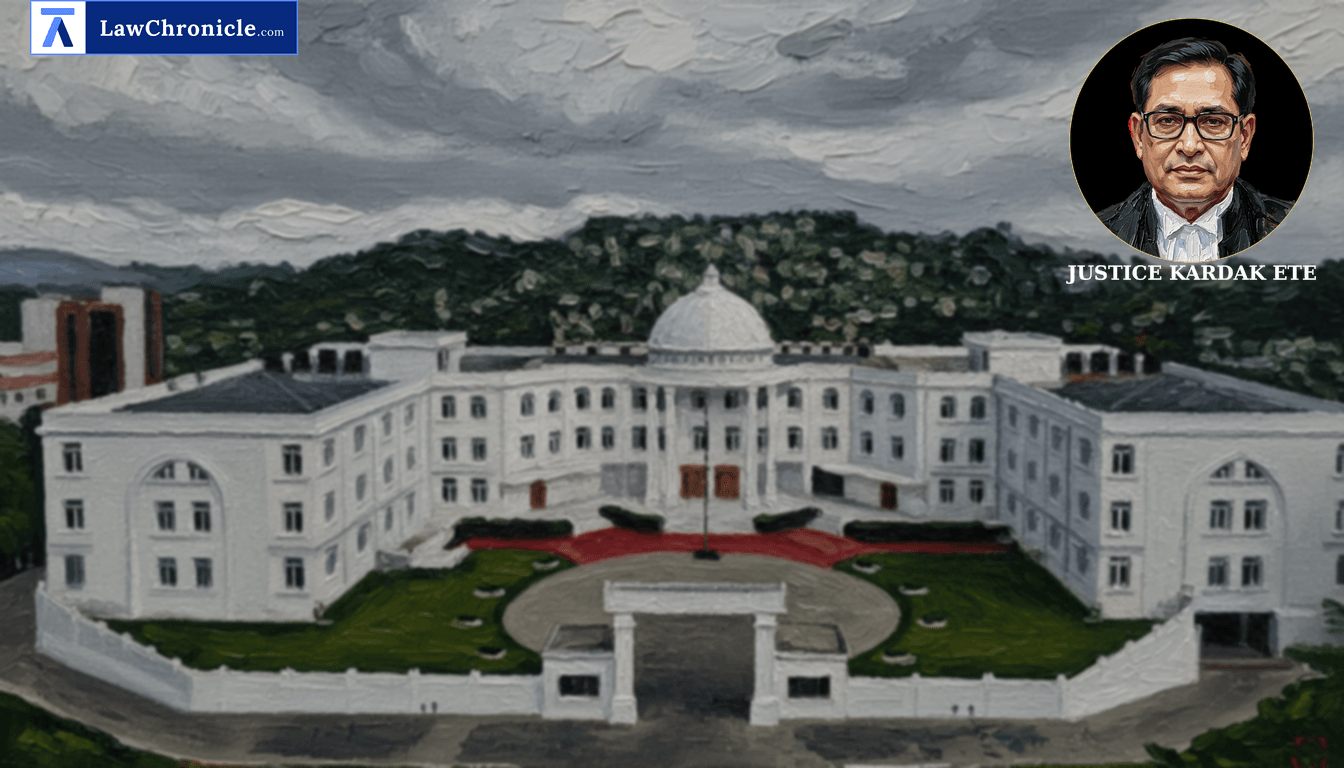
Gauhati High Court has ruled that failure to provide a delinquent employee with the enquiry report before a disciplinary authority imposes punishment constitutes a fatal procedural breach that cannot be cured by subsequent appellate review. The Bench underscored that the right to represent against adverse findings is an integral component of the 'reasonable opportunity' guaranteed under the Constitution of India, 1950.
A Single Judge bench of Justice Kardak Ete presided over the matter, examining the legality of a dismissal order passed against a Head Constable of the Assam Police. The Bench addressed whether the disciplinary authority's failure to furnish the enquiry report to the delinquent official, despite a specific request, rendered the entire punitive process void.
Key Takeaways
Mandatory Procedural Compliance
Disciplinary authorities must furnish enquiry reports to employees before final orders are passed to ensure a fair hearing.
Appellate Cure Not Possible
Subsequent review or personal hearings by an appellate authority do not rectify the initial denial of the right to represent against enquiry findings.
Reinstatement Subject to Fresh Enquiry
Procedural lapses lead to reinstatement, but the State retains the liberty to resume proceedings from the point of the error.
Fundamental Requirement of Natural Justice
The Gauhati High Court observed that the disciplinary authority ignored the petitioner's specific objection regarding the missing enquiry report and proceeded to dismiss him the very next day. Relying on settled law, the Bench noted that where the Enquiry Officer is distinct from the Disciplinary Authority, the report must be shared to allow the employee to contest the findings. The Gauhati High Court explained that "It is trite law that where the Enquiry Officer is different from the disciplinary authority, the delinquent employee is entitled to a copy of the enquiry report before the disciplinary authority takes a final decision on the question of penalty. In Union of India v. Mohd. Ramzan Khan ( "(1991) 1 SCC 588": 1990 CaseBase(SC) 308), the Hon’ble Supreme Court held that furnishing of the enquiry report to the delinquent employee is part of the reasonable opportunity of defence."
The Gauhati High Court further emphasized that this principle was solidified by a Constitution Bench in Managing Director, ECIL, Hyderabad v. B. Karunakar ( "(1993) 4 SCC 727": 1993 CaseBase(SC) 112), which reiterated the necessity of an opportunity to make a representation before the final decision is reached.
Ratio
Furnishing an enquiry report to a delinquent employee is a mandatory prerequisite of the 'reasonable opportunity' clause under Constitution of India, 1950. When the Disciplinary Authority is not the Enquiry Officer, the failure to provide the report before deciding on the penalty vitiates the decision-making process, and this procedural infirmity cannot be cured by the Appellate Authority’s subsequent consideration of records.
Background
The petitioner, Babul Sinha, a Head Constable with the Assam Police, was dismissed following allegations of negligence during night-patrol duty on February 7, 2023. It was alleged that he allowed vehicles carrying Burmese supari to pass through a check-post in exchange for illegal gratification. The petitioner contended that he was suffering from medical issues and denied the receipt of any money, arguing that his alleged 'confession' was involuntary.
Following a departmental enquiry, a second show-cause notice was issued. The petitioner replied, stating he had not received the enquiry report and thus could not effectively defend himself. However, the Superintendent of Police, Hailakandi, passed the dismissal order on November 16, 2023, just one day after the reply. An appeal filed before the Deputy Inspector General of Police (SR) was subsequently rejected.
The Gauhati High Court found that the failure to address the petitioner's grievance regarding the report before passing the dismissal order was a clear violation of natural justice. While the Bench did not comment on the merits of the supari-trafficking allegations or the alleged violation of Rule 9 of the Assam Services (Discipline and Appeal) Rules, 1964, it quashed the dismissal solely on procedural grounds, allowing the department to restart the process from the stage of furnishing the report.
Case Details:
Case No.: WP(C)/2666/2024
Neutral Citation: 2026:GAU-AS:15081
Case Title: BABUL SINHA VS THE STATE OF ASSAM AND 4 ORS
Appearances:
For the Petitioner(s): MR. P K ROYCHOUDHURY (Senior Advocate), MR. S SINHA, MR G DEKA, MR. N G KUNDU, MR. S. Ahmed
For the Respondent(s): MR. T. C. CHUTIA (Senior Advocate), MS. J. SHARMA, GA, ASSAM
Source: 2026 CaseBase(GAU) 1464
Similar Articles
 Breaking News


