


Absence Without Oral Evidence Not Misconduct: Patna HC Quashes Dismissals
 Copy Link
 Share
 Save
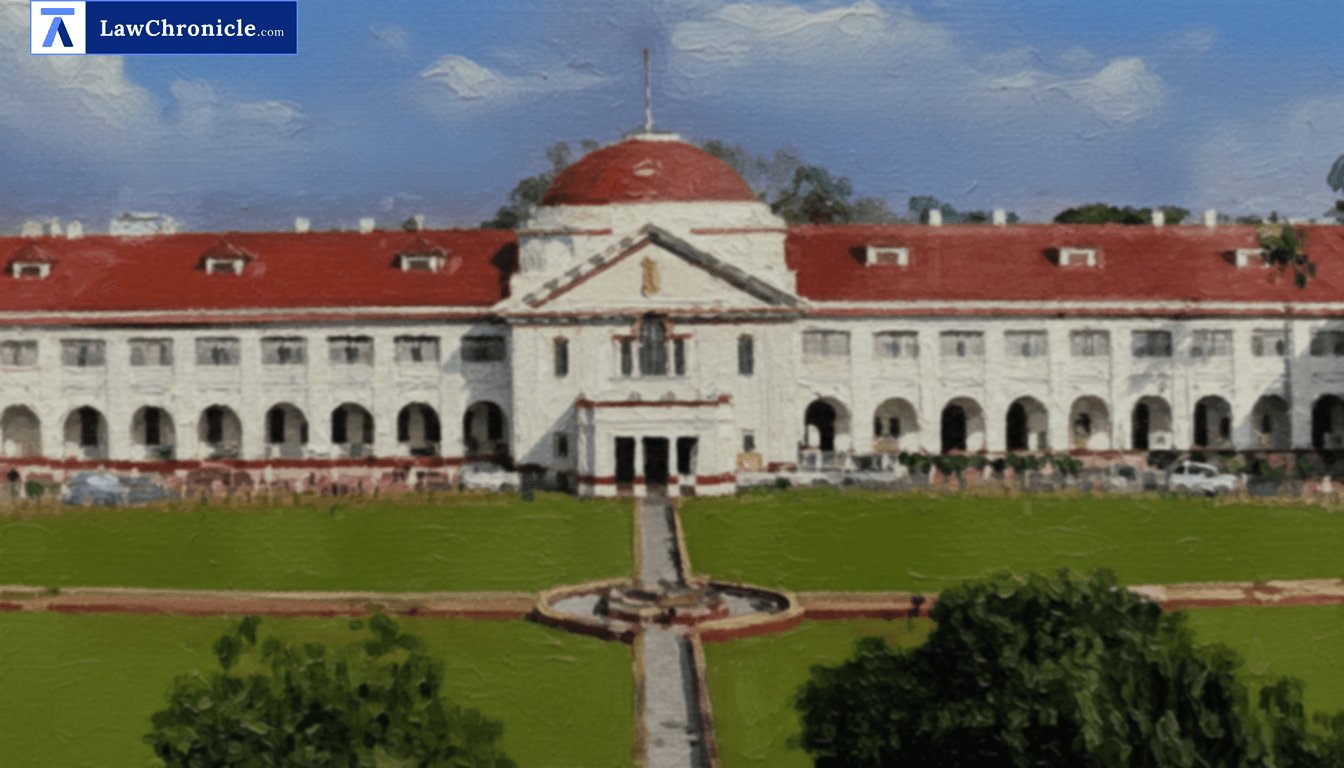
The Patna High Court has dismantled the state's practice of summarily dismissing employees for unauthorized absence without formal proof, ruling that administrative correspondence cannot substitute for oral evidence in departmental inquiries. Stripping the executive of its power to bypass natural justice, the Court held that the failure to examine witnesses to prove the 'willful' nature of absence renders such disciplinary actions legally non-est.
A Single Bench of Justice Kumar Manish adjudicated upon two writ petitions challenging dismissal orders passed against Medical Officers. The Court scrutinized whether the invocation of Rule 76 of the Bihar Service Code and the Constitution of India complied with the mandatory procedures of the Bihar Civil Services (Classification, Control and Appeal) Rules, 2005.
Key Takeaways
End of 'No Evidence' Inquiries
The Court established that mere administrative letters from superiors do not constitute legal proof of misconduct; authors of such documents must be examined as witnesses to prove the contents.
Natural Justice is Non-Negotiable
Serving notices through press communiqués when the department knows the employee's residence is elsewhere constitutes a fatal breach of the right to be heard.
Mandatory Supply of Inquiry Reports
Failure to provide an ex-parte inquiry report to the delinquent employee before imposing a penalty satisfies the 'prejudice test,' warranting the quashing of dismissal orders.
Rule 76 Is Not Automatic
Summary dismissal for long absence under the Bihar Service Code requires a prior, validly conducted departmental inquiry that proves the absence was deliberate and malicious.
Fundamental Flaws in Departmental Proceedings
The Court found that the proceedings against the petitioners were fundamentally flawed on two distinct legal grounds. Firstly, the disciplinary authority relied solely on administrative letters from the Civil Surgeon without producing oral witnesses to formally prove the underlying facts. Secondly, there was a fatal breach regarding the service of notice, as registered show-cause notices returned unserved with postal endorsements indicating the petitioners resided elsewhere, yet the department proceeded ex-parte.
The Court, in its reasoning, observed: "The reason why the right to receive the report of the enquiry officer is considered an essential part of the reasonable opportunity at the first stage and also a principle of natural justice is that the findings recorded by the enquiry officer form an important material before the disciplinary authority which along with the evidence is taken into consideration by it to come to its conclusions... It is negation of the tenets of justice and fair opportunity to the employee to consider the findings recorded by a third party like the enquiry officer without giving the employee an opportunity to controvert the same."
Judicial Rationale on Proving Misconduct
Citing the precedent in State of U.P. v. Saroj Kumar Sinha ( "(2010) 2 SCC 772": 2010 CaseBase(SC) 535), the Court noted that an Inquiry Officer acts as a quasi-judicial authority and not a prosecutor. Even in the absence of the delinquent official, the department remains under a strict legal obligation to prove allegations by producing documentary evidence through oral witnesses. The Court further emphasized that under Roop Singh Negi v. Punjab National Bank ( "(2009) 2 SCC 570": 2008 CaseBase(SC) 713), suspicion, however strong, cannot substitute for legal proof.
Furthermore, the Court referred to Union of India v. J. Ahmed ( "(1979) 2 SCC 286": 1979 CaseBase(SC) 121) to clarify the definition of 'misconduct,' noting: "...Code of conduct as set out in the Conduct Rules clearly indicates the conduct expected of a member of the service... It is, however, difficult to believe that lack of efficiency or attainment of highest standards in discharge of duty attached to public office would ipso facto constitute misconduct... it would not constitute misconduct unless the consequences directly attributable to negligence would be such as to be irreparable or the intent to cause damage is heinous..."
Directions Issued by the Court
The Court has the following directions:
"(i) To reinstate both the petitioners into service on their respective posts of Medical Officer,
(ii) The question as to the manner in which the intervening period is to be treated and the consequential monetary benefits, if any, shall be determined by the competent authority in accordance with law by passing of a reasoned order.
(iii) The question of payment of back wages, and the quantum thereof, is left open to be determined by the respondents."
Ratio
A departmental proceeding is a quasi-judicial exercise where charges must be established through legal evidence. Merely tendering administrative documents without examining witnesses to prove their contents results in a 'no evidence' finding. Furthermore, compliance with the principles of natural justice, specifically the right to receive the inquiry report as established in Managing Director, ECIL v. B. Karunakar ( "(1993) 4 SCC 727": 1993 CaseBase(SC) 112) and the proper service of notice, is a mandatory prerequisite for any order of dismissal.
Background
The petitioners, appointed as Medical Officers in the 1980s, were dismissed from service following allegations of unauthorized absence. In C.W.J.C. No. 17875 of 2017, the petitioner was dismissed despite the Bihar Public Service Commission (BPSC) refusing to concur with the punishment, noting the absence was less than five years at the time of charges. In C.W.J.C. No. 3045 of 2017, the petitioner’s defense of severe cardiac illness was ignored. The Court found that the department bypassed Rule 17(14) and Rule 18 of the Bihar Civil Services (Classification, Control and Appeal) Rules, 2005 by failing to produce oral evidence and issuing mechanical dismissal orders. The High Court ultimately quashed the dismissal resolutions but reserved liberty to the State to proceed afresh from the stage of serving a proper charge memo.
Case Details:
Case No.: Civil Writ Jurisdiction Case No. 17875 of 2017
Case Title: Thakur Ashok Kumar Prasad v. The State of Bihar
Appearances:
For the Petitioner(s): Mr. P.N. Shahi, Sr. Advocate; Mr. Rabindra Kumar Tiwary, Advocate; Mr. Arvind Kumar Singh, Advocate; Mr. Shiv Pratap, Advocate
For the Respondent(s): Mr. Ajay Bihari Sinha, GA-8; Mr. Braj Kishore Pd. Sinha, G.A.-18; Mr. Arvind Kumar, A.C. to G.A.-18
Source: 2026 CaseBase(PAT) 2690
Similar Articles
 Breaking News


