


Occurrence of Quarrel Without Intent Not Abetment Of Suicide: Chhattisgarh HC
 Copy Link
 Share
 Save
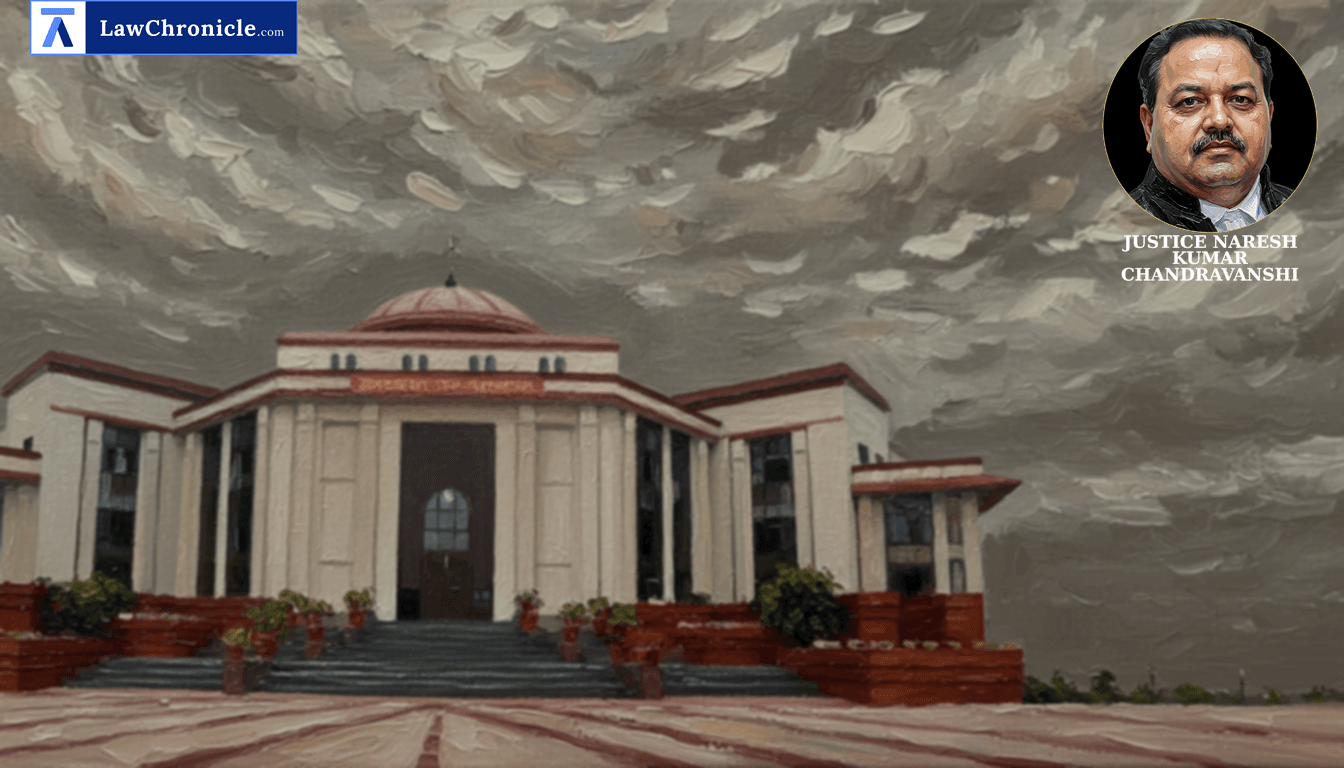
Criminal liability for abetment of suicide cannot be sustained solely on the tragedy of a victim's death without evidence of a conscious and deliberate intention to drive a person to take their own life. The Chhattisgarh High Court has clarified that even if a quarrel and assault are proven, the absence of a proximate act of instigation or clear mens rea necessitates the acquittal of the accused under Section 306 of the Indian Penal Code.
Justice Naresh Kumar Chandravanshi presided over the appeal, which challenged a trial court's decision convicting a man for abetment of suicide, criminal house-trespass, and criminal intimidation following a dispute over an alleged illicit relationship.
Key Takeaways
Requirement of Mens Rea
Criminal liability under Section 306 of the Indian Penal Code requires a specific intent to provoke or goad the deceased into committing suicide; tragedy alone is insufficient for conviction.
Necessity of Proximity
There must be a direct or indirect act of instigation in close proximity to the suicide, establishing a clear nexus between the accused's conduct and the fatal outcome.
Distinction in Offences
While a physical assault or threat may satisfy the ingredients for Indian Penal Code Sections 323 or 506, they do not automatically constitute abetment unless the criteria under Section 107 are met.
Protection Against Over-Criminalization
The ruling reinforces that continuous harassment or a single quarrel cannot be labeled as 'positive instigation' without proof that the victim was left with no reasonable alternative.
Court's Analysis of Abetment and Instigation
The Chhattisgarh High Court examined the scope of 'instigation' as defined under Section 107 of the Indian Penal Code, noting that it requires a mental process of incitement. The Bench observed that the prosecution must prove the accused contributed to the suicide by satisfying conditions of instigation, conspiracy, or intentional aid. Relying on Ude Singh v. State of Haryana ( "(2019) 17 SCC 301": 2019 CaseBase(SC) 4132), the Court noted that instigation means to goad or urge forward, and while actual words aren't always necessary, the conduct must spell out a reasonable certainty to incite the consequence.
The Chhattisgarh High Court reasoned to observe that “The statutory scheme requires the existence of an act of instigation, conspiracy or intentional aid, accompanied by the requisite mens rea for abetment of the commission of suicide. It is well settled law that for attracting Section 306 read with Section 107 of IPC, there must be direct or indirect instigation in close proximity to the commission of suicide and a clear mens rea to abet the commission of suicide.”
Ratio
To sustain a conviction for abetment of suicide under Section 306 of the Indian Penal Code, the prosecution must establish a direct or indirect act of instigation in close proximity to the death, coupled with a conscious and deliberate intention (mens rea) to drive the deceased to commit suicide. Mere proof of a quarrel, assault, or harassment followed by suicide is insufficient unless the accused's conduct was intended to leave the deceased with no other reasonable option but to end their life.
Background
The case arose from an incident on April 23, 2021, where the appellant allegedly entered the deceased's house, suspected him of having an affair with the appellant's wife, and assaulted him. The appellant left his wife at the deceased's house and departed. Subsequently, the deceased was found dead by hanging. The Trial Court convicted the appellant under Sections 452, 506 Part II, 323, and 306 of the Indian Penal Code.
In the appeal under Section 415(2) of the Bharatiya Nagarik Suraksha Sanhita, 2023, the Chhattisgarh High Court analyzed testimonies from eye-witnesses including the mother and brother of the deceased. While the Court found sufficient evidence to sustain convictions for house-trespass and assault, it noted that the deceased remained asleep for hours after the quarrel and spoke to no one before his death. Citing Prakash and Others v. State of Maharashtra and Another ( "(2026) 6 SCC 251": 2026 CaseBase(SC) 125) and Vinod Shivakumar v. State of Maharashtra ( "2026 SCC OnLine SC 1583 : 2026 INSC 867": 2026 CaseBase(SC) 793), the Chhattisgarh High Court held that the prosecution failed to show a proximate nexus or intent to instigate. Consequently, the conviction under Section 306 was set aside while other convictions were affirmed with a reduction in sentence to the period already undergone.
Case Details:
Case No.: CRA No. 1258 of 2025
Neutral Citation: 2026:CGHC:46242
Case Title: Niranjan Khusro v. State of Chhattisgarh
Appearances:
For the Petitioner(s): Mr. Ashutosh Shukla, Advocate.
For the Respondent(s): Mr. Khulesh Sahu, Panel Lawyer.
Source: 2026 CaseBase(CTH) 21285
Similar Articles
 Breaking News


