


Overloading In Vehicle Does Not Automatically Infer Contributory Negligence: Andhra Pradesh HC
 Copy Link
 Share
 Save
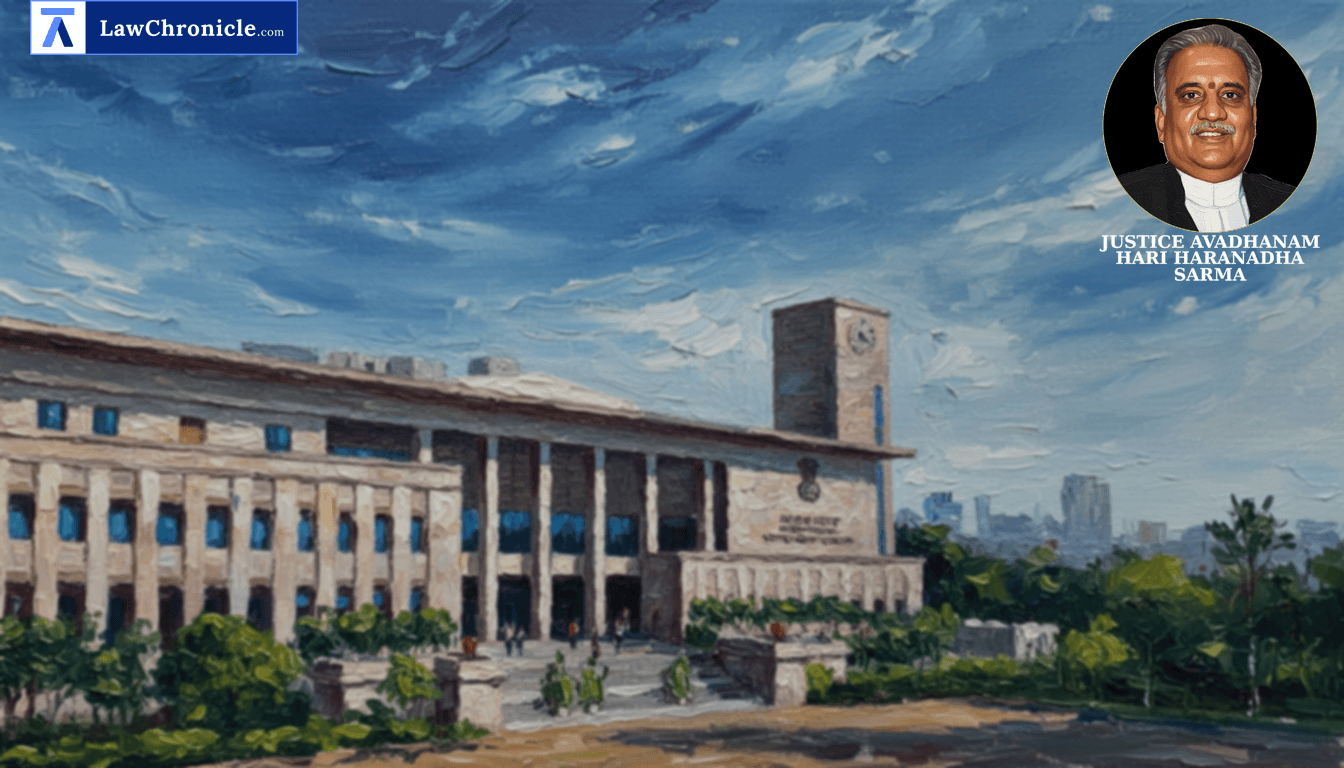
Vehicle overloading alone cannot automatically establish contributory negligence unless a clear causal link to the accident is proven. Reversing a Tribunal decision that halved compensation for accident victims, the High Court held the insurer of an offending lorry fully liable for a fatal head-on collision.
In a batch of motor accident civil miscellaneous appeals, Justice A. Hari Haranadha Sarma of the Andhra Pradesh High Court addressed the crucial legal question surrounding contributory negligence in vehicle overloading scenarios under the Motor Vehicles Act, 1988.
Key Takeaways
- Causal Link Mandatory for Contributory Negligence: Overloading a vehicle does not automatically trigger a presumption of contributory negligence without direct proof that it proximately caused the accident.
- Full Liability Restored on Insurer: The High Court set aside the Motor Accident Claims Tribunal's 50% liability reduction, directing the insurer to pay 100% of the enhanced compensation.
- Enhanced Financial Relief for Victims: Compensation across all four claim petitions was substantially enhanced, incorporating future prospects as mandated by established precedents.
Court Observations and Directions
Analyzing the evidence, the High Court observed that the charge sheet had been filed exclusively against the lorry driver, who had driven onto the extreme right side of the road while attempting a rash overtaking maneuver. The court emphasized that the mere presence of passengers beyond permissible capacity cannot automatically lead to an inference of negligence on the part of the vehicle driver.
The Court, in its reasoning, observed: "Merely because there is an overload, it is not automatic to draw the negligence on the part of the vehicle with an overload. Sometimes, there may be vehicles stationed with an overload. That does not mean that the said vehicle or its driver has contributed for accident."
Highlighting the binding legal position laid down in Devi Singh vs. Vikram Singh and others, the Court reiterated that statutory violations do not constitute contributory negligence unless they have a direct causal connection to the damage suffered.
Regarding the enhancement of compensation beyond the original claim, the Court cited Nagappa vs. Gurudayal Singh and Others ( "(2003) 2 SCC 274": 2002 CaseBase(SC) 1060), Kajal vs. Jagadish Chand and Ors. ( "2020 (04) SCC 413": 2020 CaseBase(SC) 1600), and Ramla and Others vs. National Insurance Company Limited and Others ( "(2019) 2 SCC 192": 2018 CaseBase(SC) 651) to affirm that tribunals and courts are duty-bound to award "just compensation" irrespective of technicalities or claimed amounts.
The Court issued the following directions:
"(xxi) Time for payment / deposit of balance amount is two months.
(a) If the claimants furnish the bank account number within 15 days from today, Respondent No.2 / Insurance Company shall deposit the amount directly into the bank account of the claimants and file the necessary proof thereof before the learned MACT.
(b) If the claimants fail to comply with xxi (a) above, Respondent No.2 / Insurance Company shall deposit the amount before the learned MACT and the claimants are entitled to withdraw the amount at once on deposit."
Ratio
To establish contributory negligence against the driver of a vehicle carrying passengers in excess of statutory limits, there must be cogent evidence establishing a direct causal connection between the overloading and the occurrence of the accident.
Background
The dispute stems from a severe road accident on April 13, 2012, involving an autorickshaw carrying coolies and a lorry. The lorry, while attempting to overtake another vehicle at high speed, collided head-on with the oncoming autorickshaw near Ambarupet Cross Roads. Four passengers in the autorickshaw succumbed to their injuries on the spot. The police registered a case under Sections 304-A, 337, and 338 of the Indian Penal Code, 1860 against the lorry driver.
The legal representatives of the deceased filed claim petitions under the Motor Vehicles Act, 1988 before the Motor Accidents Claims Tribunal-cum-XVI Additional District and Sessions Judge, Nandigama. The MACT determined that both drivers contributed equally to the accident due to overloading in the autorickshaw and limited the insurer's liability to 50%. The claimants challenged this apportionment and quantum before the High Court.
Applying the principles laid down in Sarla Verma (Smt.) and Ors. Vs. Delhi Transport Corporation and Anr., National Insurance Company Ltd. v. Pranay Sethi and Others ( "2017(16) SCC 680": 2017 CaseBase(SC) 551), Magma General Insurance Company Ltd. v. Nanu Ram and Others ( "(2018) 18 SCC 130": 2018 CaseBase(SC) 597), and Rajesh and others vs. Rajbir Singh and others, the High Court reassessed the multiplicand, added future prospects, awarded statutory heads including loss of consortium, and allowed the appeals with enhanced compensation.
Case Details:
Case No.: M.A.C.M.A.Nos.110, 111, 112 and 113 of 2015
Neutral Citation: 2026:APHC:34790
Case Title: Palaparthi Seekhar Babu & Ors. v. Garimi Venkateswara Rao & Anr.
Appearances:
For the Petitioner(s): M Umadevi, Ravi Kumar Tolety, Umadevi Manchala
For the Respondent(s): C Prakash Reddy
Source: 2026 CaseBase(AP) 13071
Similar Articles
 Breaking News


