


Overloading of Vehicle is not a Fundamental Breach of Policy: Himachal Pradesh HC
 Copy Link
 Share
 Save
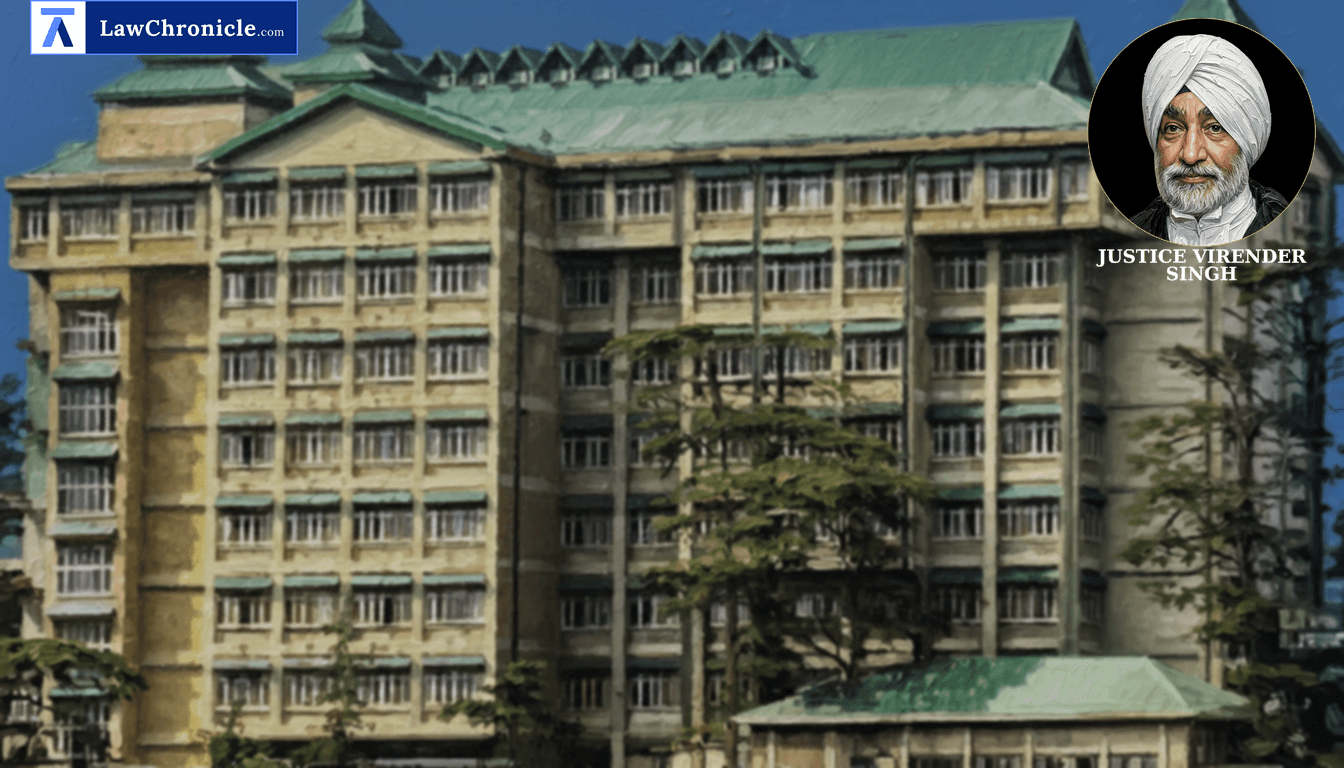
The Himachal Pradesh High Court has reinforced the principle that merely carrying more passengers than the permitted seating capacity does not constitute a fundamental breach of insurance terms to allow insurers to escape liability. This landmark ruling mandates Insurance Companies to initially satisfy the highest compensation awards up to the permitted capacity and subsequently recover excess payments from the vehicle owner.
A single-judge bench of Justice Virender Singh adjudicated upon a massive batch of 109 appeals arising from a tragic bus accident that occurred on August 11, 2012. The appeals involved complex questions regarding the liability of the Oriental Insurance Company when the offending vehicle, authorized for 44 persons, was carrying over 90 passengers, leading to a fatal plunge into a gorge.
Key Takeaways
Redefining Breach Thresholds
Overloading a vehicle is an irregularity but not a fundamental breach of contract unless it is the sole contributing factor to the accident.
Highest Award Rule
In cases of mass casualties exceeding policy limits, insurers must pay the highest awarded sums equivalent to the permitted seating capacity.
Pay and Recover Mandate
Courts will prioritize third-party victims by directing insurers to pay all claimants initially, with the right to recover excess amounts from the vehicle owner through execution proceedings.
Domestic Care Valuation
Recognizing the 'Nation Builder' status of homemakers, the Court significantly enhanced compensation by valuing domestic care contributions more realistically than previously low notional incomes.
Court's Rationale on Overloading and Insurance Liability
The Court analyzed the Insurance Company's contention that carrying 93 persons against a capacity of 44 was a gross violation of the Motor Vehicles Act, 1988 and the policy terms. Relying on Lakhmi Chand versus Reliance General Insurance Company Limited ( "(2016) 3 SCC 100": 2016 CaseBase(SC) 765), the Court noted that lifting extra passengers without the owner's explicit knowledge cannot be used as a shield to deny indemnification. The bench observed that the purpose of the Motor Vehicles Act, 1988 is to bring benefit to third parties and serves a critical social purpose.
The Court, in its reasoning, observed: "...mere factum of carrying more passengers, than the permitted seating capacity, in the vehicle does not amount to fundamental breach of the terms and conditions of the insurance policy... the practical and proper course would be to hold that the insurance company, in such a case, would be bound to cover the higher of the various awards and will be compelled to deposit the higher of the amounts of compensation awarded to the extent of the number of passengers covered by the insurance policy."
Directions Issued to Statutory Authorities and Parties
The Court has the following directions:
"The Insurance Company is liable to satisfy the highest awards, to the extent of 42 passengers, and in rest of the awards, the Insurance Company shall, at the first instance, pay the compensation amount along with interest, with a right to recover the same from the owner of the offending vehicle. Any amount already received by the petitioners-claimants, in all the cases, from the Government, shall be deducted from the total compensation awarded, as, failing to do so would result in double enrichment. The Insurance Company is also directed to deposit the amount of compensation in all the cases with liberty to recover the same from the owner, which are beyond 42 highest awards."
Ratio
The core legal principle established is that overloading of a vehicle beyond its permitted seating capacity does not amount to a fundamental breach of an insurance policy under the Motor Vehicles Act, 1988. Consequently, the insurer remains liable to indemnify the insured for the highest awards corresponding to the permitted capacity and must apply the 'pay and recover' principle for claimants beyond that limit to ensure the realization of 'just compensation'.
Background
The dispute originated from an accident involving a bus (HP-68-4949) which rolled down a 300-foot gorge at Magazine Mod, Chamba, resulting in 53 deaths and 40 injuries. Claims were filed under Section 166 of the Motor Vehicles Act, 1988 against the owner and the Oriental Insurance Company. The owner claimed a sudden mechanical fault, while the insurer argued that carrying nearly double the permitted capacity was a gross violation of the permit and policy.
The Motor Accidents Claims Tribunal (II), Chamba, originally fastened liability on the insurer for the highest awards. The High Court, while deciding the appeals, modified several awards, notably enhancing compensation for homemakers by applying the recent 2026 principles of Magma General Insurance Company Limited versus Nanu Ram @ Chuhru Ram and others ( "(2018) 18 SCC 130": 2018 CaseBase(SC) 597) and Govind Yadav versus The New India Assurance Co. Ltd., and strictly adhering to the computation standards in United India Insurance Company Limited versus K.M. Poonam and Others and National Insurance Co. Ltd. versus Pranay Sethi ( "(2017) 16 SCC 680": 2017 CaseBase(SC) 551). The Court also corrected various calculations regarding future prospects and multiplier applications as per the Indian Penal Code, 1860 context.
Case Details:
Case No.: FAO(MV) No. 259 of 2016 (Lead Case)
Neutral Citation: 2026:HHC:42154
Case Title: Oriental Insurance Company vs. Punni & Others
Appearances:
For the Petitioner(s): Mr. Ashwani K. Sharma, Senior Advocate, with Mr. Ishan Sharma & Ms. Mamta Advocates.
For the Respondent(s): Mr. Naveen K. Bhardwaj, Advocate; Mr. Vikas Rathore, Senior Advocate with Mr. Rakesh Thakur, Advocate.
Source: 2026 CaseBase(HP) 9425
Similar Articles
 Breaking News


