Paid Entry B2B Trade Exhibitions fall under Bombay Entertainments Duty Act, 1923: SC
 Copy Link
 Share
 Save
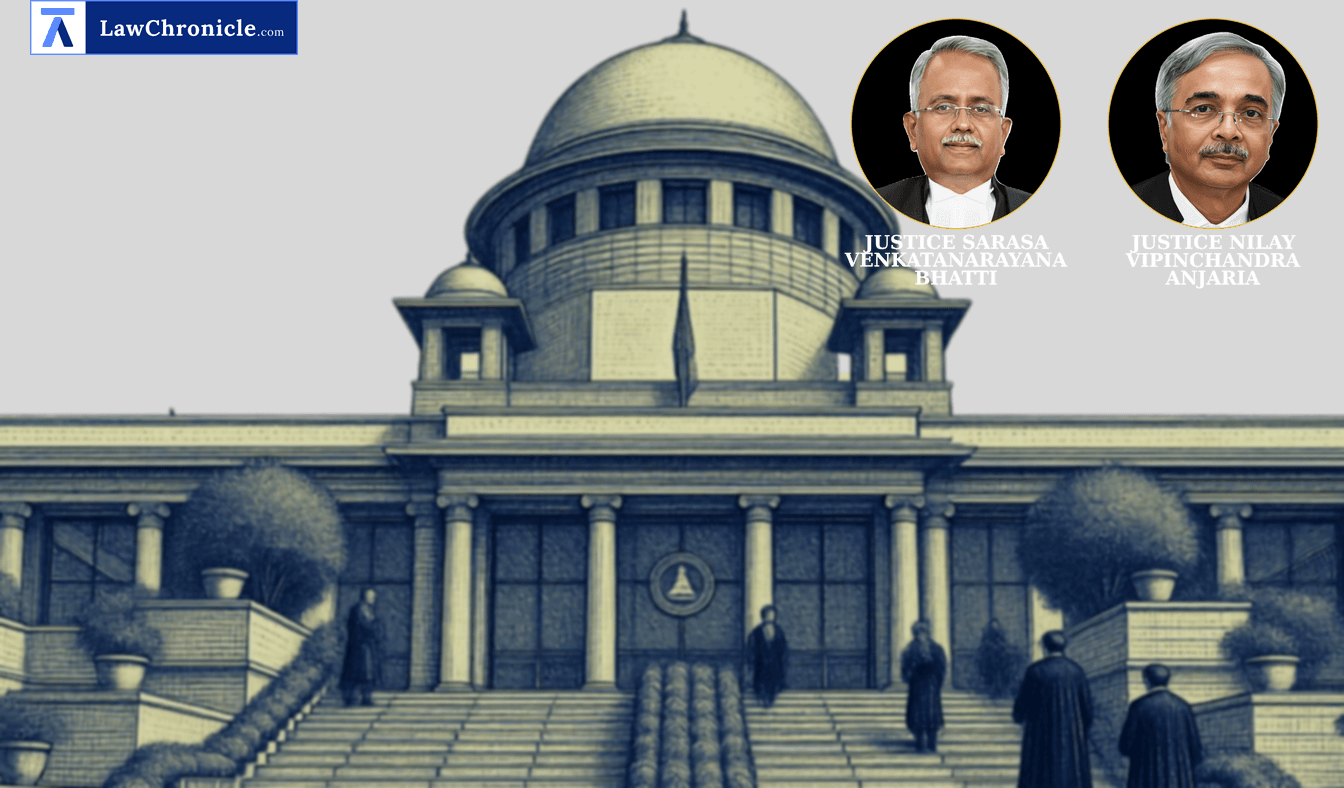
The Supreme Court has held that business-to-business trade exhibitions levying entry fees on participants and visitors fall squarely within the statutory definition of 'entertainment' and are liable to entertainment duty. A bench comprising Justice S.V.N. Bhatti and Justice N.V. Anjaria dismissed an appeal challenging the levy of entertainment duty on annual international trade shows. The Court held that restricted business access and high delegate fees do not remove trade exhibitions from the ambit of taxable entertainment under state tax laws.
Key Takeaways
- Broad Scope of Inclusive Definitions: Broadened the reach of 'entertainment' under tax laws by treating inclusive statutory definitions as non-exhaustive and expansive.
- Threshold Entry Fee Determines Taxability: Ruled that conditioning event access on payment acts as the key criterion for exigibility, irrespective of the commercial or professional nature of the event.
- Restricted Access Does Not Evade Tax: Clarified that limiting entry to specific trade delegates or requiring credentials does not eliminate the public character of an exhibition.
- Impact on Trade Organisers: Subjected commercial expos and corporate trade shows collecting entry charges to state entertainment tax regimes nationwide.
Court's Interpretation of 'Entertainment' and Entry Fees
The Supreme Court affirmed that the term 'includes' used in Section 2(a) of the Bombay Entertainments Duty Act, 1923 expands the lexical meaning of entertainment to encompass any exhibition where admission is granted against payment. The Bench highlighted that the existence of entry fees, even for pure business-to-business transactions, triggers taxability.
Examining the core rationale behind inclusive definitions in fiscal statutes, the Court reasoned that "The literal construction of the Definition Clause, by giving due and permissible meaning to the word, includes that the first limb of the definition clause deals with the 5 events, i.e., exhibitions, performances, amusements, games, or sports. The words 'to which persons are admitted for payment' would be the deciding factor in determining whether an event falls within, or in determining the scope of 'entertainment' under Section 2(a) of the Act, 1923. The exhibitions to which persons are admitted for payment are a threshold verification of a person’s entry into the event... entry into the IIJS and IIJS Signature is on payment. Further, exhibitions showcase the merchandise of the participating traders. The entry is on payment, and upon entry, even if it is a business-to-business transaction, the same cannot be taken away from the definition of 'entertainment' under the Act, 1923."
Ratio
When a statutory definition of 'entertainment' uses the word 'includes' alongside expressions covering exhibitions to which persons are admitted for payment, any display or showcase where entry is conditioned on monetary charges constitutes taxable entertainment, regardless of whether the event is restricted to trade delegates or lacks conventional amusement features.
Background
The dispute arose when a Council incorporated under Section 25 of the Companies Act, 1956 organised annual gem and jewellery trade exhibitions, namely India International Jewellery Show (IIJS) and IIJS Signature. To secure police licences under the Bombay Police Act, 1951, the organisers were mandated to obtain a No Objection Certificate (NOC) from the revenue authorities under the Bombay Entertainments Duty Act, 1923. The tax authorities demanded entertainment duty on entry and delegate fees collected for the exhibitions. The organiser paid sums under protest, contending that the events were pure business-to-business platforms with restricted access for verified trade buyers, devoid of public amusement, music, or entertainment shows. After the revenue authorities and the Divisional Commissioner upheld the liability, the organiser approached the Bombay High Court, which dismissed the writ petition. The organiser subsequently appealed to the Supreme Court.
Analyzing statutory interpretation rules, the Supreme Court cited M/s Geeta Enterprises & Ors. v. State of U.P. & Ors. (1983 CaseBase(SC) 35) to explain criteria for taxable exhibitions, Commissioner of Sales Tax, State of Gujarat v. Union Medical Agency (1980 CaseBase(SC) 206) and Bharat Coop. Bank (Mumbai) Ltd. v. Coop. Bank Employees Union (2007 CaseBase(SC) 1032) on interpretation of inclusive clauses, and Forest Range Officer & Ors. v. P. Mohammed Ali & Ors. (1993 CaseBase(SC) 49) regarding the expansive nature of the word 'includes' in statutes. The High Court had also considered precedents such as Calico Mills Ltd. v. State of M.P. and Godfrey Phillips India Ltd. v. State of U.P. (2005 CaseBase(SC) 918) while upholding taxability. Finding no merit in the appeal, the Supreme Court affirmed the decision of the High Court and dismissed the appeal.
Case Details:
Case No.: Civil Appeal No. 1889 of 2015
Neutral Citation: 2026 INSC 1246
Case Title: The Gem and Jewellery Export Promotion Council v. The State of Maharashtra and Others
Appearances:
For the Petitioner(s): Mr. Aman Raj Gandhi, Advocate
For the Respondent(s): Mr. Bharat Bagla, Advocate
Source: 2026 CaseBase(SC) 10310
Similar Articles

 Breaking News