


Partition Suit for Properties in Multiple Jurisdictions Maintainable in Court Where Any Portion Is Situated: Kerala HC
 Copy Link
 Share
 Save
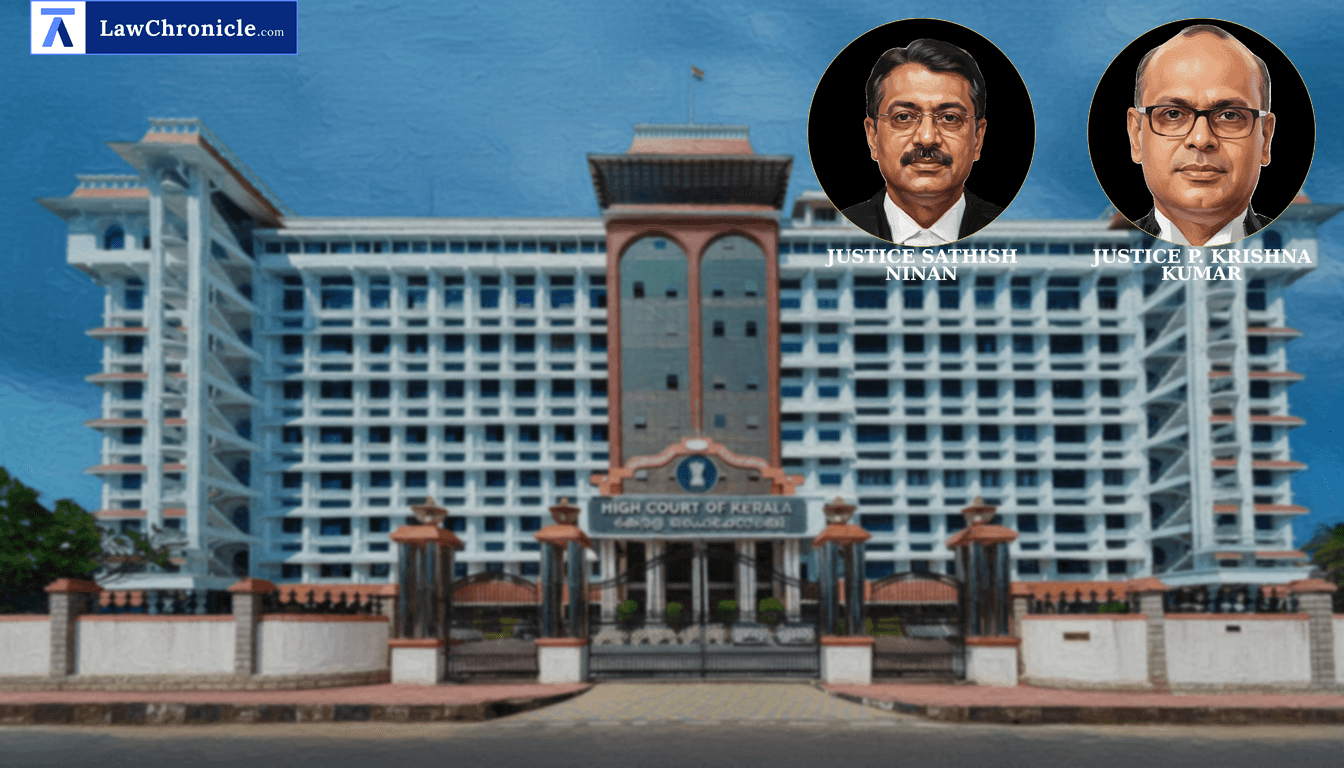
The Kerala High Court has reaffirmed that a suit for partition involving properties situated in different jurisdictions can be maintained in any court where a portion of the property is located, provided the cause of action remains common among the legal heirs. In a significant ruling, the division bench clarified that the nomination in a cooperative society does not grant absolute ownership to the nominee but merely makes them a trustee for the legal heirs.
A bench of Justice Sathish Ninan and Justice P. Krishna Kumar delivered this judgment while hearing an appeal filed by the second defendant against a preliminary decree for partition. The appellant had challenged the trial court's jurisdiction to partition a residential flat located in Mumbai, arguing that the Code of Civil Procedure and specific local rules barred such a proceeding in a Kerala court.
Territorial Jurisdiction and Multi-City Properties
The appellant contended that under Section 16(b) of the Code of Civil Procedure, the suit should have been filed in Mumbai. However, the Court relied on Section 17 of the Code of Civil Procedure, which allows for suits involving immovable properties situated within the jurisdiction of different courts to be instituted in any of those courts. The High Court, referencing the precedent in Shivnarayan (D) By Lrs. v. Maniklal (D) Thr. Lrs. and others ( "(2020) 11 SCC 629": 2019 CaseBase(SC) 2032), noted that the existence of even a portion of the property within the local limits is sufficient to confer jurisdiction.
The Court, in its reasoning, observed: "A suit in respect to more than one property situated in jurisdiction of different courts can be instituted in a court within local limits of jurisdiction where one or more properties are situated provided suit is based on same cause of action with respect to the properties situated in jurisdiction of different courts."
Nomination vs. Succession Rights
Another pivotal issue was whether a nomination made to a Cooperative Society vests absolute title in the nominee. The appellant claimed absolute ownership of the Mumbai flat based on a nomination by the deceased. The Court dismissed this, citing Indrani Wahi v. Registrar of Coop. Societies and others ( "(2016) 6 SCC 440": 2016 CaseBase(SC) 828), and reiterated that a nominee is merely the 'hand to receive' assets on behalf of all legal heirs entitled under the law of succession.
Cooperative Societies Act and Civil Court Bar
The appellant further argued that the suit was barred by Section 100 and Section 69 of the Kerala Co-operative Societies Act. The Court rejected this, clarifying that a partition dispute between legal heirs regarding inter se title does not constitute a 'dispute' touching the business or management of a Society.
The Court has the following directions:
"There is no reason to interfere with the decree and judgment of the trial court. The appeal fails and is dismissed. No costs."
Background:
The dispute arose following the death of Velayudhan and his wife Ammu, leaving behind six children. The plaintiffs, legal heirs of one of the sons (Rajendran), sought partition of several properties, including a residential flat in Mumbai (Schedule F, Item No. 1). The Sub Court, Chavakkad, passed a preliminary decree declaring each of the six branches entitled to a 1/6th share.
The appellant, who resides in Mumbai, argued that he had expended funds on the flat and should be its absolute owner via nomination. He also cited Section 120 of the Code of Civil Procedure and the Bombay High Court Rules to contest the jurisdiction. The High Court found these arguments misconceived, noting that Section 120 applies only to High Courts with original civil jurisdiction and that territorial jurisdiction objections must be raised at the earliest opportunity under Section 21 of the Code of Civil Procedure.
Case Details:
Case No.: RFA NO. 149 OF 2016
NeutralCitation: 2026:KER:35893
Case Title: P.V.SURENDRAN vs. KAVITHA RAJENDRAN & OTHERS
Appearances:
For the Petitioner(s): Shri.B.KRISHNAN, Shri.R.PARTHASARATHY, Advocates
For the Respondent(s): Shri.G.SREEKUMAR (CHELUR), Advocate
Source: 2026 CaseBase(KER) 302
Similar Articles
 Breaking News


