


Physical Absence From Property Does Not Amount to Legal Ouster of Co-Owner: Delhi HC
 Copy Link
 Share
 Save
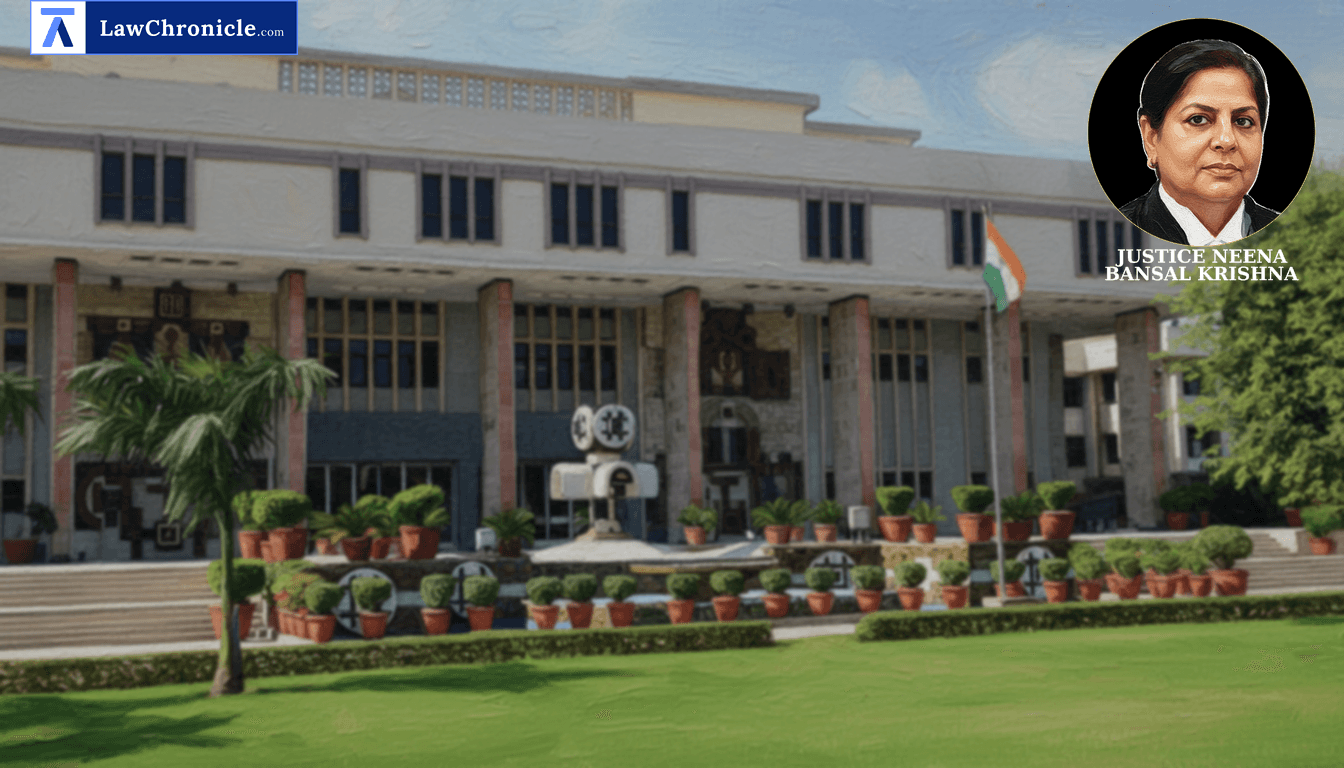
The Delhi High Court has reinforced the sanctity of co-ownership rights, ruling that a co-sharer's physical absence from a property for decades does not constitute a legal ouster unless hostile possession is explicitly established. This decision prevents dominant occupants from unilaterally claiming exclusive ownership of ancestral property simply due to the long-term residence of one heir and the physical relocation of others.
Justice Neena Bansal Krishna, presiding over the matter, adjudicated a first appeal challenging a preliminary decree of partition. The Court examined whether a brother, who moved out of his father's house in 1993, had lost his share in the property due to 'ouster' or the bar of limitation as contended by the widow and son of his deceased brother.
Key Takeaways
Constructive Legal Possession
Physical presence is not a prerequisite for ownership; a co-owner remains in constructive legal possession even if they reside elsewhere.
Strict Threshold for Ouster
Occupants must prove 'hostile possession' to the explicit knowledge and exclusion of other co-owners to claim exclusive title, a bar that requires rigorous evidence.
Limitation in Partition Suits
Time begins to run only when there is an established denial of co-ownership, not from the date a party moves out of the premises.
Procedural Flexibility
Courts can adjust shares based on subsequent events, such as the death of a party or execution of relinquishment deeds, without necessitating formal amendment of the plaint.
Legal Threshold for 'Ouster' Not Met
The Court observed that the mere fact that the Appellant had been residing in the property did not automatically grant her exclusive ownership. The judgment clarified that for an 'ouster' to be legally recognized, it must be established that the possession was hostile and intended to exclude other co-sharers to their knowledge.
The Court, in its reasoning, observed: "Merely because she had been residing in the suit property after her marriage to late Sh. Devender Kumar Arora and subsequently continued to occupy it, the physical possession would not ipso facto, get converted into ownership. The Plaintiff may not have been living in the suit property, but being a co-owner, he was in constructive legal possession along with the other co-sharers."
Clarification on Limitation and Cause of Action
The Appellant contended that the suit was barred under Limitation Act. However, the Court dismissed this, noting that the cause of action only arose in 2018 when the Plaintiff's demand for partition was formally denied. Referring to N. Asha Devi v. R. Aravind Kumar & Anr ( "2026 INSC 908": 2026 CaseBase(SC) 911), the Court noted that while limitation is usually a mixed question of fact and law, the timeline here clearly showed the suit was filed within the three-year window following the denial of rights.
The Court has the following directions:
"The Preliminary Decree of Partition has, therefore, been rightly passed by declaring the Plaintiff, Defendant Nos. 1 and 2 together, and Defendant No. 4, entitled to one-third share each in the suit property. ... Therefore, if it is found that Defendant No. 4 has genuinely relinquished her share vide registered Relinquishment Deed Ex.D-4/B, a modified preliminary decree may be drawn, giving the 1/3rd share of Defendant No. 4 to the Plaintiff, thereby making the share of the Plaintiff 2/3rd, while that of Defendant Nos. 1 and 2 together 1/3rd."
Ratio
In a suit for partition among co-owners, the plea of ouster cannot succeed merely on the basis of physical absence or separate residence of a co-sharer. The law presumes every co-owner to be in possession on behalf of all, and the burden lies heavily on the party claiming exclusive title to prove open, continuous, and hostile possession to the exclusion of other co-sharers to their knowledge. In the absence of such proof, the right to seek partition remains intact and the period of limitation commences only from the date of express denial of the co-owner's share.
Background
The dispute concerned a flat in Naraina Vihar, New Delhi, originally purchased by Late Sh. R. L. Arora, who died intestate in 1988. The Plaintiff (eldest son) moved out in 1993, while his younger brother's family (the Appellants) remained in possession. The Plaintiff filed for partition in 2019 after his sister-in-law denied his claim to the property. The Trial Court passed a preliminary decree under Order XII Rule 6 of the Code of Civil Procedure, 1908, which was challenged in this appeal. The High Court upheld the Trial Court's reliance on Nagabhushanammal (D) By LRs. vs. C. Chandikeswaralingam, affirming that physical exclusion without hostile intent does not terminate co-ownership. The appeal was dismissed, affirming the Plaintiff's right to his share.
Case Details:
Case No.: RFA 1007/2026, CM APPL. 62450/2026 & 62452/2026
CNR No.: DLHC010435362026
Case Title: Bina Arora v. Sunil Kumar Arora & Ors.
Appearances:
For the Petitioner(s): Mr. K. S. Rekhi, Mr. Kush Mudgal, Mr. Pawas Kulshrestha, Mr. Jai Vardhan and Mr. Siddharth Garg, Advocates.
For the Respondent(s): Mr. Uttam Datt, Sr. Advocate with Mr. Kumar Bhaskar, Mr. Naman Kumar and Ms. Katyayani Shekhar, Advocates for R-1.
Source: 2026 CaseBase(DEL) 6582
Similar Articles


 Breaking News


