


Patna HC Acquits Murder Convicts Over Severe Lapses in Prosecution Evidence
 Copy Link
 Share
 Save

Fatally undermining the state's case, the Patna High Court has set aside a life sentence in a decades-old murder trial, ruling that the non-examination of the Investigating Officer and medical experts creates a terminal lacuna that makes conviction legally unsustainable. This judgment reaffirms that when the genesis of an incident remains shrouded in doubt and procedural failures deprive the defense of cross-examination, the accused must be granted the benefit of doubt as a constitutional safeguard.
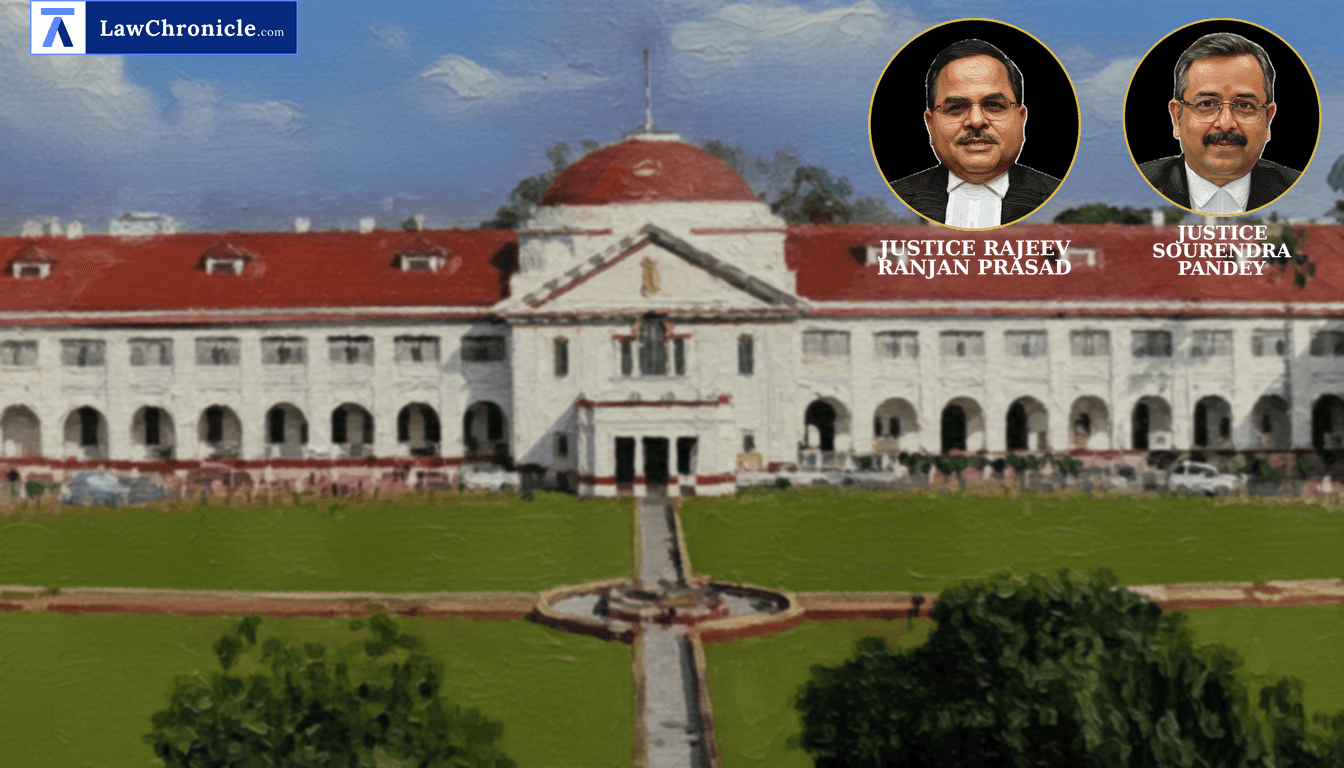
A Division Bench comprising Justice Bibek Chaudhuri and Justice Rana Vikram Singh delivered this verdict while hearing an appeal against a 2018 conviction recorded by the Trial Court for an incident dating back to 1993. The Court scrutinized the systemic failure of the prosecution to produce essential witnesses and documentary evidence in a trial involving charges under Section 302 and Section 34 of the Indian Penal Code.
Key Takeaways
Evidentiary Value of Medical Experts
Failure to examine the doctor and produce the post-mortem report is not a procedural irregularity but a substantive flaw that breaks the nexus between the injury and the cause of death.
Impact of Missing Investigating Officer
The non-appearance of the Investigating Officer (IO) is fatal to the prosecution as it deprives the defense of the vital right to confront witnesses with their previous statements.
Hearsay Evidence Limitations
Testimony from witnesses who arrived after the occurrence and relied on information from others cannot form the sole basis for a murder conviction without independent corroboration.
FIR Delay and Reliability
Unexplained delays in lodging the FIR, especially when an inquest report was prepared much earlier, cast a shadow of doubt on the authenticity of the prosecution's narrative.
Court Observations and Directions
The Court observed that the prosecution’s reliance on hearsay witnesses and a single eye-witness whose testimony was contradicted by other co-villagers created significant doubt. The Bench noted the strange discrepancy where the inquest report was prepared on May 31, 1993, at NMCH Patna, yet the formal FIR was only lodged on June 3, 1993.
The Court, in its reasoning, observed: "In the absence of the testimony of the Investigating Officer, the defence has been deprived of the opportunity to confront the prosecution with contradictions and omissions in the statements of witnesses recorded. Similarly, non-examination of the doctor and non-production of the post-mortem report deprive the Court of reliable medical evidence regarding the nature of injuries, cause of death, and the manner in which the injuries were inflicted. These lapses are not mere procedural irregularities but go to the root of the matter."
The Court has following directions:
"The appellants shall be released forthwith, if their presence is not required in any other case."
Ratio
When the genesis and the manner of the incident are doubtful due to the non-examination of the Investigating Officer and the medical expert, coupled with the non-production of the post-mortem report, the prosecution fails to establish the guilt beyond reasonable doubt. Such substantial lacunae entitle the accused to the benefit of doubt as a matter of law, rendering a conviction perverse.
Background
The case originated from an incident on May 30, 1993, where Suresh Yadav was allegedly assaulted with bhalas and lathis while sleeping at his boring machine site. The prosecution alleged that the appellants intended to steal the machine. While the informant (PW-1) claimed the deceased named the assailants, he admitted to being half a kilometer away during the occurrence. The alleged eye-witness (PW-4) was contradicted by PW-5, who claimed PW-4 arrived at the scene ten minutes after the event.
The appellants were convicted by the Trial Court in 2018 under Section 302 read with Section 34 of the Indian Penal Code. However, the High Court found that the prosecution failed to explain why the IO and the doctor were never examined. Relying on the principles in Pankaj v. State of Rajasthan ( "(2016) 16 SCC 192": 2016 CaseBase(SC) 203) and Munna Lal v. State of U.P., the High Court concluded that the gaps in the prosecution's effort to nail the appellants created reasonable doubt. Consequently, the conviction and life sentences were set aside, and the appellants were acquitted.
Case Details:
Case No.: CRIMINAL APPEAL (DB) No.760 of 2018
Case Title: Bhushan Yadav and Ors vs. The State of Bihar
Appearances:
For the Petitioner(s): Mr. Anuj Kumar, Advocate
For the Respondent(s): Ms. Shashi Bala Verma, Advocate
Source: 2026 CaseBase(PAT) 2671
Similar Articles


 Breaking News


