


Patna High Court Upholds Equal Pay Parity For Jail Superintendents
 Copy Link
 Share
 Save
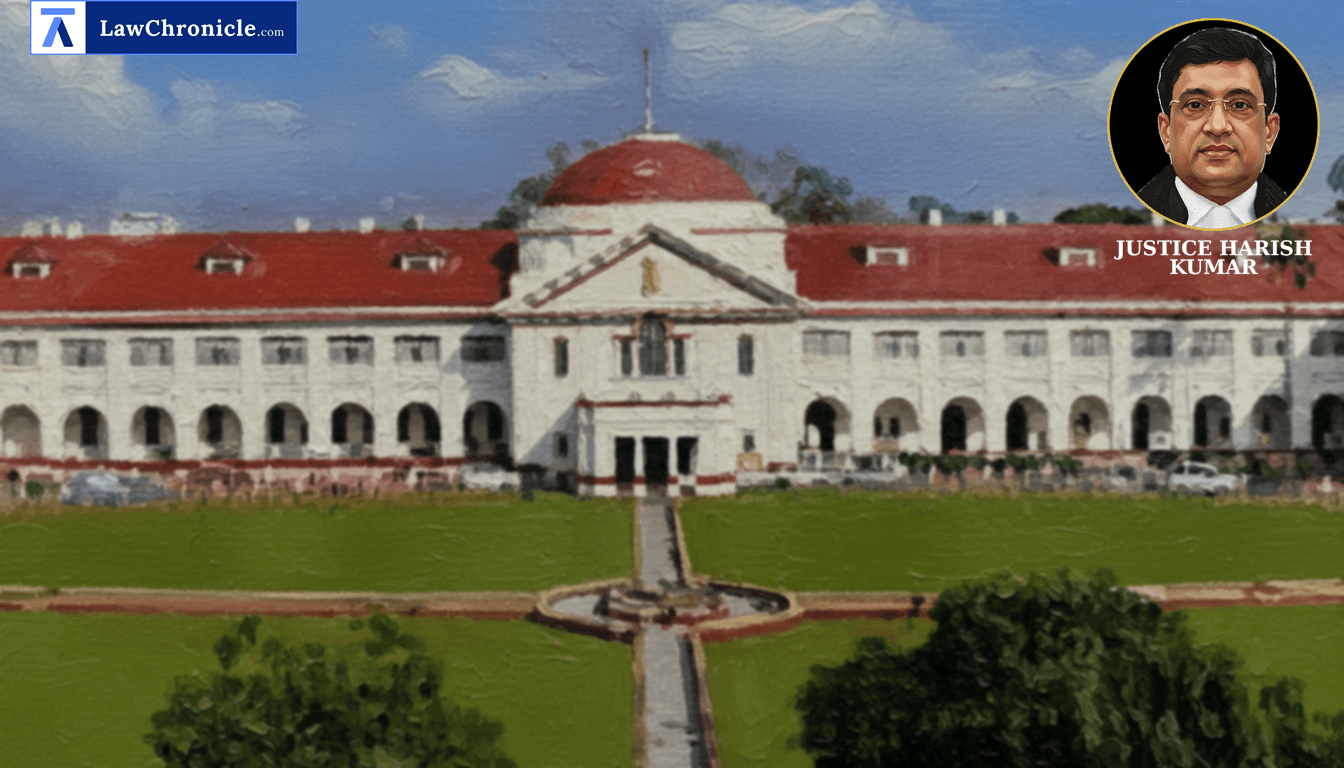
The Patna High Court has reinforced the principle of non-discrimination in state service pay scales, mandating that the government cannot arbitrarily withhold revised financial benefits from seniors that have already been granted to their juniors through prior judicial interventions. This ruling cements the binding nature of the Bihar Litigation Policy, ensuring that settled legal issues are applied uniformly to all similarly situated employees without forcing them into protracted litigation.
A single-judge bench of Justice Harish Kumar adjudicated the writ petition, which sought the enforcement of a higher pay scale for a retired Jail Superintendent. The court was called upon to determine whether the state could deny a replacement pay scale that had already been affirmed for the petitioner’s juniors by the High Court and subsequently upheld by the Supreme Court.
Key Takeaways
Enforcement of Parity
State authorities cannot deny pay scale revisions to senior employees while granting the same to juniors under identical circumstances.
Policy-Based Compliance
Under the Bihar Litigation Policy, the State is obligated to extend judicial decisions on settled issues to all similarly situated persons to reduce unnecessary litigation.
Binding Nature of Replaced Scales
Once a Fitment Committee recommendation for a replacement pay scale is accepted and judicialized, it applies to all officers holding the post prior to the revision date.
Court Observations and Directions
The Court noted that the issue regarding the entitlement of the pay scale for District Jail Superintendents was no longer res integra, having been settled in CWJC No. 22597 of 2012. The Court observed that despite the State's attempts to challenge the previous findings, the Division Bench in LPA No. 4 of 2015 and the Supreme Court had already affirmed the entitlement to the higher scale.
The Court, in its reasoning, observed: "Having considered the nature of the grievance as also the fact that the issue has already been settled regarding the entitlement of pay scale of Jail Superintendent, besides the Government has come out with Bihar Litigation Policy, 2011 to implement the decision to all similarly situated persons in case any issue is settled by the Hon'ble Court, this Court deems it fit and proper to dispose of the present writ petition..."
The Court has the following directions:
"...directing the petitioner to file a fresh representation before Respondent No. 2 (Secretary, Home Department), preferably within a period of two weeks from today. In case such a representation is filed, the same shall be considered and disposed of by a reasoned and speaking order. Suffice it to observe that if the claim of the petitioner is found identical to those of the persons with whom the petitioner is seeking parity, especially Respondent Nos. 13, 14, 15, and 16, who are said to be juniors to the petitioner in CWJC No. 22597 of 2012, the identical benefits must be accorded to the petitioner within a further period of eight weeks."
Ratio
When a legal issue concerning pay scale revisions and fitment recommendations is settled by a Court of law and attains finality through the dismissal of appellate challenges, the State is duty-bound under the National/State Litigation Policy to extend the same benefits to all similarly situated employees, regardless of whether they were parties to the original litigation, provided they seek parity within a reasonable framework.
Background
The petitioner was appointed as a District Jail Superintendent in 1990 through the 35th Combined Competitive Examination of the BPSC. The dispute arose when the Fitment Committee report dated January 12, 2004, recommended a replacement pay scale of Rs. 8,000–13,500 for District Jail Superintendents effective from January 1, 1996. However, the petitioner was kept in the lower scale of Rs. 6,500–10,500.
Juniors to the petitioner had previously moved the High Court in CWJC No. 22597 of 2012, where the court held that the pay scale of Rs. 6,500–10,500 was only for new appointees after 1996 and could not be forced upon those holding the post prior to that date. That judgment was upheld in LPA No. 4 of 2015 and by the Supreme Court. The State argued that the petitioner approached the court belatedly, but the High Court found that since the issue was settled and covered by the Bihar Litigation Policy, the petitioner was entitled to parity. The writ petition was disposed of with directions for a reasoned order and time-bound disbursement of benefits.
Case Details:
Case No.: Civil Writ Jurisdiction Case No.14672 of 2026
Case Title: Devendra Prasad Vs. The State of Bihar & Ors.
Appearances:
For the Petitioner(s): Mr. Shashi Bhushan Singh, Advocate
For the Respondent(s): Mr. D. K. Verma, GP-14; Ms. Kanupriya, AC to GP-14
Source: 2026 CaseBase(PAT) 3283
Similar Articles
 Breaking News


