


Plain Language of Will Prevails Over Descriptive Terms: Delhi HC
 Copy Link
 Share
 Save
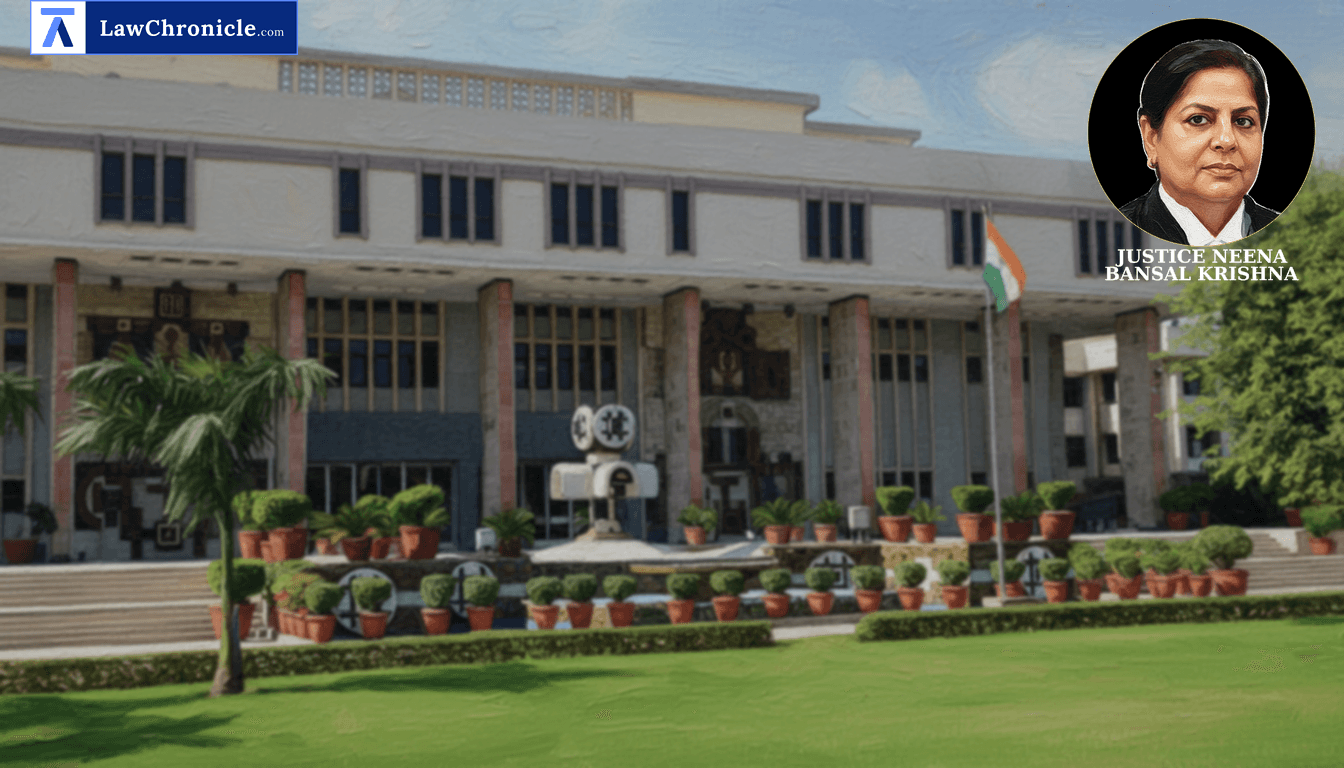
The Delhi High Court has fortified the 'armchair rule' of testamentary construction, ruling that descriptive references to specific portions of a property cannot override clear, unambiguous bequests of the entire estate to a single heir. This decision underscores that internal family residential arrangements do not create ownership rights capable of displacing a validly probated Will.
In a verdict delivered by a bench of Justice Neena Bansal Krishna, the Court dismissed an appeal challenging a decree for possession passed under Order XII Rule 6 of the Code of Civil Procedure, 1908. The dispute centered on whether a father’s bequest of a Subhadra Colony property to his son was limited only to a small shop mentioned in the Will or extended to the entire premises.
Key Takeaways
Literal Rule in Wills
Clear and unambiguous operative words in a Will prevail over mere descriptive references to the property’s current state of occupation.
Probate as Judgment in Rem
Once Letters of Administration are granted and remain unchallenged, the validity and extent of the bequest as recorded in the grant attain finality.
Permissive Possession Not Title
Long-term residence by family members or varying residential arrangements made by a patriarch during his lifetime do not confer any ownership interest.
Scope of Order XII Rule 6
Courts can determine legal consequences and interpret documents like Wills under Order XII Rule 6 of the Code of Civil Procedure, 1908 if the foundational facts are admitted.
Interpretation of Bequests and the 'Armchair Rule'
The Court rejected the appellants' argument that the mention of a "7’ x 7’ shop" in the Will restricted the bequest to only that portion. The Court noted that the testator had used the wider expression "my above said property" when defining the devolvement, rather than restrictive terms like "only the shop."
The Court, in its reasoning, observed: "The expression ‘my above said property’ is clear and unambiguous and plainly relates to property bearing No. B-107, as described in the opening sentence. Had the testator intended to confine the bequest to the shop alone, he would have used the expression ‘the said shop’ or ‘the aforesaid shop’, instead of consciously employing the wider expression ‘my above said property’."
Furthermore, the Court highlighted that the exclusion of other legal heirs in the Will supported a holistic bequest. The bench remarked that the testator was clearly aware of how to make proportionate bequests, as seen in his separate treatment of another flat in R.K. Puram.
Court Directions
The Court issued the following directions:
"The Defendants are directed to hand over vacant and peaceful possession of property bearing No. B-107, Subhadra Colony, Sarai Rohilla, Delhi, except the 7’ × 7’ shop on the Ground Floor occupied by Defendant No. 2. The Appeal is hereby, dismissed. Pending Applications are also disposed of."
Ratio
In the construction of a Will, the intention of the testator must be gathered from a holistic reading of the instrument; where a property is identified by its municipal number and followed by a specific description of a part thereof, the operative bequest of the "above said property" to the exclusion of other heirs constitutes a bequest of the entire premises. Descriptive recitals regarding occupation do not limit an otherwise absolute and unambiguous testamentary disposition.
Background
The litigation arose from a suit for possession filed by the late Bharat Bhushan against his brother Raghunath and nephew Basant Kumar. The plaintiff relied on the Will of his father, Late Roshan Lal, dated 03.03.1997. Although the defendants admitted the Will's execution and the grant of Letters of Administration, they argued the Will only gave the plaintiff a single shop and that the rest of the property was joint family property.
The Trial Court had previously relied on Rajiv Ghosh v. Satya Narayan Jaiswal ( "2025 SCC OnLine SC 751": 2025 CaseBase(SC) 426), Navneet Lal alias Rangi v. Gokul ( "(1976) 1 SCC 630": 1975 CaseBase(SC) 586), and Bay Berry Apartments (P) Ltd. v. Shobha to hold that the Will bequeathed the entire property to the plaintiff. The High Court affirmed this, noting that the defendants’ claim of co-ownership lacked a legal basis given the clear exclusionary language of the Will. The Court also addressed Indian Succession Act, 1925, finding no irreconcilable clauses that would require the application of Section 88, as the reference to the shop was merely descriptive.
Case Details:
Case No.: RFA No. 496/2026, CM APPL. 32444/2026
Case Title: Raghunath (Now Deceased) Thr LR & Anr. v. Sh. Bharat Bhushan (Deceased) Through LRs
Appearances:
For the Petitioner(s): Mr. Madan Lal Sharma, Mr. Abhay Singh, Advocates
For the Respondent(s): Mr. Rahul Madan, Advocate
Source: 2026 CaseBase(DEL) 6662
Similar Articles


 Breaking News


