


Will of Ancestral Property cannot limit Coparcenary Rights of Daughters: Chhattisgarh HC
 Copy Link
 Share
 Save
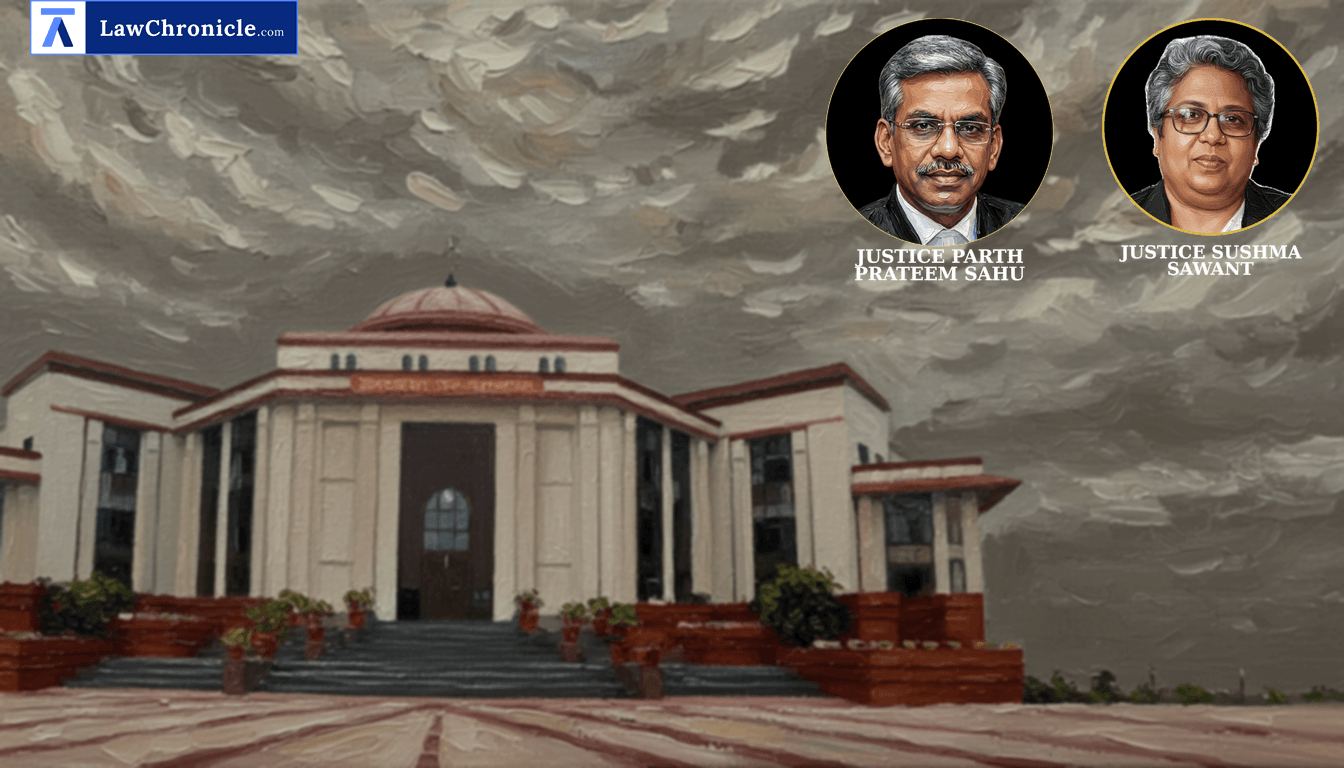
The Chhattisgarh High Court has curtailed the Will of ancestral property by a Hindu father, ruling that a Will bequeathing an entire estate is invalid to the extent it encroaches upon the independent coparcenary shares of daughters.
A Division Bench comprising Hon’ble Shri Parth Prateem Sahu and Hon’ble Smt. Sushma Sawant delivered the verdict while hearing a First Appeal under Section 96 of the Code of Civil Procedure, 1908. The appellants challenged a trial court decree that had declared the minor granddaughters of the late Kenaram Bairagi as sole owners of 13.40 acres of land based on a registered Will, effectively excluding the deceased's four daughters.
Key Takeaways
1. Coparcenary Right of Daughters
Section 6 of the Hindu Succession Act, 1956 grants daughters equal coparcenary rights that cannot be extinguished by a father's Will covering the entire ancestral estate.
2. Limits on Testamentary Disposition
A Hindu testator’s power to execute a Will over ancestral property is strictly confined to their individual share determined via a notional partition.
3. Rebuttal of Self-Acquired Claims
Property purchased from the income of an ancestral family business (like a hotel) retains its character as ancestral property unless proven otherwise by documentary evidence.
4. Validity of Multi-Locality Wills
A Will expressing intent to bequeath "all properties" is valid for future acquisitions or properties in different revenue circles even if not individually described.
Ancestral Property vs. Self-Acquisition
The Chhattisgarh High Court scrutinized the claim that the 13.40-acre suit property was the self-acquired property of Kenaram Bairagi. While the plaintiffs relied on a registered Will, the defendants argued the land was bought using proceeds from an ancestral hotel business in Dhamtari. The Bench found that the plaintiffs failed to discharge the burden of proving separate income sources. Hence, it observed that "...an analysis of the evidence available on record establishes that the plaintiffs have failed to prove that the suit property is the self-acquired property of Kenaram, in absence of which it will be presumed that it was purchased from the income of the ancestral property."
Application of the 2005 Amendment
By applying Section 6 of the Hindu Succession Act, 1956, the Chhattisgarh High Court determined that a notional partition was required immediately before Kenaram's death in 2010. Since the property was ancestral, it had to be divided into six equal shares (one for the father, one for the son, and four for the daughters). Consequently, the father only had the legal capacity to bequeath his 1/6th share.
Ratio
In cases of ancestral coparcenary property, a father/testator is not the exclusive owner and is incompetent to bequeath the entire estate; any registered Will executed by him is valid only to the extent of his individual share determined by notional partition under Section 6 of the Hindu Succession Act, 1956, preserving the equal and independent coparcenary shares of his daughters.
Background
The dispute originated following the death of Kenaram Bairagi in May 2010. His son, Sanjay Bairagi, claimed exclusive title to 13.40 acres of agricultural land in Village Nawagaon based on a registered Will dated January 25, 2003. After Sanjay's death in 2011, his minor daughters (the plaintiffs) sought a declaration of title. The Trial Court had initially decreed in their favor, accepting the Will as proof of exclusive ownership.
However, the Chhattisgarh High Court analyzed the Indian Evidence Act, 1872 and Indian Succession Act, 1925 to confirm the Will's execution while simultaneously referencing Daulat Ram and others v. Sodha and others ( "(2005) 1 SCC 40": 2004 CaseBase(SC) 40) regarding the burden of proof for fraud or forgery. While the Court upheld the Will's authenticity and followed the principles of testamentary intention as laid down in Gnambal Ammal v. T. Raju Ayyar ( "AIR 1951 SC 103": 1950 CaseBase(SC) 7) and Sadaram Suryanarayana and another v. Kalla Surya Kantham and another ( "(2010) 13 SCC 147": 2010 CaseBase(SC) 1240), it distinguished the identification of property principles in Ravi Kala and another v. Casablanca Estate and others and Sanjay Paliwal and another v. Bharat Heavy Electricals Limited Through its Executive Director. The Chhattisgarh High Court ultimately modified the decree, holding that the plaintiffs are only entitled to a 1/3rd total share (1/6th from their father's own coparcenary share plus 1/6th inherited via the Will from their grandfather).
Case Details:
Case No.: FA No. 74 of 2016
Neutral Citation: 2026:CGHC:46932-DB
Case Title: Smt. Madhuri Pramanik and another v. Ku. Rupa Bairagi and others
Appearances:
For the Petitioner(s): Mr. B.P. Gupta, Advocate.
For the Respondent(s): Mr. Ratnesh Kumar Agrawal and Mr. Sourabh Agrawal, Advocates for Respondents 1 to 5; Mr. Anant Bajpai, Panel Lawyer for State.
Source: 2026 CaseBase(CTH) 21298
Similar Articles
 Breaking News


