


Plaintiff Cannot Withdraw Suit to Cover Lacunae if Statutory Remedy Exists: Telangana HC
 Copy Link
 Share
 Save

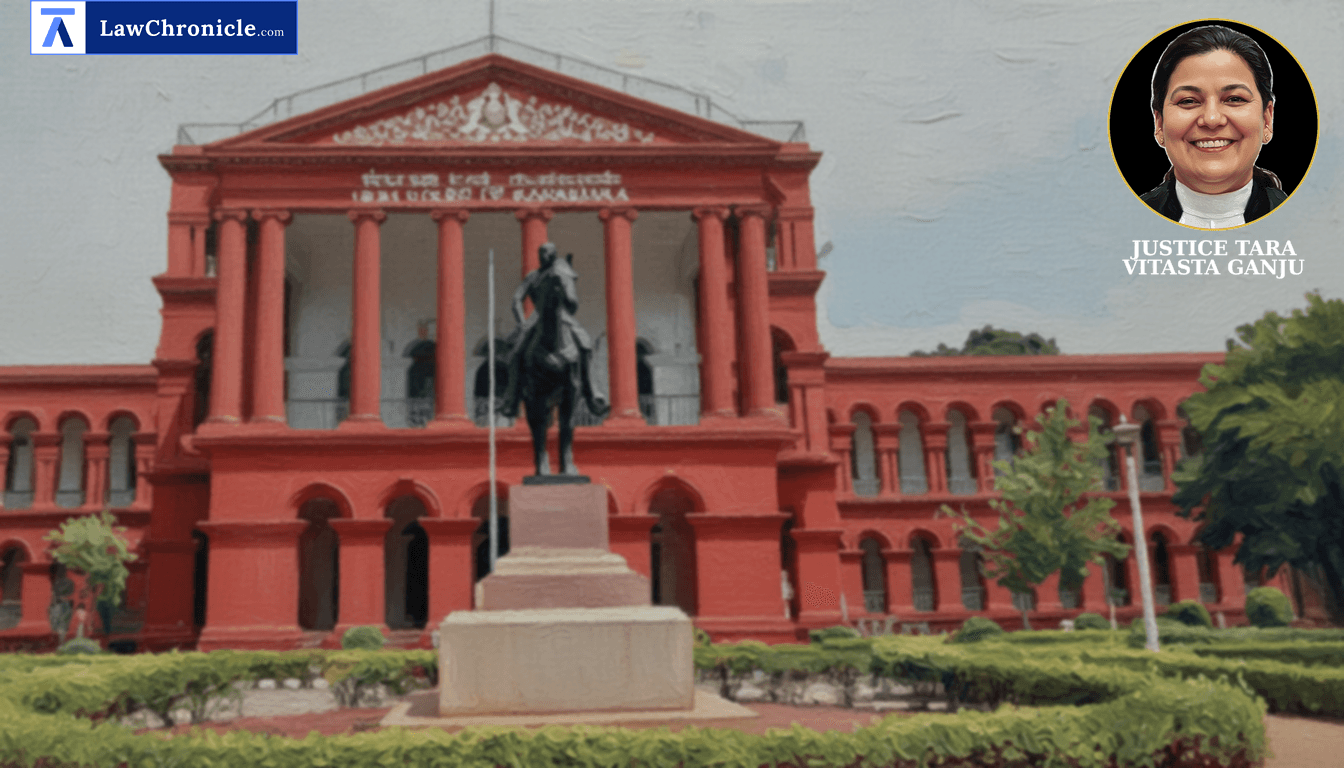
The Telangana High Court has reinforced the principle that litigants cannot bypass procedural norms to rectify suit defects, ruling that the liberty to withdraw a suit for filing a fresh one under Code of Civil Procedure, 1908 is not a tool to suppress defense disclosures or cover up shortcomings when alternative pleading mechanisms exist.
A single-judge bench comprising Justice Tangirala Madhavi Devi adjudicated upon a revision petition challenging a trial court's order that permitted a plaintiff to withdraw a specific performance suit with liberty to file a fresh comprehensive suit. The Bench emphasized that discretionary power to grant such liberty must be grounded in the existence of a 'formal defect' or 'sufficient grounds,' rather than being used as a strategic maneuver to restart litigation after the defendants have revealed their hand through written statements.
Key Takeaways
Curbing Procedural Circumvention
Telangana High Court prevents plaintiffs from using the withdrawal-with-liberty route to restart trials solely to overcome information gaps or strategic disadvantages discovered during the initial proceedings.
Priority of Order 8 Rule 9
Where additional facts need to be brought on record, the proper legal recourse is an application for subsequent pleadings rather than the drastic measure of suit withdrawal.
Formal Defect Requirement
Reaffirms that the power under Order 23 Rule 1(3) is discretionary and founded on public policy to prevent repetitive litigation on the same cause of action unless a technical failure is imminent.
Maintainability of Article 227
Clarifies that a Civil Revision Petition under Constitution of India, 1950 is maintainable even where Section 115 of the Code of Civil Procedure, 1908 might be restricted, specifically in cases involving supervisory correction of trial court errors.
Judicial Analysis and Restoration of Suit
The Telangana High Court scrutinized the plaintiff's justification for withdrawal, which centered on newly discovered facts regarding previous litigation and document discrepancies. However, the bench noted that the plaintiff was already aware of several of these proceedings or had participated in them. The Court held that simply wanting to modify averments or bring additional facts on record does not constitute a 'formal defect' as contemplated under the law. The Bench highlighted that “In this case, the respondent/plaintiff has not been able to point out any formal defect which would lead to failure of the suit... When the plaintiff had the option of filing an application under Order 8 Rule 9 of Code of Civil Procedure, 1908 to bring the additional facts on record and there was no formal defect leading to the failure of the suit, the trial Court ought not to have allowed the same.”
Ratio
Permission to withdraw a suit with liberty to file afresh under Order 23 Rule 1(3)(b) of the Code of Civil Procedure, 1908 cannot be granted for the purpose of introducing additional facts or modifying averments if such objectives can be achieved through subsequent pleadings under Order 8 Rule 9. Such liberty is reserved for cases involving formal defects or sufficient grounds where the suit would otherwise fail, and cannot be used to overreach the defendant's disclosed defense.
Background
The dispute originated from O.S.No.37 of 2025 (originally filed in 2015), where the plaintiff sought specific performance and a declaration that certain gift and sale deeds were void. After the defendants (including the petitioner) filed their written statements, the plaintiff moved an Interlocutory Application (I.A. No. 2 of 2026) to withdraw the suit with liberty to file a 'fresh comprehensive suit,' claiming they recently discovered a 1985 judgment involving the plaintiff's father.
The petitioner/defendant No.6 opposed this, arguing that the plaintiff was merely trying to cover up defects after seeing the defense's stand. While the trial court allowed the withdrawal with a cost of Rs. 10,000, the High Court intervened, relying on V.Rajendran and another Vs. Annasamy Pandian (Dead) through Legal Representatives Karthyayani Natchiar to highlight that the power is discretionary and must be used sparingly to prevent the institution of suits 'again and again' on the same cause of action. The Telangana High Court further distinguished the present case from Poonam Vs. Dule Singh and others and cited Anil Kumar Singh Vs. Vijay Pal Singh and others ( "(2018) 12 SCC 584": 2017 CaseBase(SC) 1186) regarding the rights of defendants to object to such withdrawal prayers.
Case Details:
Case No.: CIVIL REVISION PETITION NO.1056 OF 2026
Case Title: Sankineni Krishna Rao v. Rachakonda Janaiah and others
Appearances:
For the Petitioner(s): Learned counsel for the petitioner
For the Respondent(s): Learned Senior Counsel for the respondent/plaintiff
Source: 2026 CaseBase(TEL) 34915
Similar Articles
 Breaking News


