Police Cannot Interfere In Pending Civil Disputes Over Land: Andhra Pradesh HC
 Copy Link
 Share
 Save
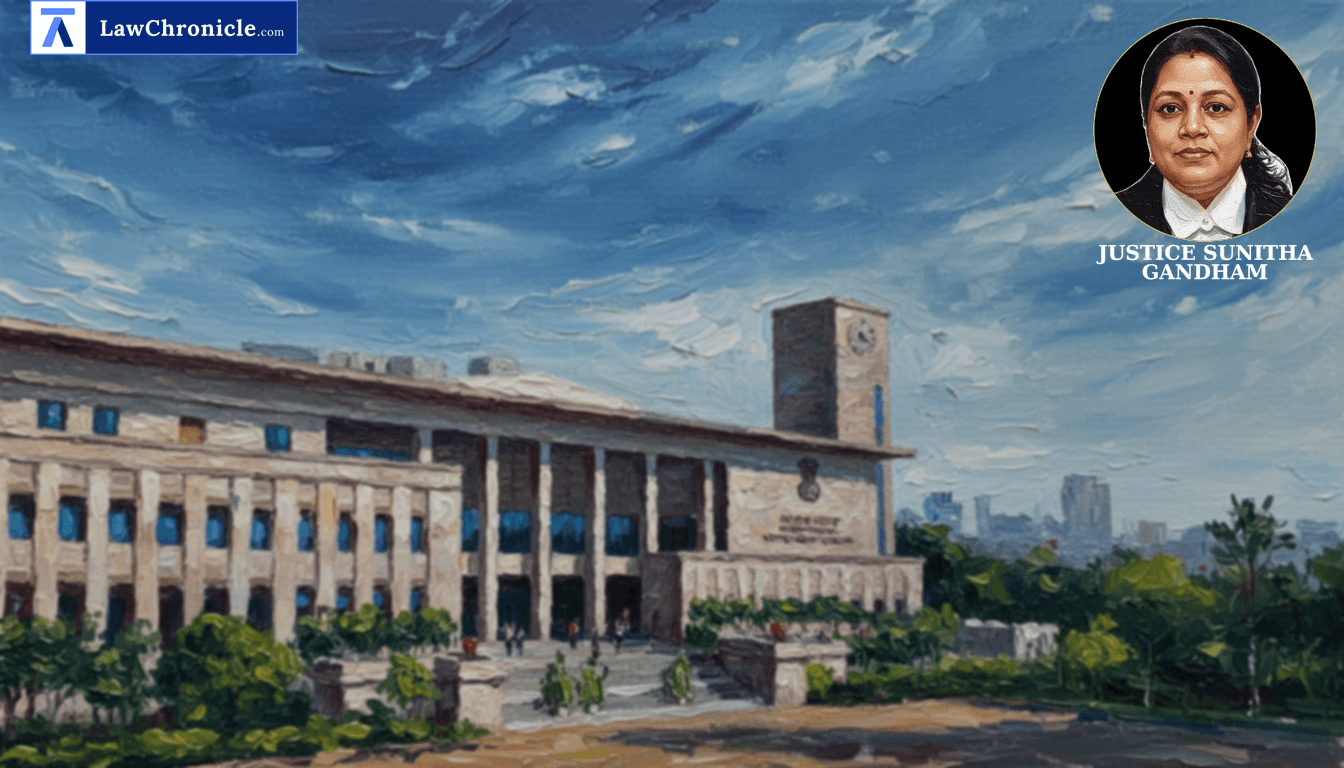
The High Court of Andhra Pradesh has reinforced the constitutional boundary between executive functions and judicial duties, ruling that police authorities possess no jurisdiction to mediate or interfere in land disputes currently pending before civil courts. This decision acts as a stern reminder that the duty to resolve private civil contests is entrusted solely to the judiciary, and any police involvement in such matters, especially at the behest of political influences, constitutes a lack of jurisdiction.
In a matter heard by a bench of Justice Sunitha Gandham, the court addressed a writ petition filed under Article 226 of the Constitution of India. The petitioner alleged that despite the pendency of a partition suit in a civil court, local police officials were frequently summoning them to the station and issuing threats to settle the matter in favor of private respondents.
Key Takeaways
Judicial Primacy in Civil Matters
Restates that the resolution of civil disputes is a purely judicial function and the police have no legal standing to intervene in potential or pending civil litigation.
Limits of Executive Jurisdiction
Clarifies that police interference in property disputes without the registration of a cognizable crime is an arbitrary exercise of power.
Protective Scope of Article 226
Affirms that the High Court will intervene when state machinery oversteps its bounds to harass litigants involved in legitimate civil court proceedings.
Court Observations on Police Jurisdiction
The court emphasized that the scheme of the Constitution of India does not permit police officers to act as mediators or enforcement agents in private property disputes. The Court, in its reasoning, observed: "It is well settled that police cannot interfere in civil disputes and the Hon’ble Apex Court repeatedly held that when the dispute is purely of civil nature, jurisdiction under Article 226 of the Constitution of India of the Constitution of India cannot be exercised and further, when the dispute between two citizens is of civil nature and no crime is registered, police have no jurisdiction to interfere in the civil dispute. It is also settled that in the scheme of the Constitution of India, duty to resolve civil dispute is entrusted to judiciary and police have no such power and involvement of police in a pending civil dispute or potential civil dispute between two citizens or two groups of citizens is not within the provisions of the police."
The Court has the following directions:
"In the result, this Writ Petition is disposed of with a direction to respondent Nos.2 to 4 not to interfere with the civil disputes pending between the petitioners and the respondents except in accordance with law, that too, in the criminal cases which are pending on the file of the learned Judicial Magistrate of First Class, Dharmavaram. It is made clear that this order shall not prevent the respondent Nos.2 to 4 from taking any action strictly in accordance with law if the facts and circumstances warrant such action."
Ratio
In the constitutional scheme of India, the power to adjudicate and resolve civil disputes is exclusively vested in the Judiciary. Police authorities lack the jurisdiction to interfere, influence, or mediate in matters of a purely civil nature, particularly when such matters are sub-judice before a competent civil court, unless such intervention is strictly required for the investigation of a registered cognizable offense in accordance with the law.
Background
The dispute originated from a conflict regarding partition of lands measuring Acs.3.67 cents and 2.44 cents in Sy.Nos.502-1 and 502-2 of Kanumukkala Village. A suit for partition, O.S.No.215 of 2024, was already pending before the Junior Civil Judge, Dharmavaram. The petitioners approached the High Court alleging that the Circle Inspector and Sub-Inspector of Police were harassing them and forcing a settlement at the instance of political leaders.
The State, through the Assistant Government Pleader, contended that two criminal cases, registered under Sections 427, 354-b, 324, 323, 355, 428, and 506 read with 34 of the Indian Penal Code, had been investigated and charge-sheeted. However, the State maintained that the police were not interfering in the civil aspects of the land dispute. The High Court, while noting the criminal proceedings, ultimately restricted the police from any further interference in the civil suit, ensuring the dispute remains within the proper judicial forum.
Case Details:
Case No.: WRIT PETITION NO: 26442/2024
Neutral Citation: 2026:APHC:40030
Case Title: Korivipalli Sivareddy V. The State Of Andhra Pradesh And Others
Appearances:
For the Petitioner(s): N ASWARTHA NARAYANA, S. Mahendra
For the Respondent(s): GP FOR HOME, O UDAYA KUMAR, K. Mallikharjuna Rao
Source: 2026 CaseBase(AP) 16166
Similar Articles

 Breaking News