


Writ Petition For Police Protection Cannot Substitute Civil Suit For Property Possession: Kerala HC
 Copy Link
 Share
 Save
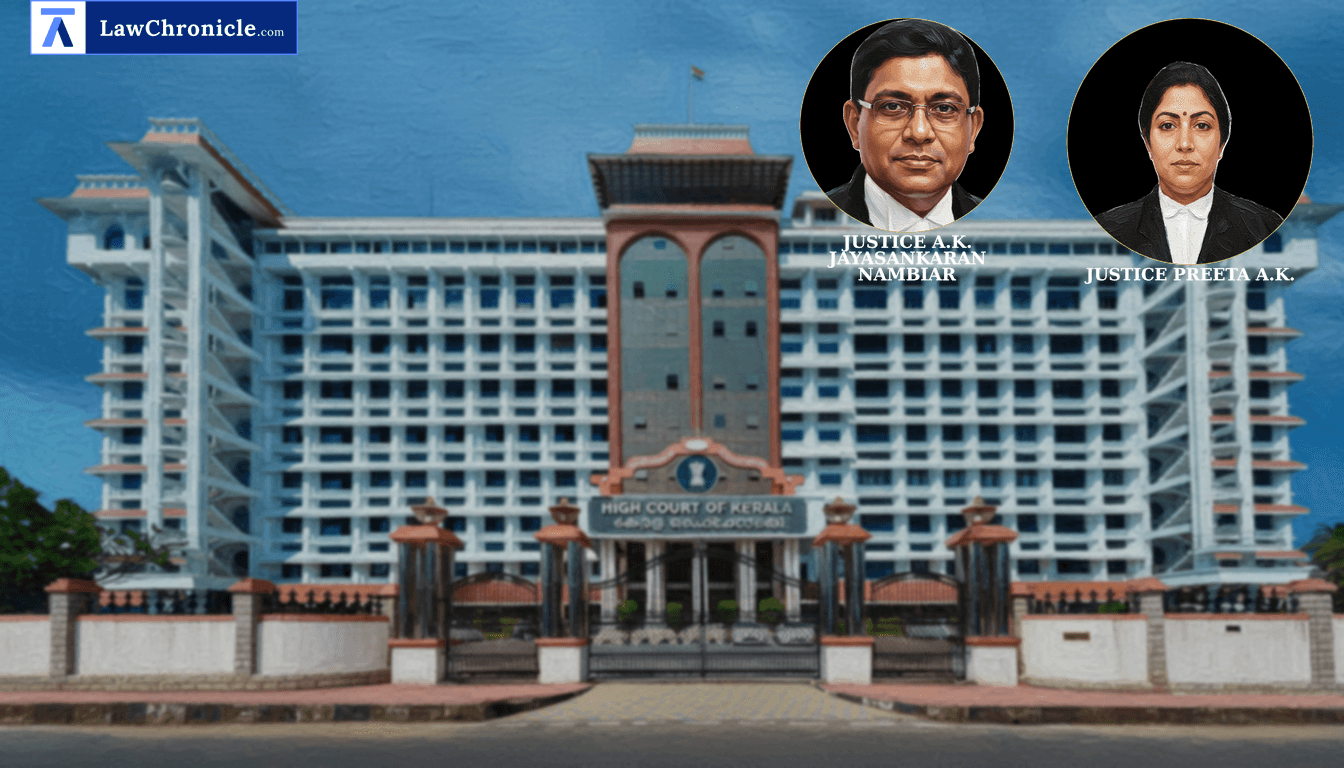
High Courts cannot issue police protection orders under Article 226 of the Constitution of India to enforce claims of possession over church properties without an underlying civil court decree establishing such rights. Establishing that a declaration on church management rules cannot automatically translate into executive enforcement for physical possession, the decision draws a firm line against using writ jurisdiction as a shortcut for civil adjudication.
A Division Bench comprising Dr. Justice A.K. Jayasankaran Nambiar and Justice Preeta A.K. set aside orders granting police protection to the Orthodox faction for taking over parish churches. The Bench was adjudicating a batch of writ appeals challenging a Single Judge's directions issued in light of the landmark ruling in K.S. Varghese v. St. Peter's and St. Paul's Syrian Orthodox Church.
Key Takeaways
- No Police Mandate Without Civil Adjudication: Writs seeking police protection under Article 226 of the Constitution of India cannot replace civil suits to determine property title or possession rights.
- Scope of Precedent Restricted: While K.S. Varghese v. St. Peter's and St. Paul's Syrian Orthodox Church governs the management framework of parish churches, it does not execute property possession without explicit civil decrees.
- State Intervention for Peace: The Kerala State Government has initiated high-level mediation efforts to resolve the century-old dispute between Orthodox and Jacobite factions amicably.
High Court's Rationale on Article 226 and Property Possession
Summarizing the core legal limitation, the High Court clarified that while a writ of mandamus can compel public authorities to perform statutory duties, it cannot settle disputed questions of property rights or title. Re-affirming established judicial principles, the Court emphasized that party litigants must establish their right to physical possession through competent civil courts before seeking police enforcement.
The Court, in its reasoning, observed: "In a dispute relating to the religious affairs of a Church, which is a Parish Church governed by the 1934 Constitution, the High Court cannot direct the Civil Administration to take over possession of the Church. In appropriate cases, when repeated disobedience of the decree passed by the competent court has resulted in a law and order situation, the High Court, being the constitutional court, can render justice by granting police protection to ensure that there are no law and order issues in the conduct of religious services and other affairs in the said Church, in accordance with the 1934 Constitution. As held by the Apex Court in Moran M. Baselios Marthoma Mathews II, after referring to the concurring opinion of Balasubramanyan, J. in P.R. Murlidharan, it would be an abuse of process for a writ petitioner to approach the High Court under Article 226 of the Constitution of India seeking a writ of mandamus directing the police authorities to protect his claimed possession of a property without first establishing his possession in an appropriate civil court."
Addressing the executive's role in mitigating factional feuds, the Court closed the appeals while noting state mediation plans. The Court has following directions:
"The above statement is recorded, and these Writ Appeals are closed with the hope that the measures proposed by the State Government would yield effective results."
Ratio
A writ petition under Article 226 of the Constitution of India seeking police protection cannot serve as a substitute for a civil suit to enforce possessory rights over property or resolve title disputes between rival factions unless supported by an adjudicated decree of a competent civil court.
Background
The dispute arose from a series of writ petitions filed by Vicars and constituent parish churches of the Malankara Orthodox Syrian Church seeking police protection to enforce the judgment in K.S. Varghese v. St. Peter's and St. Paul's Syrian Orthodox Church and secure physical possession of church properties from the Jacobite faction. A Single Judge had allowed the protection prayers, prompting the appeals.
During appellate proceedings, the High Court referred to decisions in Most Rev. P.M.A. Metropolitan, Mathews Mar Koorilos, St. Mary’s Orthodox Church, Marthoman Church, Mulanthuruthy and Others v. State of Kerala and Others, P.R. Murlidharan v. Swami Dharmananda Theertha Padar ( "(2006) 4 SCC 501": 2006 CaseBase(SC) 975), Moran M. Baselios Marthoma Mathews II v. State of Kerala ( "(2007) 6 SCC 517": 2007 CaseBase(SC) 109), Moran Mar Basselios Catholicos, and Narayanan M.V. & Ors. v. Periyadan Narayanan Nair & Ors. Examining statutory frameworks under the Code of Civil Procedure, 1908, the Universal Declaration of Human Rights, and the Kerala Right to Burial of Corpse in Christian (Malankara Orthodox-Jacobite) Cemeteries Act, 2020, the Bench concluded that K.S. Varghese v. St. Peter's and St. Paul's Syrian Orthodox Church laid down the law on parish management but did not operate as a blanket decree of possession for every individual parish property.
Consequently, the High Court allowed W.A. Nos. 378, 409, 437, 919, 941, and 942 of 2023, setting aside the Single Judge's directions, while clarifying that parties remain free to approach civil courts for possessory remedies. W.A. No. 1023 of 2023 was dismissed as not maintainable.
Case Details:
Case No.: W.A. No. 378 of 2023 and connected cases
Neutral Citation: 2026:KER:61759
Case Title: Fr. Thomas Pulayath & Ors. v. St. Thomas Orthodox Syrian Church & Ors.
Appearances:
For the Petitioner(s): Adv. Sri. K. Ramakumar (Sr.), Adv. Sri. Sreenath Vijayaraghavan, Adv. Sri. Sajan Vargheese K., Adv. Sri. M. Ramesh Chander (Sr.), Adv. Sri. K.C. Eldho, Adv. Sri. Raju Joseph (Sr.)
For the Respondent(s): Adv. Sri. S. Sreekumar (Sr.), Adv. Sri. Roshen D. Alexander, Addl. Advocate General Sri. P.A. Mohammed Shah, Senior Govt. Pleader Sri. T.S. Shyam Prasanth
Source: 2026 CaseBase(KER) 11444
Similar Articles
 Breaking News


