


Police Must Seek Court’s Leave Before Ordering Further Investigation, Supreme Court Holds
 Copy Link
 Share
 Save
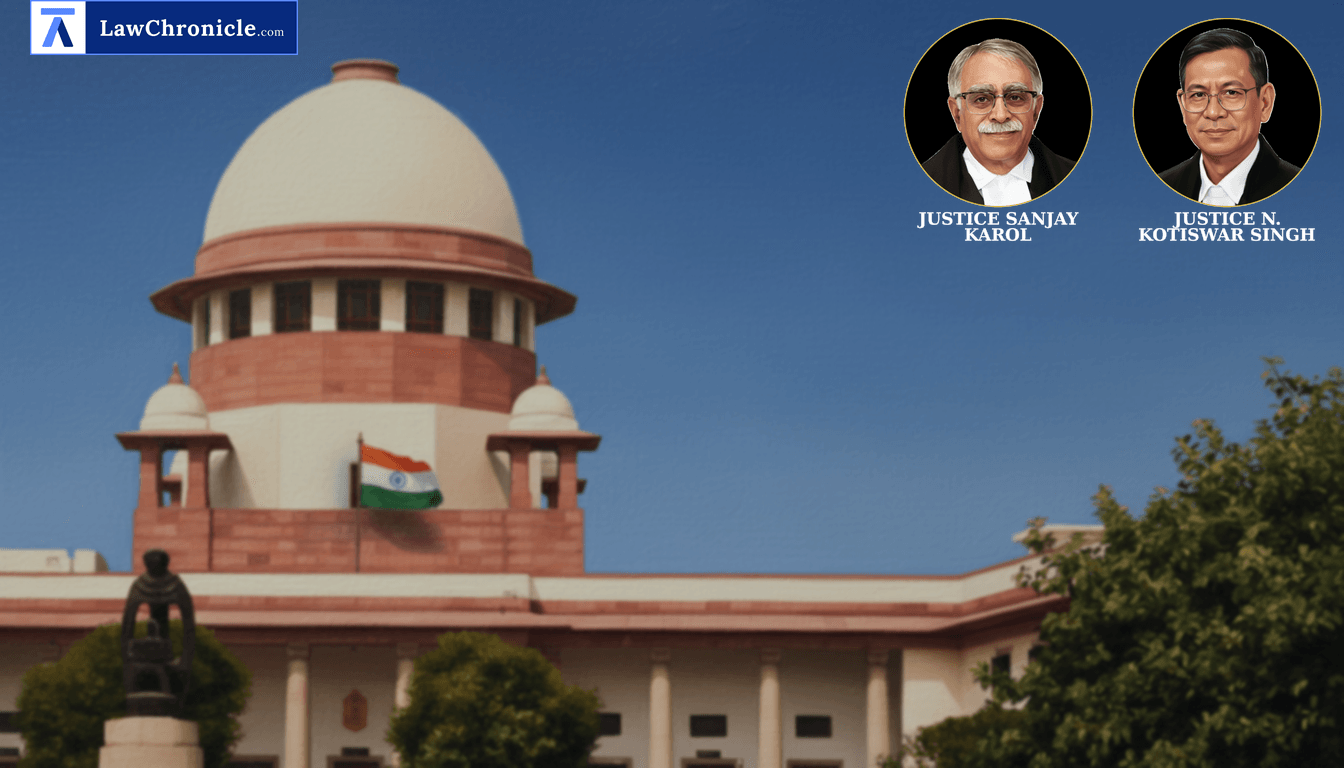
A bench of Justices Rajesh Bindal and Vijay Bishnoi heard an appeal by seven accused challenging the Allahabad High Court’s refusal to quash executive orders directing a fresh probe; the issue related to whether an investigating agency could, after filing a final report under Section 173(2) CrPC, initiate further investigation under Section 173(8) CrPC without the leave of the Magistrate or Court.
The Court allowed the appeal, set aside the High Court judgment dated 20.11.2023 and quashed the executive communications dated 06.06.2019 and 26.04.2021 which had directed the CBCID/Crime Branch to undertake further investigation. The Court held that while Section 173(8) recognised the possibility of further investigation, the power to direct such an inquiry rested with the judicial forum and not with the executive investigating agency. The Court, in its reasoning, observed: “In light of the legal position as settled by this Court through the above judgments, it is safe to say that the power to direct further investigation in a case rests solely at the discretion of the Magistrate/Court concerned. In the event, the police/investigation agency is of the opinion that further investigation is necessary in any particular case to cull out complete facts and truth in the case, it is binding upon them to file an appropriate application before the Magistrate/Court, without directing an order for further investigation by themselves.” The Court noted that the practice of seeking leave of the court had been long established and approved by earlier precedents such as Vinay Tyagi and Vinubhai Haribhai Malviya, and it distinguished Dharam Pal on its facts. The judgment further described the police action as “an unbecoming conduct from the officer of such a rank” in directing investigation without judicial permission.
Background The dispute arose from an FIR registered on 19.11.2013 alleging offences including gang-rape (Section 376D IPC) and related offences at Firozabad. The original investigating officer submitted a final report dated 30.05.2014 (Closure Report) stating that no offence was made out due to contradictions in the complainant’s statements and lack of corroborative evidence; the Judicial Magistrate accepted the closure report on 14.09.2015 after notices to the informant, who did not file objections. Years later, following a complaint to the National Human Rights Commission and directions for a fact-finding enquiry, State authorities directed the CBCID to investigate and recommended “further investigation” under Section 173(8). Letters by the Under Secretary and orders of senior police officers nominated an IO and sought DNA samples; blood samples were collected in May 2022 and a DNA report later indicated the accused were not biological fathers of the prosecutrix’s aborted foetus. The appellants challenged the executive directions before the High Court, which dismissed the petition and allowed the investigation to proceed; this Court stayed the impugned communications and the investigation on 16.01.2024 and thereafter heard the appeal.
The Supreme Court reviewed statutory text and precedents, emphasised the doctrine of contemporanea expositio and earlier rulings that had read the requirement of leave from the court into practice under Section 173(8), and held that only the Magistrate or a higher court could direct further investigation. It set aside the High Court order and the executive communications directing the probe, while clarifying that its observations would not prejudice pending criminal revision or other proceedings related to FIR No. 70/2013; the District and Sessions Judge and Trial Court were directed to decide pending matters on merits.
Case Details: Case No.: 2026 INSC 120 Case Title: Pramod Kumar & Ors. v. State of U.P. & Ors. Appearances: For the Petitioner(s): Mr. Divyesh Pratap Singh, Advocate (learned counsel for Appellants) For the Respondent(s): Mr. Apoorva Agarwal, Additional Advocate General, State of Uttar Pradesh
Similar Articles
 Breaking News


