


Closure Report Acceptance Does Not Bar Police Further Investigation: Allahabad HC
 Copy Link
 Share
 Save
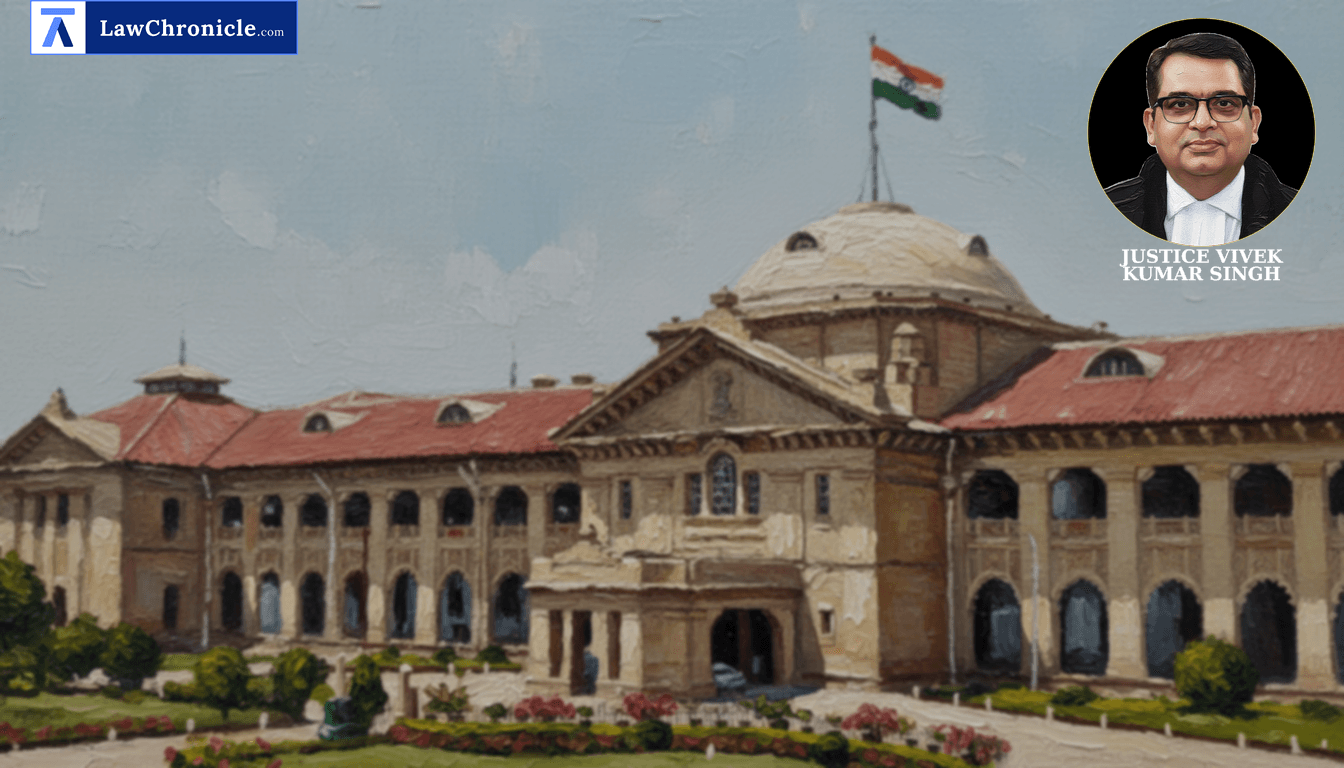
In a major ruling clarifying police investigative powers, the High Court of Judicature at Allahabad held that the judicial acceptance of a closure report does not debar law enforcement agencies from conducting further investigation upon the discovery of fresh evidence. The Court further affirmed that an accused person possesses no legal locus standi or right of hearing to challenge the mode or initiation of further investigation at the pre-trial stage.
A single-judge bench comprising Justice Vivek Kumar Singh dismissed an application filed under Section 528 of the BNSS seeking to quash a Magistrate's order that allowed police to proceed with further investigation in a 2005 double-murder case where a final report was previously accepted.
Key Takeaways
- No Bar Post Final Report: Acceptance of a closure or final report by a Magistrate under Section 173(2) of the Cr.P.C. does not terminate the statutory power of police to conduct further investigation under Section 173(8).
- No Prior Recalling Needed: Judicial orders accepting a final closure report do not require formal recall or review before initiating further probe on fresh evidence.
- Accused Has No Locus at Probe Stage: Accused persons have no statutory right to prior notice, hearing, or participation in questioning the manner or necessity of further investigation.
- Truth Over Delay: Lapsed time or trial delays cannot fetter investigative agencies from unearthing the truth and delivering substantial justice.
Court's Rationale on Section 173(8) CrPC and Police Powers
The High Court analyzed the statutory scheme governing police reports and the scope of Section 173(8) of the Cr.P.C.. Examining the binding legal principles established in Vinay Tyagi vs. Irshad Ali and Vinubhai Haribhai Malaviya vs. State of Gujarat ( "2019 (17) SCC 1": 2019 CaseBase(SC) 2743), the Court reiterated that while prior permission or informing the court is a sound procedure of propriety, the statutory mandate of Section 173(8) enables the gathering of additional evidence without wiping out the initial investigation.
The Court noted that accepting a final report by a judicial order does not operate as an absolute bar against investigating agencies exercising statutory powers under Chapter XII of the Cr.P.C.. Relying on State of Rajasthan v. Aruna Devi and others ( "1995 (1) SCC 1": 1994 CaseBase(SC) 991), the Court underscored that when fresh material comes to light, a second report indicating the commission of an offence can legitimately form the basis for taking cognizance.
The Court, in its reasoning, observed: "...a conspectus of the aforesaid decisions of Hon’ble Supreme Court rendered in cases where final reports (closure reports) had already been submitted and accepted makes the position of law very clear that even after the final report is laid before the Magistrate and is accepted, it is permissible for the investigating agency to carry out further investigation in the case. In other words, there is no bar against conducting further investigation under Section 173(8) of the Cr.P.C. after the final report submitted under Section 173(2) of the Cr.P.C. has been accepted. It is also evident, that prior to carrying out a further investigation under Section 173(8) of the Cr.P.C., it is not necessary for the Magistrate to review or recall the order accepting the final report."
Addressing the rights of the accused during the investigative phase, the Court referred to the landmark decision in Union of India and another vs. W.N. Chadha ( "1993 Supp (4) SCC 260": 1992 CaseBase(SC) 734) to observe that Chapter XII of the Cr.P.C. does not grant an accused person any right of prior notice or hearing during police investigation.
The Court, in its reasoning, further observed: "...under the scheme of Chapter XII Cr.P.C. there are various provisions under which no prior notice or opportunity of being heard is conferred as a matter of course to an accused person while the proceeding is in the stage of investigation by a police officer... Therefore, it is very much clear that at the stage of investigation the accused has no right to be heard. Thus, the present application challenging the further investigation is misconceived."
The Court has following directions:
"However, it is expected by this Court that fair, judicious and transparent investigation would be conducted by the Investigating Officer."
Ratio
Acceptance of a closure report under Section 173(2) CrPC does not extinguish the police's power or the Magistrate's discretion to permit further investigation under Section 173(8) CrPC upon the discovery of fresh evidence, nor does it require setting aside or recalling the earlier order of acceptance. Furthermore, an accused has no statutory right of hearing or locus standi to oppose or question the commencement of further investigation at the pre-trial stage.
Background
The case stems from an incident on August 6, 2005, where an FIR was lodged under Sections 147, 148, 149, 307, 302 of the IPC and Section 7 of the Criminal Law Amendment Act regarding the murder of the informant's parents. During the initial investigation, the informant and her sister filed affidavits and statements under Section 164 of the Cr.P.C. stating they had not witnessed the crime and that the named persons were wrongly implicated.
Consequently, the Investigating Officer submitted a final closure report in 2006, which was accepted by the Chief Judicial Magistrate, Mainpuri. Nearly two decades later, the informant approached senior police officials alleging that she and her siblings were minors at the time, were detained and coerced into signing affidavits by the accused persons, and could not pursue the case due to fear. Seeking further investigation, new facts were brought on record.
The Station House Officer applied to the Chief Judicial Magistrate, Mainpuri, who on August 5, 2025, observed that formal permission of the Magistrate was not strictly required and left the police at liberty to conduct further investigation under Section 173(8) of the Cr.P.C.. Aggrieved by this, the applicant challenged the order before the High Court under Section 528 of the BNSS.
The applicant relied on precedents including Pramod Kumar vs. State of U.P. ( "2026 INSC 120": 2026 CaseBase(SC) 96) and Vinay Tyagi vs. Irshad Ali to argue that reopening an investigation after 20 years without fresh material amounted to illegal de-novo investigation and that police cannot suo motu reopen settled cases. The State and informant countered using decisions such as Pramatha Nath Taluqdar v. Saroj Ranjan Sarkar ( "AIR 1962 SC 876": 1961 CaseBase(SC) 284), K. Chandrasekhar vs. State of Kerala, U.P.S.C. vs. S. Pappaiah, N.P. Jharia v. State of M.P. ( "2007 (7) SCC 358": 2007 CaseBase(SC) 1), and Kari Choudhary v. Mst. Sita Devi and Others, asserting that crime never dies, delay is no bar to discovering the truth, and prior permission is not an absolute statutory prerequisite to preclude further investigation.
Finding no illegality in the Magistrate's order, the High Court dismissed the application, directing the police to ensure a fair and transparent investigation.
Case Details:
Case No.: APPLICATION U/S 528 BNSS No. - 17955 of 2026
Case Title: Anurag Dubey @ Dabban v. State of U.P. and Another
Appearances:
For the Petitioner(s): Sri Manish Tiwary (Senior Counsel), Abhinav Dwivedi, Pranav Tiwary
For the Respondent(s): Sri Anoop Trivedi (Senior Counsel / Additional Advocate General), Sri Sanjay Kumar Singh (A.G.A.), Anil Kumar Rai (G.A.), Sri Prabhakant Singh, Sri Abhishek Singh
Source: 2026 CaseBase(ALL) 606
Similar Articles
 Breaking News


